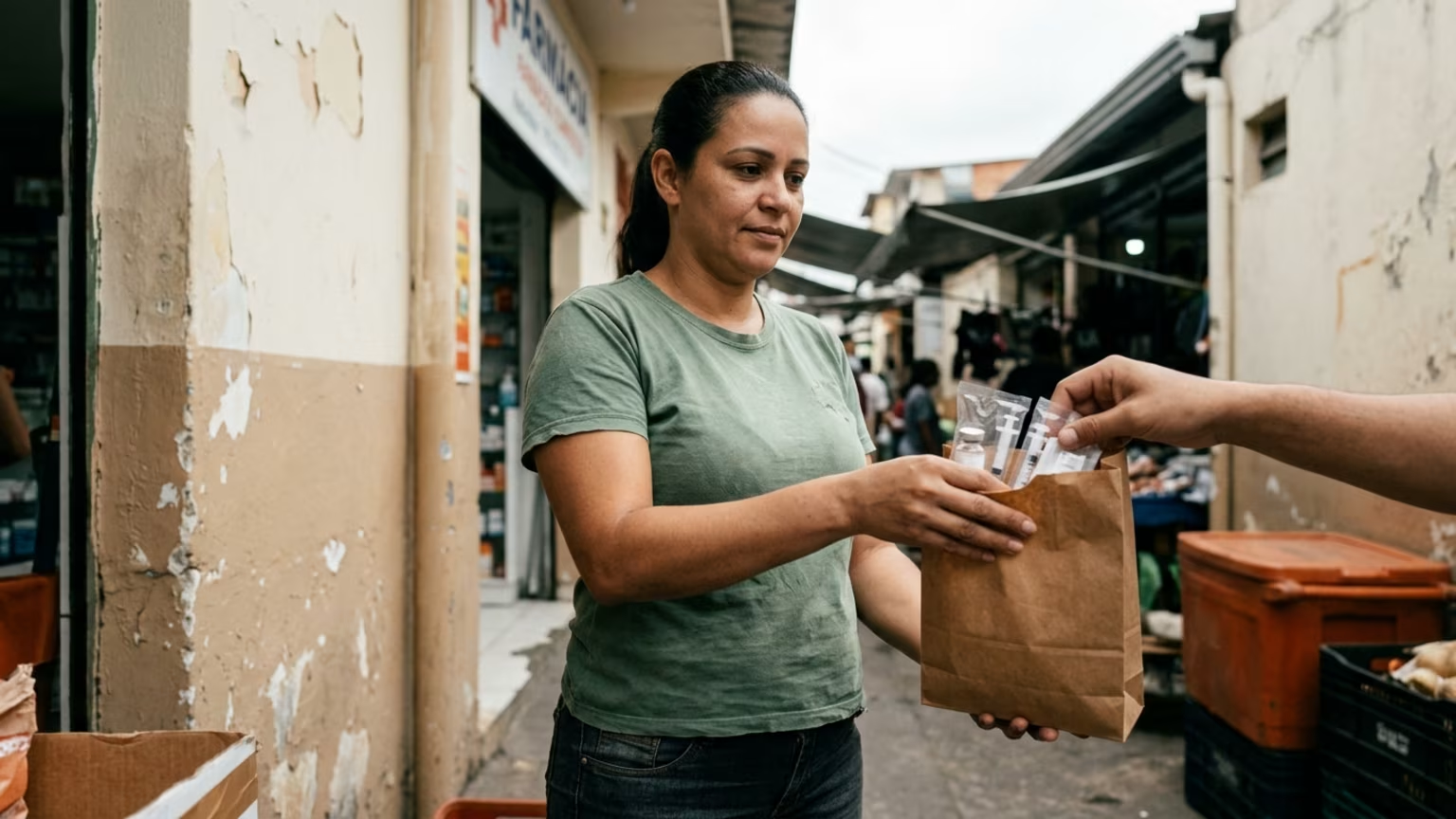

A booming black market for tirzepatide in Brazil highlights the safety risks of unauthorized appetite suppressants and the need for supervised medical care.





Reported nationwide seizures of illegal GLP-1-based weight-loss medicines rose from 609 units in 2024 to 60,787 units in 2025, according to figures attributed to Brazil’s anti-counterfeiting association. This massive increase reveals a desperate pursuit of appetite suppression outside regulated channels. It shows that affordability barriers are pushing patients toward dangerous alternative supply chains. The Brazilian black market for weight-loss drugs has become a significant public health issue.
The demand for injectable medications like tirzepatide is booming across South America. Brazil’s health regulator, Anvisa, recently prohibited and ordered the seizure of all medicines marketed under the United Labz brand. This regulatory action occurred after officials identified products advertised without required registration or agency authorization. The situation underscores the immense risks of seeking pharmaceutical solutions without proper medical oversight.
Anvisa specified that its prohibition covered the manufacture, importation, and use of these unverified products. The company responsible for manufacturing the United Labz products was completely unknown. Relying on anonymous manufacturers removes every safety protocol that protects patients from contamination. These stringent regulatory responses illustrate the growing complexity of modern weight loss pharmacology.
To understand this trend, we have to look at what these seizure metrics actually measure. A high interception count indicates increased enforcement and reporting as much as it shows higher smuggling volumes. For instance, Brazilian customs agents reportedly found hundreds of tirzepatide vials hidden in jars of dulce de leche on a tourist bus traveling from Paraguay in April 2026. This specific shipment ultimately exceeded 2,500 vials, according to Brazil’s Federal Revenue Service.
The broader market estimates provide helpful context for these isolated incidents. Euromonitor International estimates that GLP-1 use in Brazil is 5.5% of the population, which sits noticeably above the global average of 3.7%. Furthermore, Itaú BBA estimates that compounded and smuggled products could account for about 5% of Brazilian weight-loss-drug sales in 2026. Total estimated Brazilian sales of weight-loss medicines are projected at approximately $7 billion for the year.
It is crucial to view these numbers with a calm and objective perspective. Seizures represent only a fraction of actual circulation, and market estimates are not clinical registries of medically supervised treatment. Rising interception numbers can sound alarming, but they also reflect improved vigilance from regulatory authorities. They highlight an administrative effort to protect consumers from unverified and potentially hazardous substances.
We must separate verified statistics from the sensational narratives surrounding illegal markets. Products transported in hidden compartments do not undergo the rigorous safety testing required for clinical use. Anvisa has stated that tirzepatide is an active ingredient used in medicines for type 2 diabetes and obesity. Meanwhile, retatrutide remains in clinical development and is not approved for commercial sale.
The ecosystem surrounding weight management involves complex variables such as cost, biological drives, and access to care. Economic pressure is a primary driver for unauthorized cross-border trafficking. Reuters reported that a four-week supply of the lowest-dose Mounjaro cost about $290. The reported economic pressure is substantial, as one Brazilian consumer profiled by Reuters earned roughly $300 per month.
The price gap helps explain the strong incentive to bypass official pharmacies. One consumer interviewed for the report paid approximately $75 for Paraguay-made T.G. every six weeks. Another reported comparison noted a monthly supply of Ozivy for less than $100, versus approximately $340 for a high-dose Wegovy package sold online. Paraguay’s medicines authority, Dinavisa, authorized the product T.G., but that does not authorize it for Brazilian distribution.
Dinavisa stated that neither it nor the Paraguayan government was responsible for the transport of medicines. They characterized some cross-border transport of these medications as highly irresponsible. Andreia Kohout, pharmaceutical director of Brazil’s anti-counterfeiting association, noted that consumers mistakenly regard compounded medicines as identical to branded products. Reuters noted that compounded medicines are subject to technical standards and local inspections.
Economic and environmental factors often obscure the fundamental biology of weight maintenance. Early in our research, we reviewed a study showing how just a few nights of poor sleep could significantly alter appetite hormones. It was a clear revelation. So many people were meticulously tracking their food but completely ignoring their sleep and stress levels.
We immediately shifted our editorial focus to include recovery as a fundamental pillar of weight management alongside nutrition and movement. Relying purely on smuggled appetite suppressants ignores this vital ecosystem of sleep, nutrition, and habits. Medication can be a helpful tool, but it cannot replace the physiological need for adequate rest. Sustainable health requires building supportive daily routines rather than just suppressing hunger cues.
While many adults use approved GLP-1 medications safely, unauthorized supplies create severe health outliers. Brazilian authorities recorded 83 deaths and more than 3,600 adverse events associated with anti-obesity medicines between 2018 and mid-August 2026. Reuters reported that more than 60% of the adverse-event reports occurred during 2025 and 2026. However, these cases remain under investigation, and a direct causal link to unauthorized products is not definitively proven.
Unregulated products bypass the critical safeguards that protect typical patients. Health professionals and a Brazilian official told Reuters that inadequate storage and heat exposure can damage injectable weight-loss medicines. Proper storage is often impossible when vials are concealed in dulce de leche jars or transported across borders. The safety profile of an approved medication simply cannot be transferred to an unknown product.
Even with regulated products, patients require medical supervision to navigate potential complications. Anvisa has warned about acute pancreatitis and about aspiration and pneumonia risks during anesthesia associated with GLP-1 medicines. The Mounjaro and Wegovy product information cited by Reuters lists acute pancreatitis as occurring in approximately 0.1% to 1% of patients. A Brazilian obesity specialist also noted that some patients developed severe constipation after using weight-loss medicines obtained through unofficial channels.
One tragic case highlighted by Reuters involved a 31-year-old woman who died after taking an unidentified weight-loss medicine without consulting a health professional. A forensic pathologist stated her blood sugar fell severely, she lost consciousness, and stomach contents entered her airways. Finding reliable weight-loss treatments means strictly avoiding unknown compounds. Professional supervision remains the only way to minimize these severe outlier risks.
The emergence of a robust black market underscores a profound mismatch between public demand and accessible healthcare. In May 2026, Anvisa approved Ozivy, which was described by Reuters as the first domestic alternative to Novo Nordisk’s Ozempic. The agency subsequently approved other brands, offering safer pathways for those seeking pharmacological support. Leandro Safatle, Anvisa’s director-president, argued that consumers would naturally favor regulated products if they were available at prices similar to unauthorized imports.
Medication must serve as just one component within a broader behavioral strategy. A physician interviewed by Reuters specifically warned that prolonged fasting can contribute to hypoglycemia when using these treatments. True metabolic health requires consistent nourishment, robust sleep hygiene, and professional supervision rather than starvation. Individuals achieve better results when they integrate strategies for appetite control into their daily lives.
Eli Lilly told Reuters that it supports Brazilian authorities’ efforts against the illegal market. The company cited the goal of protecting patient safety and noted it continues seeking regulated ways to improve affordability. Novo Nordisk similarly observed that GLP-1 popularity in Brazil has encouraged a market for illegally imported products. These corporate responses highlight the global recognition of this critical patient safety issue.
Our team at WeightRestart consistently observes that sustainable health relies on supportive habits. Addressing the root causes of overeating builds a biological resilience that a syringe alone cannot provide. Medical tools can initiate progress, but thoughtful daily routines maintain those results over a lifetime. The most profound changes often happen quietly through steady and predictable choices over time.
WeightRestart shares research-led guidance on weight loss, metabolism, nutrition, strength, appetite, sleep and recovery. Our goal is to make complex health information clear, practical and useful for people building progress they can maintain.




Learn how to build a weight-management approach around better information, realistic expectations and habits you can keep using.
read the blog


