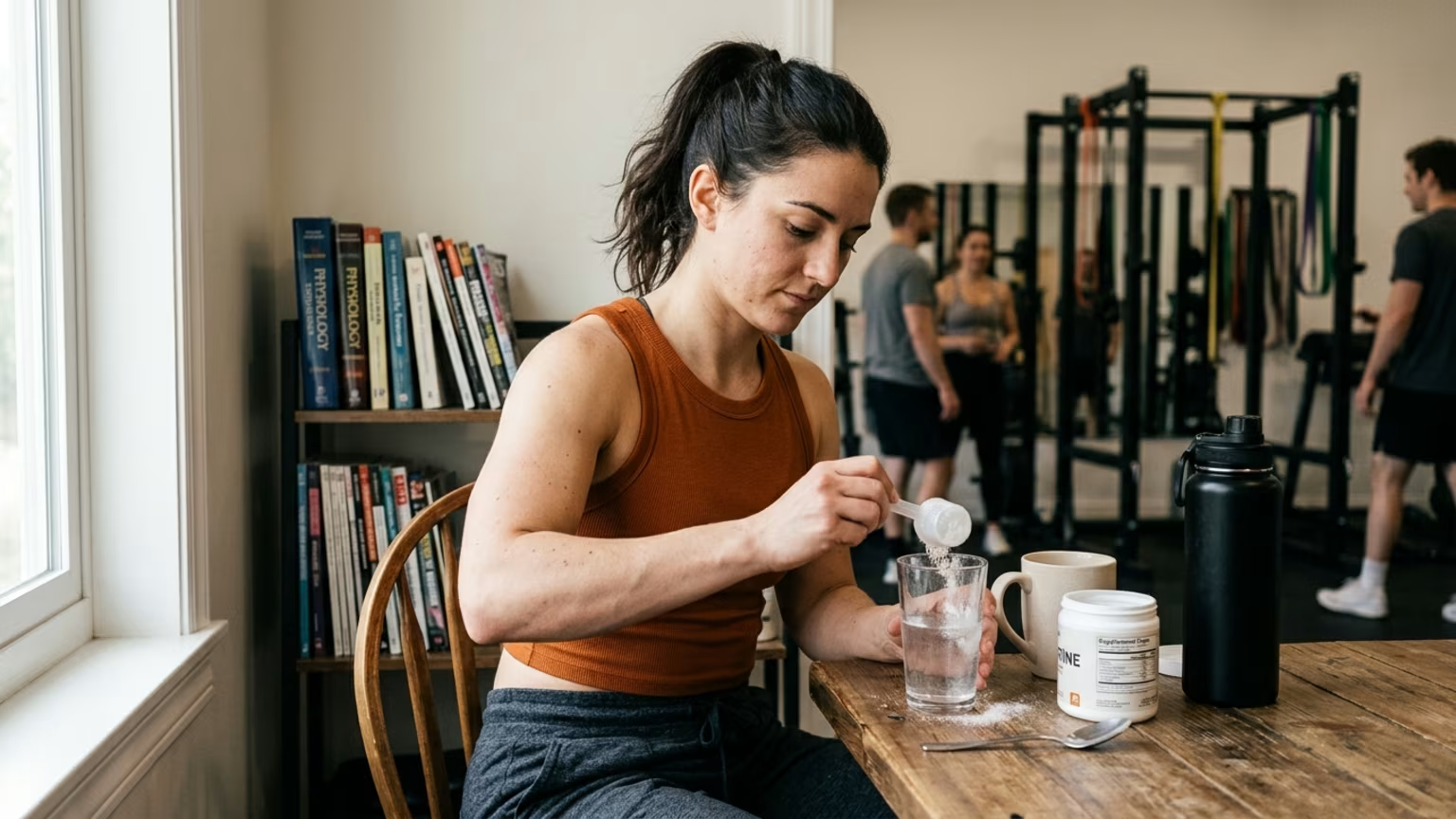

A 2026 Texas A&M study examined creatine and lean tissue in adults aged 45 to 65. Learn how researchers measured body composition during a 12-week trial.





In 2026, the Journal of the International Society of Sports Nutrition published new findings regarding creatine monohydrate and body composition in midlife adults. A 12-week trial at Texas A&M University examined how the supplement impacts lean tissue. Researchers focused on healthy adults aged 45 to 65. The study investigated physical outcomes for both exercising and non-exercising groups.
The trial was led by Jisun Chun and colleagues. It adds to a growing conversation about maintaining physical capabilities as our bodies age. Sixty-four completers finished the study and provided the final data. Participants who were assigned to the supplement group took 10 grams of creatine daily.
Navigating physical changes during your forties and fifties often feels incredibly frustrating. Many adults notice that lifestyle strategies they used in their twenties no longer produce the same results. Their focus shifts from seeking rapid scale changes to building a resilient and functional body. This is why research into lean tissue preservation is becoming so vital for everyday health.
One of the most common mistakes I see in adults over forty is focusing solely on the scale. People would celebrate rapid weight loss, only to find their energy plummeted and their metabolism slowed. They were losing muscle instead of just fat. Shifting the conversation from generic weight loss to body composition and strength training has been one of the most impactful changes we have championed at WeightRestart.
Research like this Texas A&M study highlights why that shift is so necessary today. It investigates specific clinical tools that might assist in protecting functional tissue during periods of intentional weight reduction. We can better understand how to support our bodies by looking closely at the data. This careful analysis allows us to move beyond simplistic dieting advice and make informed choices.
Translating clinical measurements into everyday terms is critical for making informed health decisions. In this study, the primary outcome measured by the researchers was lean tissue. Lean tissue encompasses everything in the human body that is not fat. This biological category includes muscle, bone, organs and water.
A common misconception is that any increase in lean tissue automatically equals new contractile muscle. The Lifespan article covering this research flags an important interpretation issue regarding this mechanism. They explicitly note that the measured increase in lean mass may include water weight. Creatine is biologically known to draw water directly into muscle cells.
This fluid retention can easily register as an increase in lean mass on clinical body scans. It is a standard biological response that often accompanies creatine supplementation. Therefore, readers should not automatically describe this measurement as an equivalent gain in pure muscle. Understanding this distinction helps set realistic expectations for anyone tracking body composition changes over time.
Measuring progress requires us to look at multiple data points rather than relying on a single metric. When water enters the cells, it can cause the number on the scale to rise slightly. This temporary fluctuation often creates anxiety for individuals trying to manage their weight. Recognizing the difference between transient water retention and true muscle growth is essential for sustainable progress.
Mainstream fitness media often frames dietary supplements as guaranteed shortcuts for transforming your body overnight. Headlines frequently suggest that certain products can completely replace the need for physical activity. Texas A&M’s coverage characterizes the results as suggesting creatine may help aging adults maintain lean tissue and strength. They note this occurred even without structured exercise.
However, it is absolutely essential to look at the actual study design to find the necessary nuance. Participants in this specific trial chose whether to join the exercise and diet program. After making that initial choice, they were randomly assigned to either creatine or a placebo within their respective groups. Because the exercise participation was self-selected, we cannot assume the groups were perfectly matched from the start.
People who willingly choose to participate in a supervised training program may differ fundamentally from those who decline. The self-selected nature of the exercise groups means the study does not cleanly establish causality. We cannot declare that adding exercise directly caused the exact differences observed between the separate groups. The most direct and reliable comparisons are strictly between the creatine and placebo users within each specific group.
Furthermore, the reported trial lasted 12 weeks and involved a small group of healthy adults. It is just one piece of evidence and cannot establish long-term outcomes on its own. We cannot assume these exact results apply to every adult pursuing a sustainable weight loss plan. Nuance is required when translating a single short-term trial into daily health habits.
This no-exercise result is simply a finding from this specific trial. It is not a valid reason to present supplementation as a substitute for physical activity. Movement provides cardiovascular, metabolic and mental health benefits that no supplement can replicate. We must view these findings as a small piece of a much larger metabolic puzzle.
The clinical observations from this trial offer specific data points regarding body composition and supplementation. In the group that did not take part in the structured exercise and diet program, the creatine users saw measurable physical changes. This specific group gained about 1.1 kilograms, or 2.4 pounds, of lean tissue over 12 weeks. This finding comes directly from the university’s official account of the published study.
The outcomes were notably different for the participants who opted into the active intervention. The exercise and diet program combined supervised training with a weight-loss diet. According to the university report, people in this active program who took creatine experienced more favorable outcomes overall. They had greater reductions in body-fat percentage than the comparison group in the trial.
These active participants also achieved measurable and greater strength gains during the study period. While the non-exercising group gained lean tissue, the combined approach yielded better improvements in overall body composition. These findings do not establish creatine as a standalone fat-loss supplement under any circumstances. Instead, they show its potential as a supportive tool when paired with active and intentional behaviors.
The researchers designed the trial to look at multiple facets of adult health. The study also assessed strength, muscular endurance and cognitive measures among the participants. However, the headline findings do not establish that creatine produces broad cognitive or metabolic benefits. Those particular outcomes need to be treated separately from the primary physical body-composition results.
The conversation around preserving lean mass during weight reduction is clearly gaining much-needed attention in medical circles. This trial provides helpful data on how middle-aged adults might respond to creatine supplementation over a short period. However, we need much longer-term evidence before making broader claims about its universal effectiveness. Future studies should follow participants for much longer than a mere 12 weeks.
We also need research that directly isolates the variables of diet and exercise in a fully randomized manner. Because the current study relied on self-selected exercise groups, future trials must randomly assign the physical activity component. This would help clarify exactly how much of the benefit comes from the training versus the supplement itself. It would also help researchers conclusively separate true muscle growth from simple fluid retention.
In this trial, the creatine intervention was set at exactly 10 grams daily for the duration. This specific dosage should not be turned into universal dosing advice for the general public. We expect future clinical trials to test different dosages to find the most efficient and practical protocol for adults. Until then, creatine remains a subject of ongoing study rather than a mandatory requirement for daily health.
As the clinical science evolves, we will continue to monitor how these tools integrate with sustainable habits. The most defensible takeaway right now is that this supplement showed modest benefits for lean tissue in a specific age group. We will keep watching the data to see if these early findings translate into reliable, long-term health practices. There is no rush to adopt every new finding before the evidence is truly robust.
WeightRestart shares research-led guidance on weight loss, metabolism, nutrition, strength, appetite, sleep and recovery. Our goal is to make complex health information clear, practical and useful for people building progress they can maintain.




Learn how to build a weight-management approach around better information, realistic expectations and habits you can keep using.
read the blog