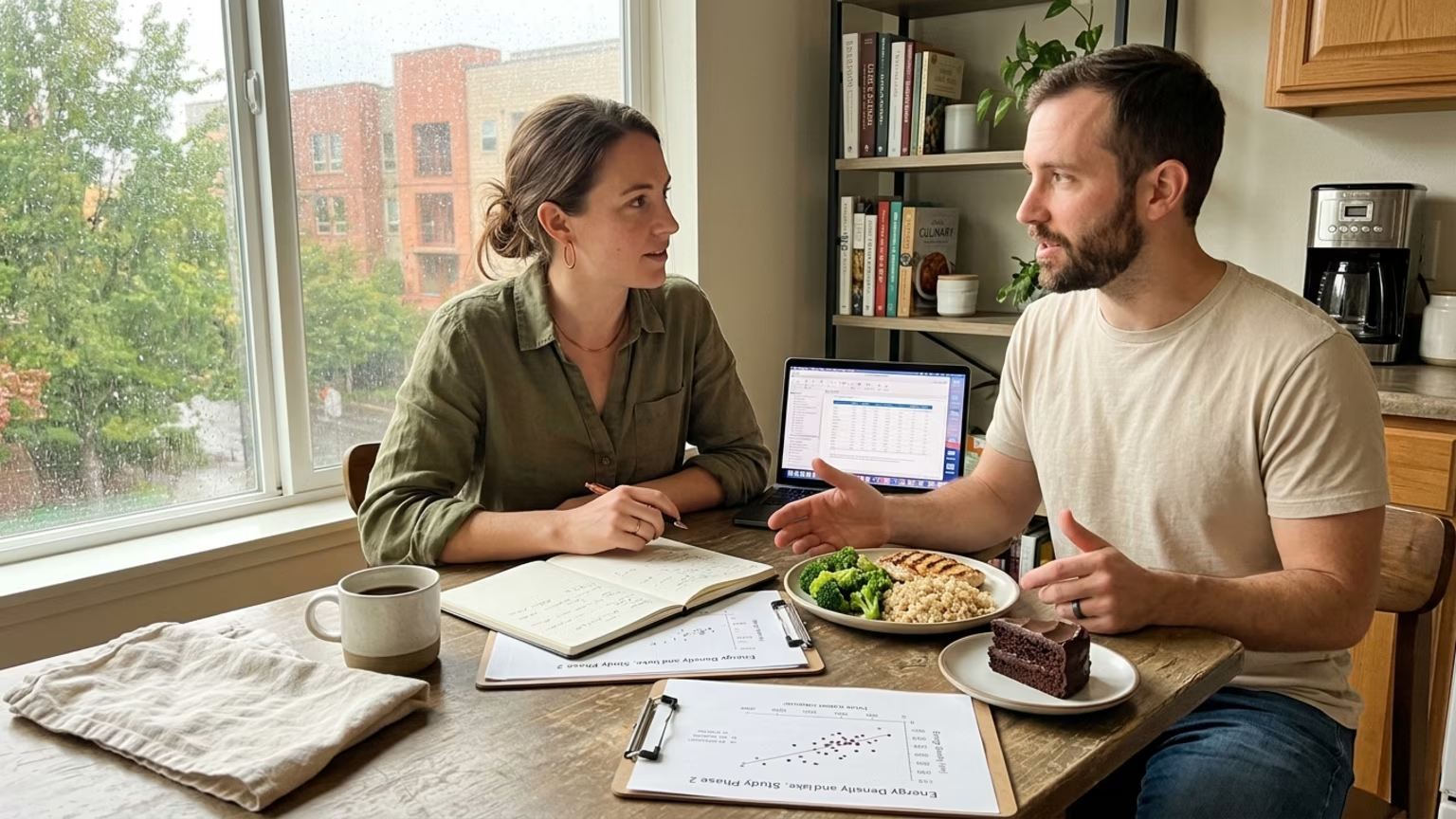

A 16-week trial analysis shows that reducing dietary energy density lowered daily calorie intake without significantly changing total food weight.





On September 14, 2026, reports highlighted a new 16-week analysis published in JAMA Network Open regarding a low-fat vegan diet and dietary energy density. The news coverage detailed a clinical trial comparing adults assigned to a low-fat vegan eating pattern against a control group making no dietary changes. The central finding focused on how the intervention group lowered their daily caloric intake while consuming a similar total weight of food. The Jamaica Gleaner and Men's Fitness reported that the primary mechanism behind this reduction was a lower dietary energy density.
The conversation around weight management often centers heavily on reducing portion sizes to create a calorie deficit. This analysis introduces a different perspective by examining the physical weight of the food eaten. By measuring total daily food weight alongside daily energy intake, researchers tracked how participants adjusted their eating habits. The findings provide a clear data point in the ongoing discussion about sustainable nutrition strategies.
Dietary energy density refers to the number of calories present in a single gram of food. The researchers calculated this metric by dividing the total daily energy intake by the total daily weight of the food consumed. Foods that contain high amounts of water and fiber generally carry a much lower energy density than foods rich in added fats. This means a person can eat a physically larger amount of food while consuming fewer total calories.
Understanding this biological mechanism is vital for adults seeking sustainable ways to manage their weight. For years, I watched smart, capable people blame themselves when standard diet advice failed them. They would cut calories drastically, run themselves into the ground and inevitably regain the weight. It was heartbreaking to see.
I realized we were treating a complex biological and psychological system like a simple math problem. That was the turning point when I knew we had to focus on metabolic health and habits rather than just restriction. The concept of energy density aligns perfectly with this approach. It shifts the conversation away from simply eating less food and toward choosing foods that provide physical volume.
Understanding the role of water and fiber clarifies why certain foods are naturally less dense. Fresh vegetables and whole grains hold significant moisture and structural fiber that increase their physical footprint. When these foods enter the digestive system, they stretch the stomach wall. This physical stretching sends satiety signals to the brain to indicate fullness.
This mechanical signaling process is a fundamental part of human biology. Relying on smaller portions of calorie-dense foods completely bypasses this natural volume-sensing system. A person eating a tiny portion of a highly processed meal will likely feel hungry shortly after finishing. Integrating foods with lower energy density respects the body's need for physical fullness.
When people attempt to lose weight by merely shrinking their portion sizes, they often fight intense biological hunger signals. Modifying the energy density of a meal allows the stomach to experience normal physical fullness. This provides a highly practical strategy for achieving portion control without obsession. A plate built around lower energy density can physically fill the digestive tract and signal fullness to the brain.
This can help address common eating patterns that undermine weight loss by replacing highly processed items with nutrient-dense alternatives. Weight management is heavily influenced by appetite regulation, nutrition composition, and daily habits. Focusing solely on caloric restriction without considering food volume often leads to a cycle of restriction and overeating. This mechanism explains why changing the mix of foods on the plate is often more sustainable than simply eating smaller versions of the same meals.
Mainstream media frequently sensationalizes nutrition research with bold claims about effortless results. The coverage of this JAMA Network Open analysis is no exception to this trend. Some news reports have suggested that participants lost weight without experiencing any hunger. The Men's Fitness summary includes the specific claim that participants lost weight without reported hunger.
However, the retrieved research results do not provide detailed hunger measures or explain how hunger was formally assessed. Assuming that a complete diet overhaul comes with absolutely zero hunger is a leap that the available data does not explicitly support. Another critical layer of context involves the organization that conducted the research. The Men's Fitness article notes that the study was conducted by the Physicians Committee for Responsible Medicine.
This group is an organization that strongly advocates for plant-based eating. This institutional context is highly relevant when reading how the findings are framed in the news. It does not automatically invalidate the clinical results, but it does explain the specific focus on a low-fat vegan intervention. Furthermore, the media coverage offers practical advice that extends well beyond the actual trial data.
The Men's Fitness article argues that readers may apply the energy-density idea without entirely adopting a vegan diet. The publication suggests emphasizing vegetables, fruit, potatoes, oats and beans while retaining lean protein. While this might be a logical approach for adults learning how to make healthy choices easier, it is purely editorial advice. These specific non-vegan food swaps and protein targets were not tested in the reported analysis.
Finally, headlines claiming that participants ate the exact same amount of food require careful interpretation. The reports describe a similar total food weight between the two study groups. This does not necessarily mean they consumed identical portions, experienced the same plate volume, or shared an identical eating experience. Food weight is just one metric of how much a person is eating.
The clinical details of the 16-week analysis offer a clearer, more objective picture of the actual findings. The Men's Fitness story says the trial followed 244 adults with overweight. One group was assigned to a low-fat vegan diet without specific calorie limits. The comparison group was asked to make no dietary changes at all.
This randomized structure helps isolate the effects of the dietary pattern over the measured short-term period. The caloric differences observed between the two groups were notable. Reports state that calorie intake actually decreased in both groups over the course of the study. However, the vegan group experienced a much larger overall decrease.
In the Men's Fitness account, the vegan group consumed about 357 calories per day less relative to the control group. Importantly, the total weight of the food they consumed did not significantly change during this time. The shift in dietary composition was the primary driver of this intake reduction. The reported change in energy density was about 30 percent lower in the vegan group.
Meanwhile, dietary energy density remained essentially unchanged in the control group. The Jamaica Gleaner reports that larger energy-density reductions were associated with greater weight loss. This specific association persisted even after researchers accounted for changes in calorie intake. It is absolutely critical to view the 357-calorie figure accurately.
This number is reported as a difference in change between groups rather than a guaranteed, exact reduction for every single participant. It represents an average trend observed among the individuals during the 16 weeks. Some participants may have seen larger reductions, while others likely saw smaller changes. Group averages are helpful for identifying overall trends, but they rarely reflect an individual's exact daily experience.
Nutritional research inherently involves complex human behaviors that vary from person to person. A clinical trial environment also provides a level of structure that is difficult to replicate in everyday life. The analysis shows a strong association between the dietary pattern and the intake changes, but it does not prove that energy density alone independently caused the weight loss. Weight change is a multifaceted process influenced by sleep, physical activity, and baseline metabolic health.
This 16-week analysis provides interesting data on dietary energy density, but future research is necessary to answer several remaining questions. We need to see long-term clinical trials that track participant adherence and weight maintenance over a period of years rather than weeks. The current results do not establish whether this specific dietary pattern is sustainable for the average adult in the long run. Researchers must also investigate how flexible, mixed-diet approaches compare directly to strict vegan interventions.
Testing the editorial suggestions of incorporating lean protein alongside lower-energy-density plant foods will clarify if similar results are achievable without full dietary restriction. Real-world applications of energy density must account for individual preferences, budget constraints, and cultural food traditions. It is highly unlikely that a single, rigid dietary pattern will work for the entire population. Clinicians will need robust data to understand how people can customize these volume-based principles sustainably. Until those comprehensive studies are published, adults can carefully consider the principles of energy density as one potential strategy for managing appetite and nutritional health.
WeightRestart shares research-led guidance on weight loss, metabolism, nutrition, strength, appetite, sleep and recovery. Our goal is to make complex health information clear, practical and useful for people building progress they can maintain.






Learn how to build a weight-management approach around better information, realistic expectations and habits you can keep using.
read the blog