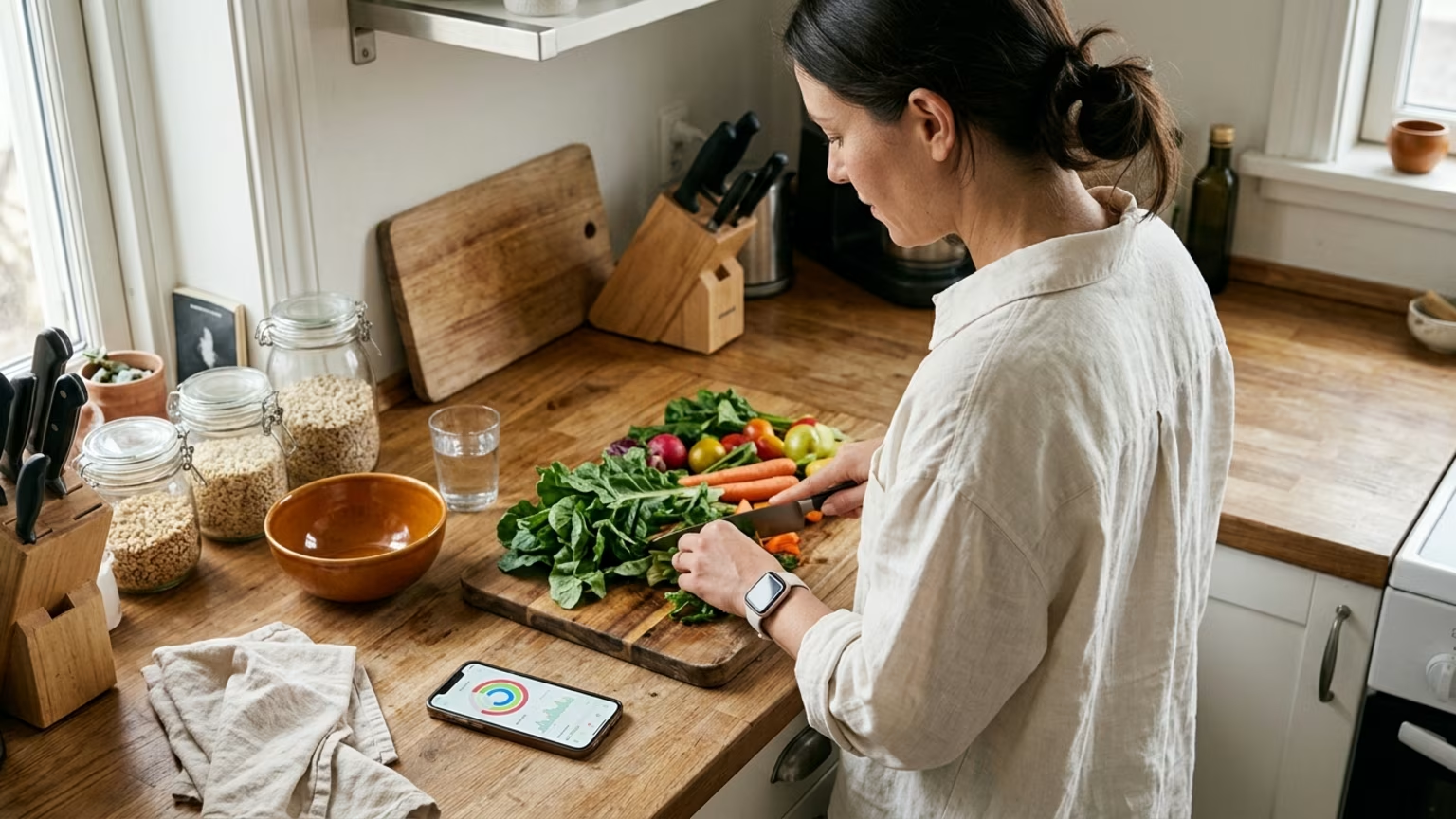
New survey data reveals how frozen vegetables can reduce household waste and support consistent nutrition routines without relying on extreme diet rules.





On September 1, 2026, Nutrition & Dietetic News reported new findings regarding household food waste and fresh grocery shopping habits. The article highlighted consumer research commissioned by Nomad Foods. This research indicated that "fresh-first" shopping habits may be contributing to unnecessary food waste and higher household bills. According to the survey data, half of the consumers across six European markets reported discarding fresh vegetables at least monthly.
Many adults struggle to maintain consistent vegetable consumption because fresh produce spoils rapidly. Freezing produce shortly after harvest limits the nutrient losses that naturally occur during transport, storage, and household refrigeration. This preservation method effectively pauses the deterioration process. It allows you to portion exact amounts as needed and store the remainder for future meals.
This practical flexibility is a crucial element of long-term health and weight management. Maintaining a nutrient-dense diet depends heavily on removing friction from your daily routines. Relying strictly on fresh produce can create unnecessary barriers when your schedule changes unexpectedly. Keeping frozen staples available helps you navigate decision fatigue and eating by providing a reliable fallback option.
Focusing on an accessible ecosystem of habits is vital for sustainable results. Early in our research, we reviewed a study showing how just a few nights of poor sleep could significantly alter appetite hormones. It was a clear revelation. So many people were meticulously tracking their food but completely ignoring their sleep and stress levels. We immediately shifted our editorial focus to include recovery as a fundamental pillar of weight management alongside nutrition and movement. In much the same way, reducing the stress of meal preparation through convenient frozen foods supports a healthier overall routine.
UK dietary guidance recognizes fresh, frozen, dried, and canned fruit and vegetables as counting toward the five-a-day target. NHS dietary guidance also identifies fruit and vegetables as vital sources of vitamins, minerals, and fiber. The guidance encourages eating a wide variety across different types and colors. Frozen vegetables make it easier to meet these daily targets without requiring frequent trips to the grocery store.
Mainstream coverage of this report often repeats its financial figures without mentioning the commercial sponsorship behind them. Nomad Foods is the owner of prominent frozen-food brands including Birds Eye. Their report estimated that improved use of frozen food could save households as much as £539 a year. The report also estimated that replacing some takeaway meals with frozen alternatives could save up to £1,000 a year.
These figures are consumer estimates drawn from company-linked research rather than independently audited household-spending measurements. The UK government’s August 2026 waste dashboard provides official national waste-monitoring context. However, the dashboard does not provide a specific fresh-vegetable waste figure to independently verify the Nomad Foods headline statistics. You should treat these financial numbers as potential budgeting insights rather than guaranteed financial results.
We must also carefully differentiate between plain frozen produce and the broader frozen food category. Nomad Foods chief executive Dominic Brisby described frozen food as a practical part of how households manage time, budgets, and meal preparation. Brisby argued that frozen food is not a compromise and plays an important role in food access. Because these comments come from an industry executive, we view them as industry commentary rather than independent nutritional consensus.
The freezer aisle contains a massive spectrum of dietary quality. Plain frozen vegetables support a nutrient-dense diet, but the category also includes heavily processed items. The convenience of keeping ingredients on standby does not mean every frozen product is equally beneficial for metabolic health. Selecting plain options helps you maintain an eating pattern that supports metabolic health without the high sodium of prepared meals.
The underlying research provides a detailed look at how people view and use their groceries. Focaldata conducted the consumer survey between April 15 and April 27, 2026. The researchers used nationally representative samples from multiple countries. They surveyed 2,000 people in the UK and 2,000 in each of France, Germany, Italy and Sweden. The survey also included 750 respondents in Croatia.
Across these six European markets, fewer than three in ten respondents said they discarded frozen vegetables at least monthly. This contrasts sharply with the half of respondents who reported throwing away fresh vegetables at least monthly. In the specific UK sample, only 16 percent of respondents said they never threw away fresh vegetables. Meanwhile, 36 percent of UK respondents stated they never threw away frozen vegetables.
These numbers illustrate a significant gap in how households manage different types of perishable food. The research also revealed interesting consumer perceptions about nutritional value. Among the surveyed group, 63 percent considered frozen peas at least as nutritious as fresh peas. Additionally, 51 percent held the exact same view about frozen sweetcorn.
Despite these positive findings, many consumers still heavily associate fresh food with superior overall nutrition. The survey noted that 65 percent of respondents regarded fresh cooked potatoes as more nutritious than frozen ones. Similarly, 63 percent held that view for both fresh chicken and fresh fish. Despite these mixed perceptions, 51 percent of surveyed consumers ranked finding something in the freezer among their top two options when they needed dinner quickly. In comparison, only 30 percent ranked takeaway delivery or collection in their top two options.
The most effective nutritional strategy is one that you can execute consistently week after week. Buying fresh produce for an idealized week often creates waste when work or fatigue intervene. A mixed strategy of using some fresh produce for immediate needs and frozen vegetables for later meals often matches actual routines much better. This realistic approach prevents the burnout associated with strict or rigid dieting frameworks.
You can easily build repeatable meals around a small rotation of reliable frozen staples. A practical weeknight dinner might include plain frozen vegetables paired with an adequate protein source and a high-fiber carbohydrate. By focusing on simple preparation, you drastically reduce the time and energy required to cook a balanced meal. The ultimate goal is to make healthy eating a convenient default rather than an exhausting chore.
Reducing household waste is not exactly the same as improving diet quality. A household can waste far less food while still eating too few vegetables or consuming excessive calories. The strongest practical interpretation of this data is that frozen vegetables can remove one major barrier to consistent vegetable intake. They do not independently create weight loss, but they make it easier to build sustainable eating habits over time.
As discussions around sustainability and food costs continue, we expect greater scrutiny on household waste metrics. Future research should focus on independently audited kitchen records rather than relying entirely on self-reported consumer surveys. We also need detailed, non-industry-funded nutritional analyses comparing the long-term vitamin retention of specific fresh and frozen vegetables. Until those studies emerge, everyday adults can confidently use plain frozen vegetables as a practical tool to support healthy eating.
WeightRestart shares research-led guidance on weight loss, metabolism, nutrition, strength, appetite, sleep and recovery. Our goal is to make complex health information clear, practical and useful for people building progress they can maintain.





Learn how to build a weight-management approach around better information, realistic expectations and habits you can keep using.
read the blog