
A JAMA Network Open study links GLP-1 medications with healthier grocery purchases. We explain how reduced food cravings support sustainable behavioral habits.





In August 2026, JAMA Network Open published new findings analyzing how modern obesity medications influence everyday consumer choices. Researchers analyzed almost 2 million supermarket receipts from more than 1,100 people in Denmark. The study connected objective grocery purchase records directly with prescription data. The investigators compared individuals who began GLP-1 treatment against a control group to track behavioral shifts.
By examining changes in food-purchase behavior, the researchers gained an indirect but highly valuable measure of real-world dietary habits. Traditional nutrition research relies heavily on participants remembering what they ate or accurately stating their dietary preferences. This reliance on memory often creates significant limitations in scientific data. The Danish research team bypassed these common hurdles by tracking exact supermarket receipts.
This method provided a factual look at the food environment individuals created for themselves. The findings offer compelling insights into how medical interventions shape daily routines outside of controlled clinical settings.
The biological mechanisms behind these medications extend far beyond simply slowing digestion or increasing physical fullness. Researcher Joana Nicolau notes that GLP-1 medicines deeply affect brain circuits associated with reward and impulse control. These neurological shifts change the pleasurable or hedonic response to food. Such profound biological adjustments help explain why patients experience a reduction in what experts call food noise.
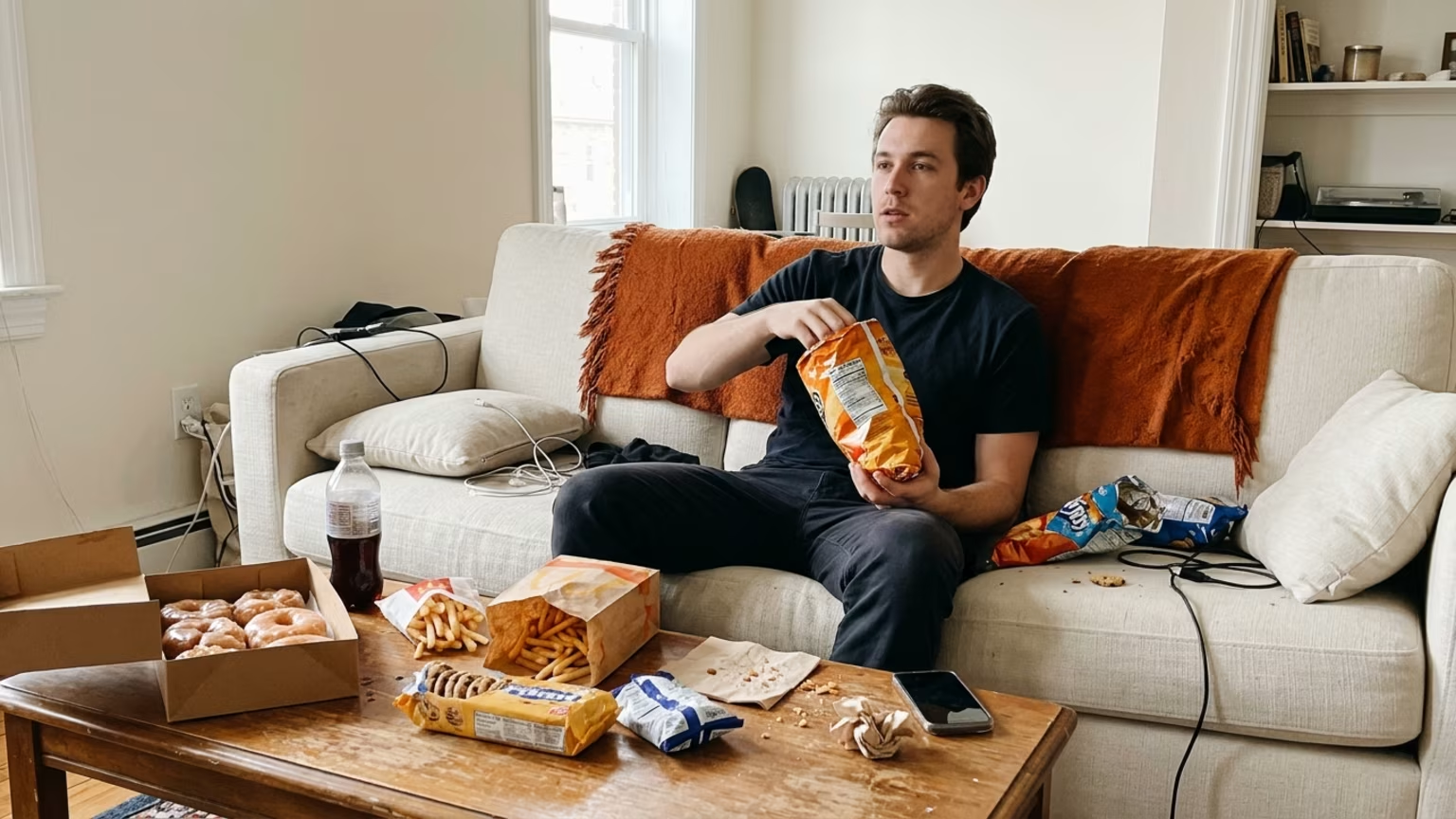
Medical professionals define food noise as persistent and intrusive food-related thoughts that actively interfere with daily life. It is not simply ordinary hunger or briefly anticipating a meal. For many adults, this constant mental chatter makes eating behavior significantly harder to manage. By reducing these intense cravings, the medication can create a supportive window for individuals to establish healthier routines.
This quiet period allows patients to build a healthier home food environment without constant psychological friction. The treatment effectively lowers the volume on psychological barriers. This biological assistance makes structured habit work much more feasible. However, clinicians emphasize that medication operates as a facilitator rather than a permanent replacement for behavioral adaptation.
It provides the necessary mental space to practice better nutrition and movement habits. When the brain is no longer consumed by persistent thoughts of food, individuals can focus their energy on intentional meal planning. They can navigate grocery aisles with a clearer sense of purpose rather than reacting to immediate impulses. Treatment may reduce biological and psychological barriers enough for structured habit work to take root.
Mainstream media outlets have frequently described these medications as a vaccine against ultra-processed foods. This framing is rhetorically powerful but scientifically misleading. The Danish study certainly did not test a vaccine. Its observational design does not justify presenting medical treatment as guaranteed protection against unhealthy dietary choices.
The research supports a strong association between starting the medication and better grocery purchases, but it explicitly does not prove causation. Several other factors likely contribute to these shifting lifestyle patterns. People beginning a medical treatment protocol often experience increased motivation to change their daily habits. They frequently receive personalized nutritional advice and closer supervision from endocrinologists or dietitians.
As Cristóbal Morales emphasized, it is impossible to determine how much of the positive effect comes exclusively from the medicine itself. The medication works alongside human motivation and professional care. Furthermore, the study did not directly measure food-noise levels or emotional eating through a validated clinical questionnaire. Those psychological concepts were offered by experts as a highly plausible explanation for the observed purchasing patterns.
To state that the study definitively proved a reduction in intrusive food thoughts would overstep the available evidence. Readers must also recognize that healthier purchases do not automatically equate to better long-term health outcomes. Groceries can be purchased for other household members, eaten away from home, or wasted. We cannot view receipt data as a perfect record of what participants actually consumed.
Additionally, it is crucial to understand that these medications are not appropriate for every adult seeking to change their grocery habits. The reported findings arose in a medically treated population under strict clinical supervision. The results should never be interpreted as evidence that medication makes healthy eating automatic. Anyone relying solely on a pharmaceutical intervention without addressing their underlying lifestyle habits will likely struggle with long-term weight management.
Despite the need for cautious interpretation, the objective receipt data revealed several clear purchasing trends among the observed individuals. Participants bought groceries containing fewer calories, sugars, and carbohydrates after starting treatment. Their supermarket receipts also showed less saturated fat and a modest increase in protein content. The group taking GLP-1 medications significantly reduced their purchases of highly processed grocery items.
They shifted toward items described as less energy-dense and nutritionally superior. This pattern strongly aligns with recent related developments observed in other international markets. BBC Science Focus highlighted related work by researcher Jill McCluskey and colleagues regarding household budgeting. This research found that people using weight-loss medication devoted less of their grocery budget to ultra-processed foods.
These shoppers spent more on fresh produce, meat, and plain dairy products instead. The same coverage noted that households with at least one GLP-1 user bought fewer calorie-dense foods like savory snacks. These households simultaneously reduced their spending at fast-food chains and coffee shops. The business sector is closely monitoring these behavioral shifts.
Food Dive cited separate Numerator data to illustrate broader market changes across the consumer landscape. That specific dataset showed grocery spending among people using weight-loss drugs dropped by 4 percent. These GLP-1 users now represent more than $660 billion in market spending power. The long-term permanence of these category shifts remains unverified.
Individuals managing their weight must remember that drastically reduced food intake requires careful nutritional planning. The Danish study observed a modest increase in protein purchases, which is an encouraging sign. Adequate protein intake is vital for patients experiencing substantial weight changes to prevent severe muscle loss. Adults concerned about body composition should avoid assuming that eating less automatically preserves skeletal muscle.
A comprehensive approach involving dense nutrition, consistent resistance training, and psychological support is still required. Readers should quickly distinguish between a beneficial reduction in constant food cravings and a harmful loss of normal hunger signals. Persistent nausea, severe fatigue, or anxiety around food warrants immediate discussion with a healthcare professional.
Future clinical studies must incorporate comprehensive body-mass-index and body-composition data to interpret these purchasing shifts accurately. The current data lacks this specific physical context. While healthier grocery choices represent an excellent starting point, researchers need to verify if these behavioral changes lead to sustained fat loss and optimal muscle retention over years. The medical community heavily relies on longitudinal research to understand how the human body adapts to extended treatment protocols.
Furthermore, scientists must track what happens to food purchasing patterns if a patient eventually discontinues the medication. Habit formation takes significant time and repetition. Understanding how effectively these temporary windows of reduced cravings translate into permanent lifestyle adaptations will determine the true value of these interventions. Until more data emerges, the most sustainable approach combines medical support with dedicated, shame-free behavioral adjustments.
WeightRestart shares research-led guidance on weight loss, metabolism, nutrition, strength, appetite, sleep and recovery. Our goal is to make complex health information clear, practical and useful for people building progress they can maintain.






Learn how to build a weight-management approach around better information, realistic expectations and habits you can keep using.
read the blog