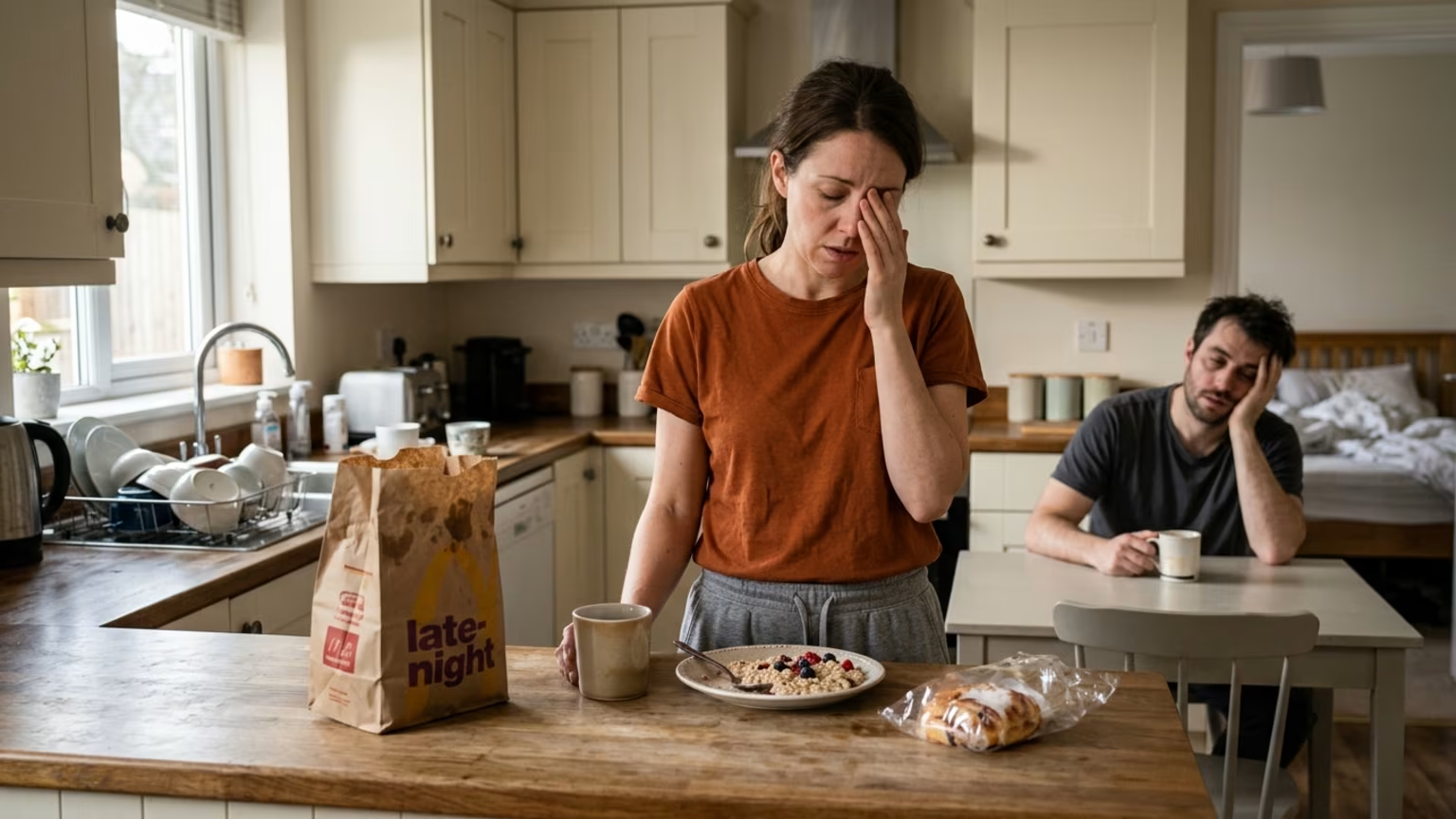

A recent Concordia University study shows how one partner's poor sleep can lower confidence and effort in healthy eating for both cohabiting partners.





On September 15, 2026, Concordia University announced new findings published in the Annals of Behavioral Medicine. The study examined whether one partner's sleep quality was associated with both partners' ability to maintain healthy eating habits. Researchers followed 204 cohabiting couples in Canada over three months to observe their daily behavior. They found that poor sleep in one person was linked to lower confidence and less effort to eat well in both partners.
At WeightRestart, we often see how shared environments dictate daily food choices. For years, I watched smart, capable people blame themselves when standard diet advice failed them. They would cut calories drastically, run themselves into the ground and inevitably regain the weight. It was heartbreaking to see.
I realized we were treating a complex biological and psychological system like a simple math problem. That was the turning point when I knew we had to focus on metabolic health and habits rather than just restriction. This new Concordia research reinforces that our daily habits are deeply intertwined with the people around us. Nutrition is rarely an isolated, individual effort when living in a shared household.
The core mechanism identified in the study is behavioral and relational rather than purely physiological. Cohabiting partners frequently share meals, evening routines and food purchasing decisions. When one person sleeps poorly, that individual predictably reports weaker diet-related self-regulation. The notable finding was that the well-sleeping partner reported similar reductions in confidence and effort.
Jean-Philippe Gouin, the study's corresponding author, offered a practical explanation. He suggested that having a sleep-deprived partner might increase the household's exposure to calorie-dense snacks. These readily available options often include highly palatable foods like crackers, chips, chocolate and candy. When one person struggles with fatigue, making healthy choices becomes less convenient for the entire household.
This dynamic adds a household-level dimension to behavior change. Adherence to a nutritional plan is influenced by whether a partner is tired, eating highly rewarding snack foods or unintentionally making healthier choices harder. It shows how lack of rest alters metabolic signals and ripples through a shared living space. Consequently, sustainable weight management requires looking beyond individual calorie targets.
Other recent research highlights how sleep directly alters body composition during caloric restriction. Another recent report described a small randomized crossover study in 10 adults with overweight. That trial compared 14 days of 5.5 versus 8.5 hours of sleep opportunity. The shorter-sleep condition was associated with a smaller proportion of weight lost as fat and a greater loss of fat-free mass.
The study highlights why focusing solely on restriction is an incomplete approach to metabolic health. When sleep is chronically restricted, the body preserves fat stores over lean tissue. Coupled with the behavioral friction of a tired household, this physiological shift creates a significant barrier to success. You can read more about these metabolic responses in our overview of why weight loss plateaus happen.
Mainstream media coverage might easily interpret these findings as proof that a restless partner directly causes weight gain. However, the Concordia study was strictly observational. It cannot establish that poor sleep directly causes unhealthy eating or that improving sleep will automatically improve both partners' diets. The results show a behavioral association rather than a strict physiological cause-and-effect relationship.
Furthermore, the data relied entirely on self-reported sleep, diet and diet-related effort. Researchers did not use objective sleep tracking, direct observation of food intake or independently measured household food purchases. The study measured associations over three months, which is useful for observing repeated patterns. Yet, it does not establish whether the relationship persists over years or translates into clinically meaningful body composition changes.
The researchers noted that other shared factors could easily explain the behavioral shifts in the household. Shared stress, household schedules, relationship dynamics and financial constraints could all play a role. The authors presented the exposure to calorie-dense snack foods as a likely explanation rather than a proven mechanism. Readers should avoid using these findings to blame a partner for weight regain, as the evidence does not support direct causation.
The study collected extensive data from the 204 participating couples over the three-month period. Participants completed questionnaires at baseline, one month and three months. They also maintained daily diaries during the first 14 days to record their specific efforts to eat healthily. The participants were 42 years old on average, providing a clear look at midlife habit formation.
This sample was particularly relevant to adults actively managing their metabolic health. Each couple included at least one person with overweight or obesity, defined in the study as a body-mass index of at least 25. This individual was actively attempting to improve their diet or physical activity. In fact, nearly 96 percent of all participants said they were actively trying to change their diets.
Because the participants already had stated dietary goals, the findings closely mirror real-world weight-management efforts. Across the entire study period, diet quality improved modestly, while sleep quality did not change significantly. Women reported healthier diets and stronger efforts to maintain healthy eating habits than men. However, the researchers found no evidence that gender altered the way one partner's sleep affected the other partner's diet-related behavior.
The Concordia team included lead author Maegan Dymarski alongside Tamara Cohen, Noémie Carbonneau and Kaberi Dasgupta. The work was funded by a Social Sciences and Humanities Research Council of Canada Insight Grant. Related evidence supports the idea that partner involvement is highly relevant to long-term success. In a randomized trial summarized by Medscape, partners formally included in a behavioral weight-management program lost 2.5 kilograms at 24 months, compared to 0.4 kilograms for a participant-only group.
The Medscape summary highlights that partner support can directly alter the trajectory of a shared health goal. While that trial did not establish sleep as the specific mechanism for weight loss, it clearly shows the power of the shared environment. When both individuals are engaged in the process, the household naturally supports better daily habits. This reinforces the Concordia researchers' argument that durable dietary change may require both partners to work together.
If you are actively working on your nutrition, consider treating sleep as a shared household resource. The findings suggest that discussing evening food routines without assigning blame is a highly productive step. A practical conversation can focus on which foods are easiest to reach for when fatigue inevitably sets in. It helps to agree on a kitchen-closing routine or keep ready-to-eat balanced meals available for difficult evenings.
These behavioral strategies align with broader recommendations for optimizing sleep and recovery. By planning ahead, couples can make healthier choices more convenient when energy is low. It is also helpful to track your confidence and effort alongside any scale changes. Noting how poor-sleep nights make planned eating feel harder can help you adjust your household environment proactively.
Because the study focused heavily on confidence and effort, these metrics serve as valuable indicators of future success. Many adults only track their physical weight, ignoring the mental friction required to maintain their habits. If your confidence in maintaining a healthy diet drops after a week of poor household sleep, that is a valuable data point. Recognizing this pattern allows couples to prioritize rest before their nutritional adherence completely unravels.
Moving forward, researchers need to confirm these observational findings through rigorous intervention studies. Future trials should utilize objective measures of sleep and examine actual household food purchases rather than relying on self-reports. The Concordia researchers suggested that treatments such as cognitive behavioral therapy for insomnia could eventually be studied as couple-based health interventions. Until those clinical trials are completed, adults should focus on building supportive household routines that protect both sleep and nutrition.
WeightRestart shares research-led guidance on weight loss, metabolism, nutrition, strength, appetite, sleep and recovery. Our goal is to make complex health information clear, practical and useful for people building progress they can maintain.






Learn how to build a weight-management approach around better information, realistic expectations and habits you can keep using.
read the blog