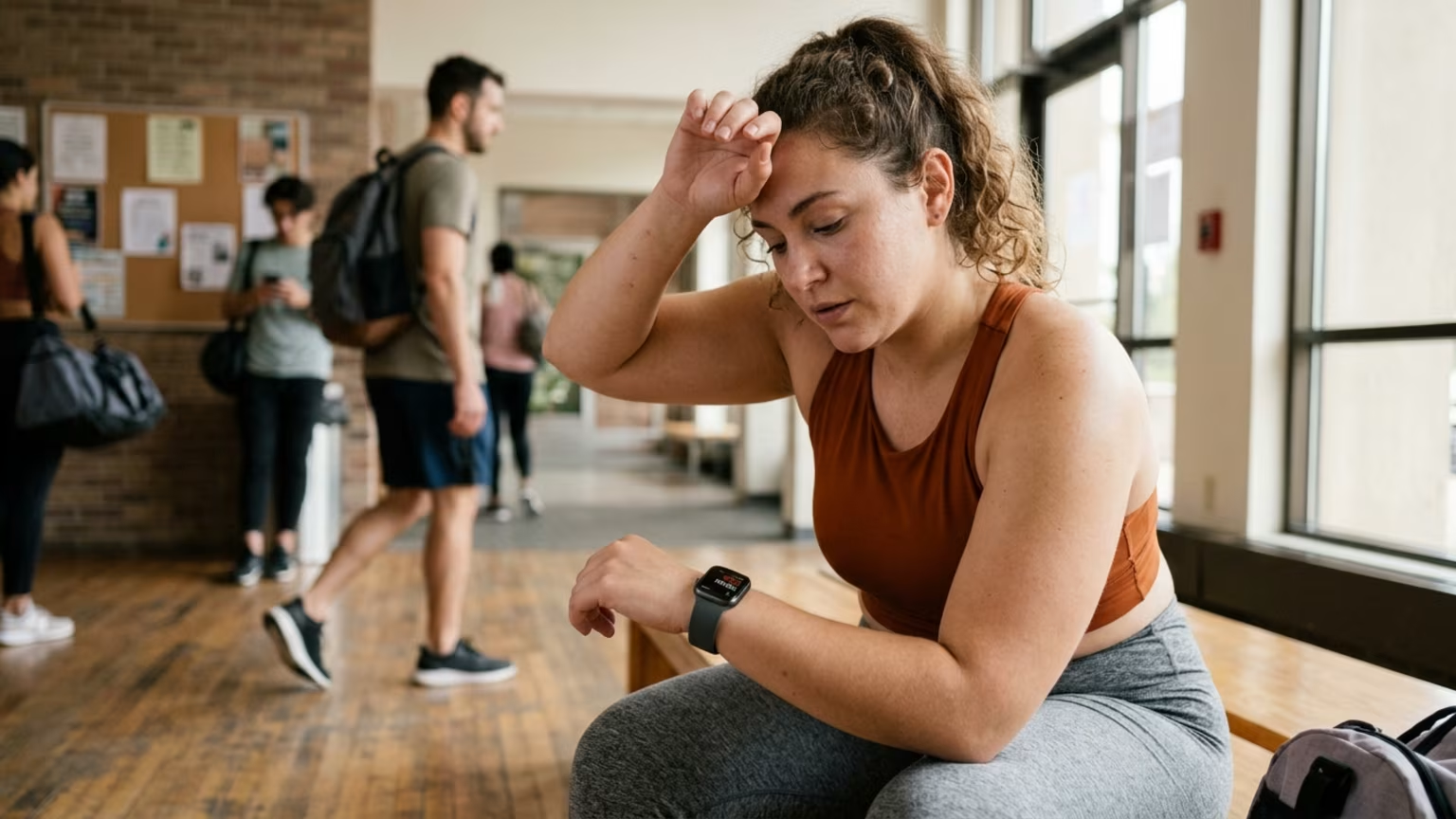

A study finds popular smartwatches overestimate calories burned, with accuracy worsening as body fat increases. Learn why trackers are not reliable calculators.





Your smartwatch is not a metabolic accountant, and trusting it to authorize your food intake is a reliable way to stall your progress. We have grown accustomed to wearing digital trackers that promise perfect mathematical certainty about our energy expenditure. We trade our morning workouts for a precise number of calories on a screen. This transactional mindset reduces the vast complexity of human metabolism to a simple addition and subtraction problem.
For years, I watched smart, capable people blame themselves when standard diet advice failed them. They would cut calories drastically, run themselves into the ground and inevitably regain the weight. It was heartbreaking to see. I realized we were treating a complex biological and psychological system like a simple math problem.
That was the turning point when I knew we had to focus on metabolic health and habits rather than just restriction. Real behavior change requires naming the actual factors driving our choices, such as appetite, nutrition, environment, movement and sleep. A recent Florida International University study illustrates exactly why relying on a wearable device for absolute dietary guidance is misguided. Researchers tested four popular smartwatches on 58 adults during a cycling workout.
They compared the watches' calorie estimates with clinical-grade measurements of actual energy expenditure, and the results revealed significant discrepancies. This study challenges the assumed precision of our favorite fitness gadgets. It highlights the inherent danger of trusting an algorithm over our own physical intuition. The findings encourage a necessary reevaluation of how we use consumer health data.
The fitness industry profits by framing human metabolism as a basic calculator where every calorie burned can be meticulously tracked. This narrative creates an illusion of complete control. It convinces consumers that a digital device understands their physiology better than their own internal signals. However, the collected data reveals a very different reality entirely.
In the Florida International University study, the tested watches generally overestimated calories by roughly 15% to 25%. All four watches demonstrated a tendency to overestimate the actual energy expenditure of the users. The Apple Watch Series 8 had the smallest average overestimate at approximately 21.6 to 22 kilocalories per trial. Meanwhile, the Samsung Galaxy Watch5 overestimated energy expenditure by approximately 56.8 to 57 kilocalories on average.
The Garmin Forerunner 955 overestimated calories by approximately 68.6 to 69 kilocalories. The Fitbit results were even more complicated for the researchers to interpret accurately. Researchers found that approximately 13% of Fitbit trials produced implausibly high readings, which they excluded from the main analysis. One separate analysis reported that including these excluded trials would have produced an average overestimate of roughly 129 kilocalories.
Perhaps the most critical finding was that accuracy worsened as participants' body-fat percentage increased. This specific pattern was observed across all four brands tested in the study. Lead author Jason Kostrna stated that "all of them struggled" and emphasized that body-fat percentage was important to the accuracy of the devices. The implications are significant for adults utilizing these trackers to guide their daily nutrition.
Our bodies are not isolated engines burning fuel at a predictable, uniform rate. The ecosystem of weight management is deeply influenced by sleep, daily stress, appetite regulation and long-term metabolic adaptations. When we obsess over a single calorie number on a watch, we ignore these foundational elements completely. Wearable technology cannot accurately measure how poor rest alters your hunger hormones or how chronic stress affects your cellular recovery.
The researchers suggested that smartwatch algorithms may have been developed mainly using relatively lean populations. They also noted that these algorithms might not adequately account for differences in blood flow and wrist tissue associated with different body-fat levels. While the precise reason for the body-fat effect remains unresolved, the resulting discrepancy is quite clear. Relying on an algorithmic estimate to manage your nutrition ignores the biological reality of your unique physiology.
WeightRestart focuses on addressing the entire biological environment rather than chasing mathematical perfection on a digital screen. When a device overstates exercise expenditure, a person might eat back calories that were never actually burned. This unintentional compensation can quickly erase a desired energy deficit over time. True progress requires a broad approach to understanding energy balance and appetite instead of relying on a flawed digital readout.
Understanding the impact of rest is equally important when evaluating our overall health behaviors. A lack of sufficient rest can significantly influence our dietary choices and overall energy output the next day. It is vital to recognize how a lack of rest alters metabolic signals to drive increased daily consumption. Wearables often fail to connect the data points between a poor night of sleep and an inaccurate exercise reading.
The evidence does not suggest that smartwatches are completely useless for your personal health journey. Instead, it strongly indicates that their numbers should be treated as rough estimates rather than guaranteed calorie credits. These devices are excellent tools for monitoring behavioral consistency, measuring elapsed time and tracking resting heart rate trends. They are simply not designed to dictate exactly how much food you should consume after completing a workout.
Adults seeking sustainable body composition changes should prioritize consistent movement over precise calorie counting. General guidelines recommend combining weekly aerobic activity with muscle-strengthening work on at least two days. Building a habit of regular strength training provides structural metabolic benefits that a wearable device cannot adequately quantify. The FIU study tested cycling specifically, so its results should not automatically be treated as a precise estimate for walking or resistance training.
Using real-world outcomes as a calibration check is far more effective than trusting a screen. If someone consistently follows a plan but sees no expected change in weight or waist measurements, the appropriate response is to review the overall approach. This review should include looking at food intake, daily activity, sleep quality and recovery times. It is much safer to adjust your overall habits than to assume the smartwatch calorie number is flawlessly accurate.
Rather than reacting to a single workout number, evaluate your progress through multi-week trends and physical adaptations. Pay close attention to how your clothes fit, your daily energy levels and your physical strength. It is highly beneficial to focus on tracking functional muscle over time instead of obsessing over daily calorie estimates. Use your smartwatch to build sustainable habits rather than using it to validate your dietary choices.
Taking a broader view helps you avoid the common trap of using exercise as a strict mechanism for burning off meals. Your movement should support your cardiovascular health, preserve your muscle mass and improve your daily physical function. When we detach our nutrition from our fitness tracker, we build a much healthier relationship with our physical activity. This mindset shift is essential for avoiding the pitfalls of yo-yo dieting and extreme fitness culture.
When we stop viewing exercise as a financial transaction for food, we can finally appreciate movement for its true physiological benefits. A digital tracker can easily capture the duration of your effort, but it cannot measure the resilience you are building. Sustainable health requires trusting the process more than trusting a glowing screen. How might your relationship with food and movement change if you stopped trying to balance an invisible ledger?
WeightRestart shares research-led guidance on weight loss, metabolism, nutrition, strength, appetite, sleep and recovery. Our goal is to make complex health information clear, practical and useful for people building progress they can maintain.



Learn how to build a weight-management approach around better information, realistic expectations and habits you can keep using.
read the blog


