

Recent data highlights how walking, resistance training and balance work support bone density and muscle preservation for midlife adults.





On September 9, 2026, the BMJ published a systematic review examining how exercise impacts bone health in adults over 40. Shortly after, on October 7, 2026, The Straits Times published an article discussing the relationship between movement, nutrition and musculoskeletal health. Together, these reports highlight an important shift in how we understand midlife physical activity. Rather than viewing exercise solely as a tool for aesthetic change, researchers are assessing how it preserves our physical framework.
At WeightRestart, we translate complex clinical research into simple, actionable steps for everyday life. Many adults aged 35 to 60 feel frustrated by conflicting nutrition research and extreme fitness culture. Building sustainable health is not a matter of pure willpower. It requires establishing consistent daily habits around physical activity, recovery and nutrition.
Taking a body-neutral approach focuses the conversation on metabolic health and long-term functional capacity. If you want to learn more about evidence-led weight management, our focus remains on the entire ecosystem of physical well-being. Adding short physical activity sessions throughout the day can be a practical way to support these structural goals. Consistency over time matters more than intensity.
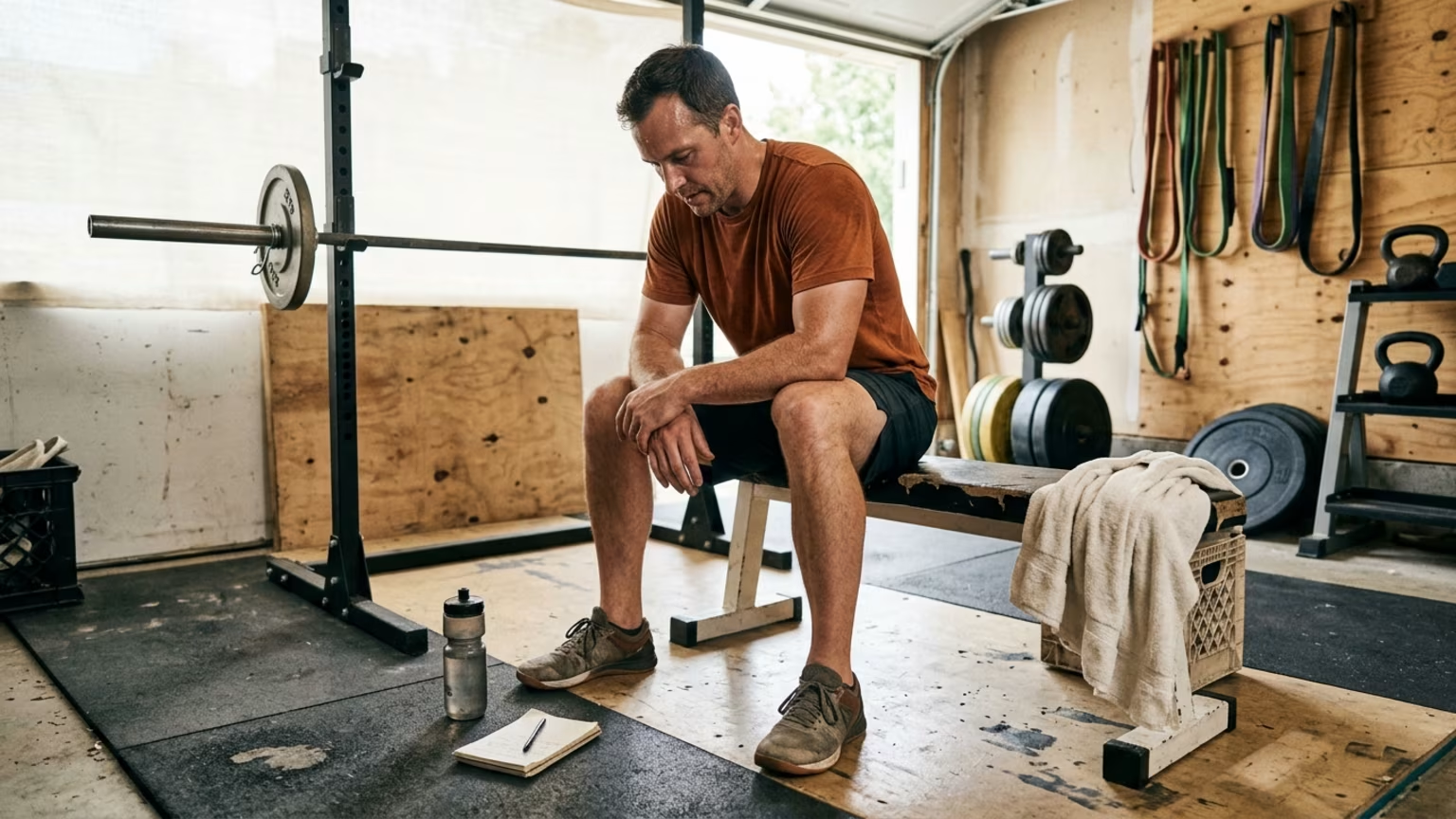
The human body adapts continuously to the physical demands placed upon it. The branded article in The Straits Times outlines how different forms of movement load the body in unique ways. It states that weight-bearing activities, such as stair climbing and brisk walking, actively load the skeleton. Meanwhile, resistance exercises, including squats, resistance bands and weight lifting, challenge both the muscles and the bones.
By applying these specific stressors, everyday movement encourages the body to maintain its structural integrity over time. For adults seeking sustainable habits without shame, finding accessible ways to load the muscles is highly beneficial. This practical approach helps bridge the gap between complex science and daily life. It proves that movement does not have to be extreme to be effective.
There is also an important biological link between our immune system and our physical framework. Rheumatologist Dr Tan Teck Choon, quoted in the branded article, explained that immune dysregulation or chronic inflammation can adversely affect musculoskeletal health. In cases involving chronic inflammation, a loss of both bone and muscle mass is frequently observed. This suggests that managing internal inflammation is just as crucial as external movement for protecting long-term mobility.
Nutrition plays a foundational role in maintaining this complex biological balance. The article connects mobility directly with immune function and dietary intake. It notes that calcium and vitamin D are important for bone strength, while nutrients such as zinc, iron and vitamin A support normal immune function. Providing the body with these resources helps maintain baseline physical capabilities.
However, calculating exactly what your body actually needs can prevent unnecessary anxiety about dietary perfection. A calm, research-led approach to nutrition helps adults make better-informed choices for their changing bodies. Understanding these basic inputs allows for more sustainable long-term health planning. It removes the stress of trying to achieve perfect dietary records every single day.
When commercial media outlets cover health topics, distinguishing between proven outcomes and general associations requires careful attention. The Straits Times piece was explicitly published as branded content on October 7, 2026. It names and promotes a specific product, Anlene Total+ Nutritional Powder Beverage. The article presents this beverage as a complement to regular meals rather than a total food replacement.
Readers should view this product placement as commercial promotion, not an independent scientific finding that a specific powder guarantees immune resilience. Dr Tan also cautioned readers that nutritional studies are often about broad associations rather than direct cause and effect. Adequate vitamins and minerals help maintain baseline functions relevant to mobility and activity, but they are not standalone cures. We must evaluate health claims with a clear understanding of what the science actually supports.
Sweeping promises about specific foods preventing illness often strip away the nuanced reality of human biology. We promise clear, shame-free guidance that makes uncertainty visible, helping you navigate these complex commercial messages. Similarly, broad claims about exercise routines and fall prevention require careful interpretation. The primary article suggests that balance and core exercises can help reduce the likelihood of falls.
However, it does not provide a specific dose, a tested routine or a quantified fall-risk reduction metric. The suggested exercises are practical examples rather than a detailed or individualized training plan. Furthermore, the suggested activities are not a universal prescription for every adult. The article specifically advises people with osteoporosis or other medical conditions to ask a healthcare professional about suitable exercise.
For individuals managing complex metabolic or skeletal conditions, personalized clinical guidance is essential. Seeking professional advice ensures that any new movement habit supports health safely. Relying purely on generalized commercial content can lead to frustration and burnout. Individualized support is often necessary for sustainable success.
The September 2026 BMJ systematic review and network meta-analysis provides concrete data on physical activity and bone density. This extensive review included 124 randomised trials and 18,429 participants aged 40 and older. Its specific fracture analysis looked at 26 trials and 11,132 participants. Gathering this volume of data allows researchers to observe broader trends regarding exercise in midlife adults.
The review found that certain activities are associated with measurable physical changes. Brisk walking or jogging, alongside combined aerobic-resistance exercise, were associated with a 0.013 g/cm² difference in lumbar-spine bone mineral density compared to controls. Additionally, brisk walking or jogging may benefit femoral-neck bone density by 0.009 g/cm² and total-hip bone density by 0.021 g/cm². These figures provide a helpful benchmark for understanding how the skeleton responds to consistent loading.
Despite these positive associations, the study authors called for a highly cautious interpretation of their findings. They rated the certainty of the evidence as low for walking or jogging and low to moderate for combined exercise. They also reported that fracture-risk estimates for mixed aerobic and mind-body exercise were based on low-certainty evidence. Just as experts are interpreting metabolic measurements with more nuance, bone density estimates require a careful look at the underlying certainty of the data.
When estimating a beneficial dose of exercise, the BMJ review authors offered a cautious approximation. They suggested that clinically meaningful benefits might generally be achieved at about 600 MET-minutes per week. They equated this measurement to roughly two to three hours of brisk walking or jogging. The authors described a dose-response analysis whose relationships appeared nonlinear and generally inverted-U-shaped.
This two to three hour estimate is a study-derived approximation for bone-density outcomes, not a guaranteed prescription for every individual. It suggests a reasonable baseline target for general physical health. Finding ways to incorporate this movement sustainably is a key part of long-term success. It highlights why everyday activities matter for our structural health.
Future research will need to clarify the optimal combinations and specific doses of exercise required to support healthy aging. While current data shows that walking, resistance training and balance work offer potential benefits, the precise routines needed for proven fall prevention remain uncertain. Scientists will likely conduct longer trials focused on direct clinical outcomes, such as actual fracture rates, rather than relying solely on bone mineral density changes. Until these clearer clinical guidelines emerge, adults can focus on incorporating varied, sustainable physical activities into their weekly routines while consulting their healthcare providers for personalized advice.
WeightRestart shares research-led guidance on weight loss, metabolism, nutrition, strength, appetite, sleep and recovery. Our goal is to make complex health information clear, practical and useful for people building progress they can maintain.




Learn how to build a weight-management approach around better information, realistic expectations and habits you can keep using.
read the blog


