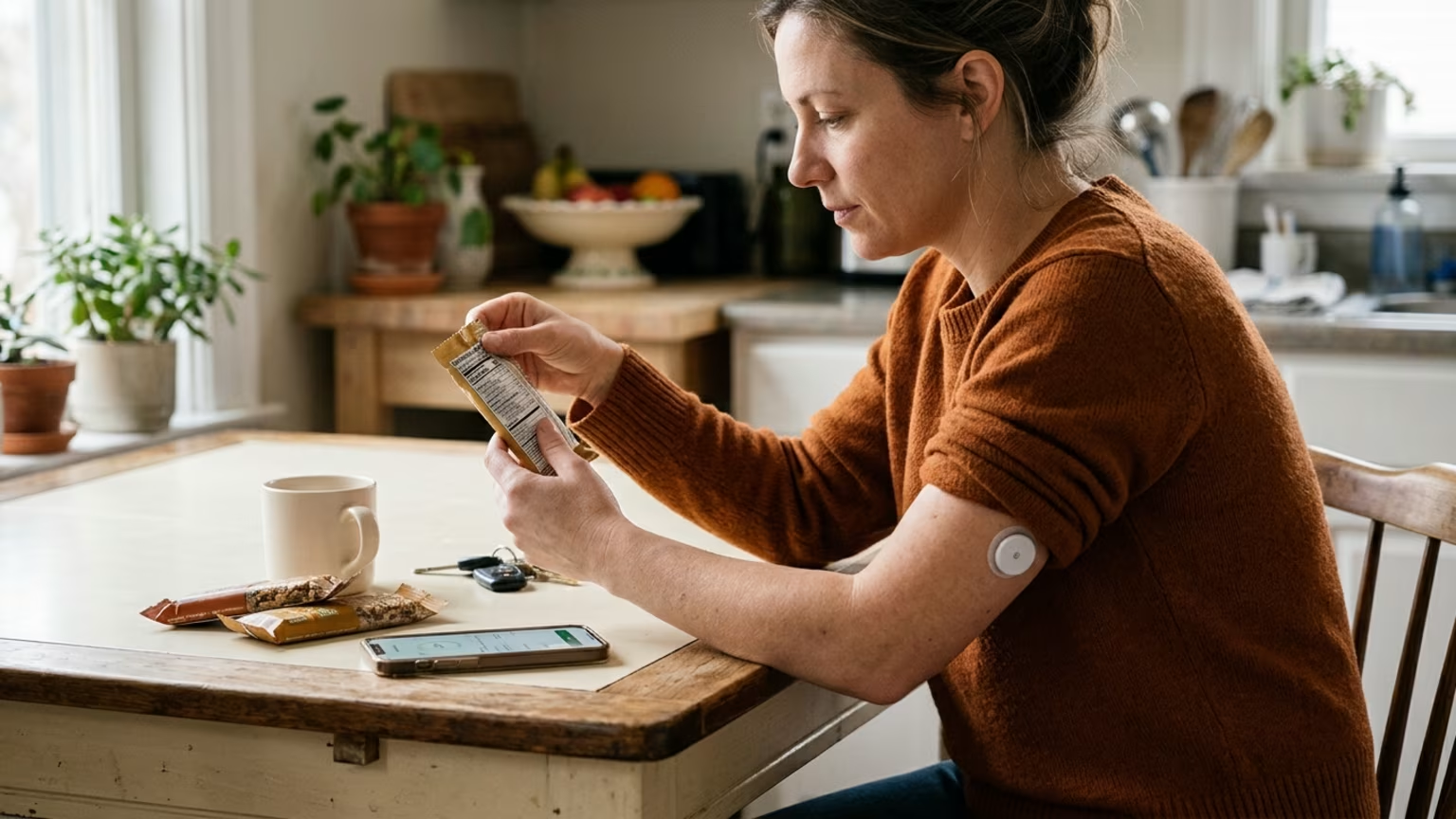

The two-year SWITCH trial shows how structured behavioral programs drive long-term weight management, proving that sustainable habits outweigh beverage choices.





On August 4, 2026, the British Journal of Nutrition published new findings regarding the long-term effects of non-nutritive sweetened beverages and water on body weight. The University of Liverpool conducted a randomized open-label equivalence trial known as the SWITCH study. The trial compared water with non-nutritive sweetened beverages during an extensive behavioral weight-management program. The research focused on 493 adults with a body mass index between 27 and 35. These participants regularly consumed cold beverages before the study began.
Navigating conflicting nutrition and diet research is a major challenge for adults seeking sustainable health improvements. The publication provides a detailed two-year look at how continuous behavioral support interacts with specific beverage assignments to influence body weight over time. The findings offer a clinical perspective on habit formation, reducing the noise around extreme diet regimens. By examining both groups over a prolonged period, researchers generated actionable data on how structural support impacts overall metabolic health without relying on restrictive fitness industry hype.
The core mechanism observed in the SWITCH trial goes far beyond the simple selection of a daily drink. The intervention tested the assigned beverages within a highly structured behavioral weight-management program. Participants completed an initial 12-week weight-loss phase with weekly group meetings to establish foundational habits. This rigorous early phase was followed by a 40-week assisted maintenance period featuring monthly meetings. A final 52-week period was completely voluntary and lacked any routine meetings.
Weight change is never just a matter of willpower. It is heavily influenced by a person's physical environment, daily nutritional routines and ongoing psychological support. By nesting the beverage choice within a comprehensive behavioral program, the study highlights how regular guidance shapes long-term physical outcomes. The participants were assigned to drink at least two 330 milliliter servings of their allocated beverage each day. The sweetened drinks included commercially available products whose predominant sweeteners were aspartame, acesulfame potassium and sucralose.
The 330 milliliter servings required by the trial design ensured consistent consumption levels across the participant pool. However, evaluating the volume of fluids consumed tells only a fraction of the story regarding human metabolism. Our approach at WeightRestart highlights that sustainable weight management depends on addressing the entire behavioral ecosystem. By standardizing the beverage intake, the researchers could better observe how the structured meetings supported broader lifestyle adjustments.
The routine group meetings likely helped participants navigate complex appetite signals and nutritional decisions outside of those two daily drinks. The trial underscores the importance of a well-designed ecosystem for sustaining health over multiple years. When individuals participate in regular group meetings, they build resilient routines that support sustainable nutrition and daily movement. This aligns closely with broader findings on how structured lifestyle interventions improve metabolic health over time.
At WeightRestart, we translate complex clinical research into simple, actionable steps for everyday life. We recognize that a beverage alone does not create this required operational structure. The behavioral support system provides the steady foundation needed for metabolic changes to persist through periods of high stress. The SWITCH trial demonstrates that focusing on a body-neutral approach and long-term habits is far more critical than agonizing over a single fluid choice.
Mainstream media coverage often presents diet drinks or water as standalone solutions for effortless weight control. Headlines frequently suggest that simply swapping one beverage for another will automatically trigger major physical changes. The SWITCH trial data tells a much more nuanced and context-dependent scientific story. The study authors state clearly that people may lose weight and maintain it while drinking either beverage type as long as they actively participate in a weight-management program. The findings absolutely do not establish that either beverage choice independently causes weight loss.
It is also critical to understand the broader scientific landscape regarding artificial sweeteners. The trial paper explicitly notes that World Health Organization guidance suggests non-nutritive sweetened beverages should not be used to help achieve weight control. This conditional WHO recommendation relies on a wider evidence base that includes varying degrees of uncertainty and possible confounding factors. Readers who want to set sustainable weight-loss goals should look at total dietary patterns rather than isolated drink choices.
Navigating conflicting advice requires separating highly controlled clinical variables from everyday lifestyle choices. Mainstream media articles frequently rush to declare one specific product superior without examining the required support system behind the results. The trial compared beverage assignments in a very particular academic setting rather than establishing a universal beverage prescription. Removing fitness industry hype from these conversations allows adults to make clearer, shame-free decisions about their personal routines.
Transparency in research funding is another deeply important element of this scientific reality check. The clinical trial was funded by the American Beverage Association. The published paper reports that the American Beverage Association was not involved in the trial design, conduct, data analysis or interpretation. However, the industry association was given an opportunity to review the manuscript before the academic authors made their final content decisions. This disclosed industry funding relationship is highly relevant context for anyone independently evaluating the quality of the evidence.
For adults navigating the hype versus reality of emerging weight-loss strategies, removing shame from the equation is essential. The data supports a calm, factual approach where beverage choices are seen as just one small component of a larger lifestyle ecosystem. Extreme rules often lead to burnout, whereas understanding the scientific context supports capable and confident decision-making.
The clinical outcomes from the SWITCH trial offer specific, measurable data points on long-term weight management. Out of the 493 initially enrolled adults, exactly 220 participants completed the full 104-week clinical assessment. The remaining sample included 117 people in the water group and 103 in the sweetened beverage group. The substantial rate of attrition over the two years means the final results reflect only those individuals who remained engaged in the testing protocol.
At week 104, participants in the water group had lost an average of 3.7 kilograms from their baseline starting weight. Those in the sweetened beverage group lost an average of 4.8 kilograms over the exact same period. The researchers reported that the between-group difference was not statistically significant. Both groups remained below their baseline weight, and the paper confirms statistical equivalence between the two beverage groups for weight change at the two-year mark.
The study also tracked secondary physical measurements across the remaining participant pool. The published paper reports reductions in both waist and hip circumference in both trial groups, and there were no significant differences between them. A smaller body-composition subset showed reductions in both fat mass and fat-free mass across both designated groups. This subset data emphasizes why comprehensive methods for tracking body composition provide much better insights than a standard bathroom scale. Tracking these internal metrics over time helps individuals ensure they are prioritizing actual metabolic health over arbitrary numbers.
Some specific biomarker comparisons at week 104 showed statistical differences between the two distinct groups. These specific measurements included total cholesterol, diastolic blood pressure and HbA1c levels. However, the study authors stated that these observed differences did not meet their established thresholds for clinical importance. They also clearly noted that some of these biomarker comparisons relied on particularly small sample sizes.
The authors identified the single-site English setting, lack of race and ethnicity data and missing blood samples for some participants as key limitations that constrain generalizability. Furthermore, the fact that the final 52 weeks were entirely unassisted demonstrates how challenging habit maintenance can be without continuous support. These clinical observations remind us that long-term physical changes require sustainable infrastructure rather than quick, temporary adjustments.
Future research must rigorously isolate the distinct metabolic effects of specific beverages from the broader impact of intensive behavioral counseling. We need long-term studies conducted across diverse, multi-site global populations to properly improve the generalizability of these initial findings. The intersection of hydration, artificial sweeteners and long-term habits remains a complex area of study requiring extensive ongoing observation. Future trial designs should incorporate robust post-program tracking to see if behaviors persist once all structural assistance concludes. Additional independent investigations should track detailed biomarker data over multiple years to clarify the subtle metabolic shifts associated with prolonged commercial sweetener consumption. Until larger independent trials examine these variables, adults should focus on maintaining sustainable nutritional habits rather than treating any single beverage as an isolated health solution.
WeightRestart shares research-led guidance on weight loss, metabolism, nutrition, strength, appetite, sleep and recovery. Our goal is to make complex health information clear, practical and useful for people building progress they can maintain.






Learn how to build a weight-management approach around better information, realistic expectations and habits you can keep using.
read the blog