
Learn why clinical science questions proprietary sleep scores and how to use wearable trackers without developing orthosomnia or sleep-related anxiety.





Myth: A perfect daily sleep score from your wearable device is a mandatory medical standard for health.
Reality: That single number on your screen is a manufacturer estimate rather than a validated clinical metric.
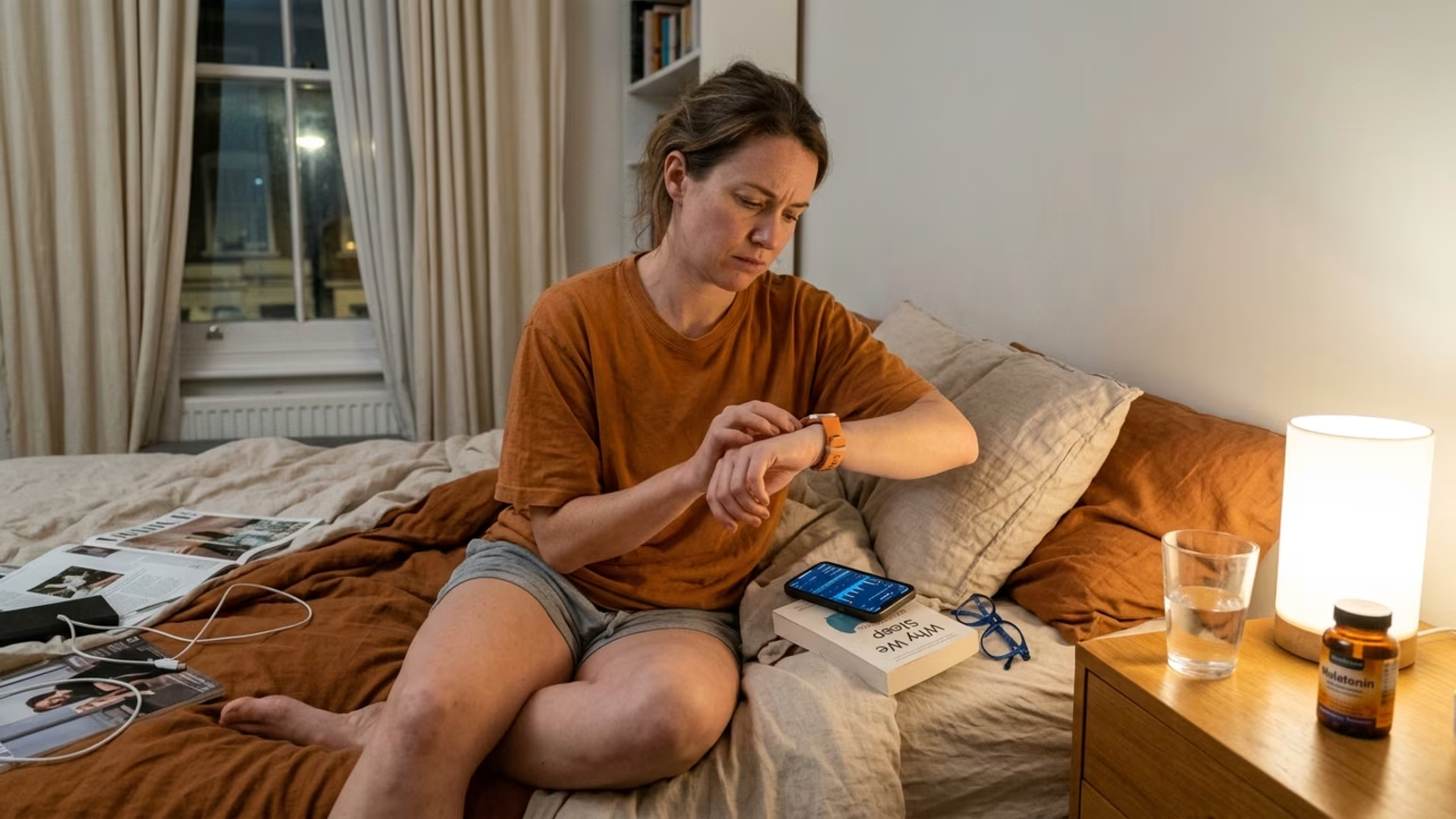
The modern trend of "sleepmaxxing" has turned natural rest into a highly technical project. People now attempt to optimize their nights through tracking devices, specialized sleep scores, supplements, and white-noise recordings. However, on September 6, 2026, BBC Russian published a translated report highlighting how this intense focus often backfires. Dr Alanna Hare, a sleep-medicine consultant at London’s Royal Brompton Hospital, told the BBC that a "sleep score" is not a recognized scientific measure.
She described it instead as a concept created by manufacturers. Treating this proprietary grade as a universal health standard creates unnecessary pressure. Dr Hare sees value in the increased public attention to sleep, but she warns that tracker data can generate significant anxiety. This concern generates additional questions that themselves interfere with the ability to fall asleep.
The pursuit of perfect metrics often disrupts the exact biological recovery process you are trying to improve. A rigid focus on technology can easily turn a relaxing night into a stressful performance. True metabolic health relies on consistent habits rather than manufactured perfection. The clinical evidence suggests that stepping away from the data might be the best way to rest.
The desire to quantify rest makes logical sense for adults managing busy schedules. For years, people struggling with fatigue or trying to improve their body composition sought a reliable way to measure their recovery. Weight management involves an ecosystem of sleep, nutrition, environment, and movement rather than just willpower. Because sleep advice is increasingly bundled with diet and exercise recommendations, people naturally wanted a tool to track their progress.
The first commercial fitness tracker with sleep-analysis capability identified in the BBC article was the Fitbit Classic. Its release in 2009 offered a compelling new window into a previously invisible bodily process. Since that initial release, brands like Garmin, Whoop, Apple, Oura, Ultrahuman, and RingConn have rapidly expanded the consumer market. Consumers logically assumed that these high-tech wearables were delivering absolute medical truths.
The BBC article notes that consumer devices commonly divide sleep into specific stages. They estimate periods of wakefulness, light sleep, deep sleep, and REM sleep. The devices then combine their estimates into a single proprietary score. For adults frustrated by conflicting health advice, a daily numerical grade felt like a reliable and objective anchor.
The fitness industry often promotes extreme regimens that lead to burnout and confusion. In contrast, checking a morning score felt like a manageable and scientific approach to wellness. It is easy to see why we handed our sleep confidence over to consumer technology. A specific number on a screen feels much more actionable than vague lifestyle advice.
We naturally want clear instructions when managing our habits and body composition. However, turning a natural biological function into a rigid daily test sets a dangerous precedent. The original goal of measuring recovery slowly morphed into a stressful obligation.
The clinical reality of sleep measurement is far more complex than a single morning grade. Sleep specialist Neil Stanley told the BBC that commercial devices largely infer sleep from physical movement. Direct and precise measurement requires monitoring actual brain activity in a clinical setting. Turning sleep into a game of targets and scores can create a frustrating feedback loop.
The device produces a number, the user adopts a rigid goal, and concern about reaching that target makes sleep more difficult. This cycle has led to a phenomenon the BBC describes as "orthosomnia." This term describes an excessive preoccupation with achieving supposedly perfect sleep. Although the condition is not officially recognized as a separate disorder in the United Kingdom, the behavioral trap is very real.
People become so obsessed with optimizing their rest that the obsession itself causes insomnia. The article reports that some patients bring fitness-tracker data to clinicians during medical appointments. They mistakenly assume that the consumer device readings alone prove they have a medical sleep disorder. Clinical professionals must then spend time explaining the limitations of wearable technology.
Your belief about your sleep quality can directly impact your physical energy levels. The BBC describes an Oxford University experiment that illustrates this psychological effect clearly. Participants were given randomly generated sleep-quality scores that were entirely unrelated to their actual sleep. Participants who were told they had slept badly subsequently reported greater fatigue and lower alertness.
They also performed worse on clinical tests of attention and reaction speed. The arbitrary number influenced their subjective fatigue and their objective physical performance. This demonstrates why relying purely on an unvalidated grade can actively harm your daily well-being. Furthermore, the precision of these consumer devices remains a subject of ongoing debate and legal scrutiny.
The BBC reports that a collective lawsuit filed against Oura in San Francisco alleged that the company’s rings cannot accurately determine sleep quality and sleep stages. Oura told the BBC that it stands behind the scientific basis of its research and claims. The company stated it aims to distinguish clearly between metrics it measures and metrics it estimates. A 2026 review of wrist-worn trackers similarly concluded that discrepancies remain between consumer devices and criterion measurements.
This review found that wearable accuracy has improved but continues to vary significantly by brand, activity, and population. Because of this variability, caution is needed when precise medical measurement is required. Relying on an unvalidated score to dictate your daily choices can lead to misguided lifestyle changes.
Acknowledging these measurement limitations does not mean all wearables are entirely useless. A 2026 PubMed-indexed study found preliminary agreement between Apple Watch measurements and the GENEActiv actigraphy device. This study noted useful agreement for total sleep time, time awake in bed, and sleep efficiency. The reported intraclass correlation coefficients for these variables were 0.95, 0.72, and 0.69 respectively.
The authors of this study described the findings as preliminary and called for larger investigations. Consumer wearables can provide useful insights when viewed through a realistic and cautious lens. The nuance lies in how you choose to interpret the data your device provides daily. A tracker can be a helpful tool if it merely prompts you to notice broad behavioral patterns.
For example, a device might help you realize that your bedtime is consistently drifting later over the month. This information is valuable when building better recovery and stress habits for your overall metabolic health. The danger arises when you allow a proprietary composite score to act as a definitive medical diagnosis. If your tracker repeatedly makes you anxious, consider reducing alerts or taking a temporary break from the device entirely.
The BBC reports that tracker-related concern can itself become a significant part of the sleep problem. You should use tracking only if it helps you make a useful, practical decision about your routines. If the device simply makes you worry about whether you are capable of working or exercising, the data is no longer serving your health. The American Academy of Sleep Medicine recommends that adults obtain at least seven hours of sleep per night.
They emphasize that consistent bedtimes and wake times can benefit adults, including on weekends. Focusing on predictable sleep regularity provides a simpler behavioral benchmark than trying to maximize a daily grade. For adults dealing with chronic issues, the focus should shift to medical evaluation rather than consumer tracking. The American Academy of Sleep Medicine advises people with chronically disrupted sleep to seek professional help.
Symptoms like loud snoring, witnessed breathing pauses, and excessive daytime sleepiness require proper medical assessment. Sleep apnea is diagnosed through clinical sleep testing rather than a consumer score.
Final verdict: You can stop worrying about achieving a flawless score on your fitness app. The clinical evidence clearly shows that overanalyzing proprietary metrics often creates anxiety that disrupts your rest. Instead of relying on complex technology to grade your night, focus on practical and flexible sleep hygiene. The same all-or-nothing mindset that drives extreme dieting can turn your recovery into a daily test.
The BBC offers practical advice that is deliberately less precise than many commercial sleep protocols. The article does not mandate rigid rules, such as forcing a room to be exactly 16°C or completely silent. They simply recommend keeping your bedroom relatively cool, dark, and quiet to support natural rest. Seeking bright light in the morning and engaging in light physical activity can also help regulate your daily energy.
Additionally, they suggest eating a generally healthy Mediterranean-style diet filled with a variety of plant foods. Focusing on daily routine alignment is far more effective than adding unnecessary complexity to your night. The American Academy of Sleep Medicine also recommends setting aside 30 to 60 minutes before bed to step away from screens and demands.
Takeaway: If your tracker repeatedly makes you anxious, hide the score tonight and focus solely on a 30-minute, technology-free wind-down routine.
WeightRestart shares research-led guidance on weight loss, metabolism, nutrition, strength, appetite, sleep and recovery. Our goal is to make complex health information clear, practical and useful for people building progress they can maintain.




Learn how to build a weight-management approach around better information, realistic expectations and habits you can keep using.
read the blog