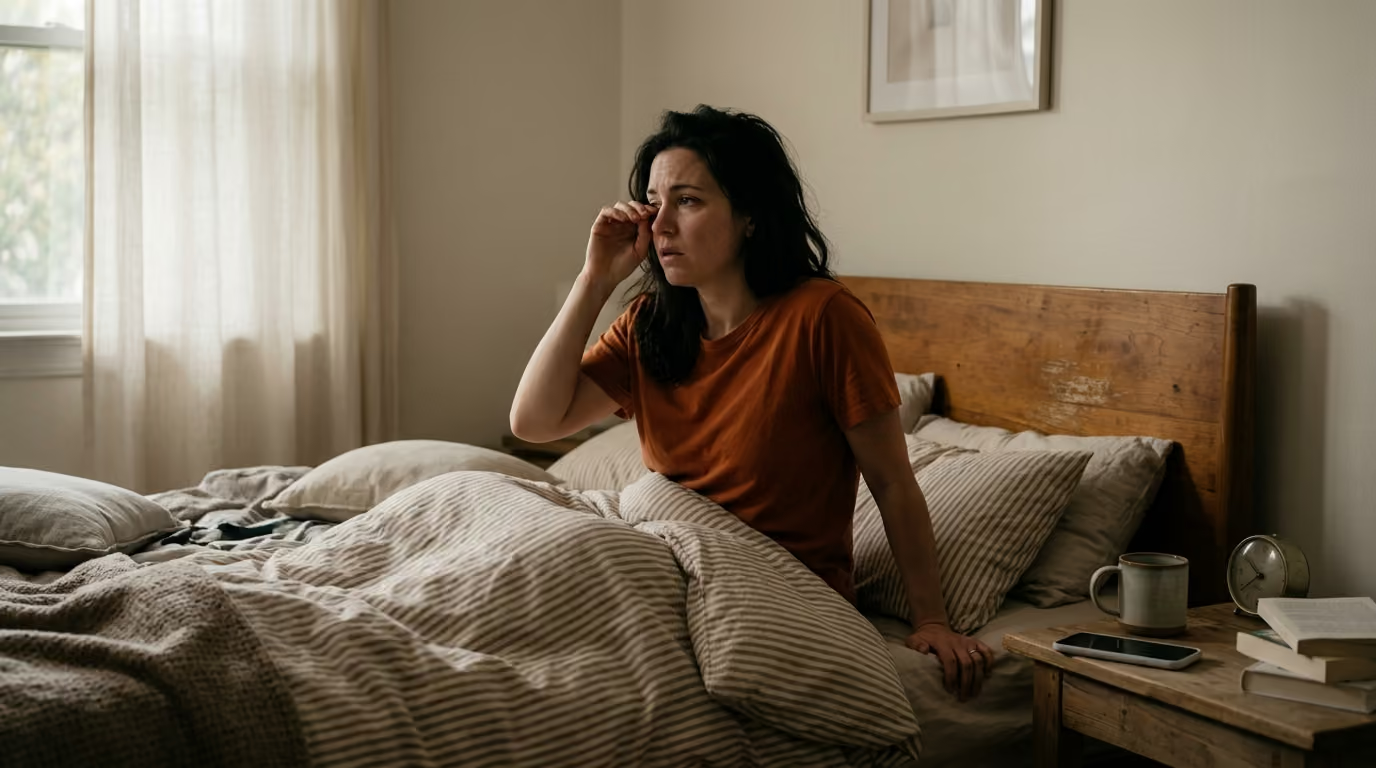

Cognitive behavioral therapy for insomnia targets conditioned hyperarousal and sleep regulation mechanisms through structured behavioral scheduling.





Cognitive behavioral therapy for insomnia, commonly known as CBT-I, is a structured, evidence-based psychological treatment that retrains the brain and body for consolidated sleep. It is not general lifestyle advice, a collection of relaxation tricks, or a lecture on keeping your bedroom cool. Instead, CBT-I is a targeted clinical protocol that dismantles the learned behaviors, physiological hyperarousal, and anxious thought patterns that keep sleep disruption alive over time.
This guide examines the biological mechanisms that govern human rest, the specific behavioral components of the therapy, and the clinical evidence supporting its first-line status. You will learn how stimulus control resets environmental conditioning, how sleep scheduling rebuilds natural sleep pressure, and how cognitive restructuring reduces nighttime dread.
Cognitive behavioral therapy for insomnia is a short-term, multicomponent intervention designed to resolve chronic sleep disruption by altering learned wakefulness. Standard medical guidelines from the American Academy of Sleep Medicine identify CBT-I as the primary recommended treatment for chronic insomnia in adults. A standard course usually lasts between four and eight sessions under the guidance of a trained clinician, although digital and group formats also exist.
Insomnia itself is defined clinically by persistent difficulty falling asleep, staying asleep, or waking too early despite having adequate opportunity for rest. When these difficulties occur at least three nights per week for three months or longer, and create noticeable daytime distress or fatigue, the condition is classified as chronic insomnia disorder. According to the Centers for Disease Control and Prevention, roughly 14.5 percent of adults in the United States report frequent trouble falling asleep.
Many people confuse CBT-I with generic sleep hygiene, but the two approaches operate on entirely different levels. Sleep hygiene consists of basic environmental and lifestyle tips, such as avoiding late-day caffeine, keeping the bedroom dark, and maintaining a comfortable room temperature. While these basic habits support healthy rest, clinical guidelines explicitly advise against using sleep hygiene as a standalone treatment for chronic insomnia.
Sleep hygiene assumes that poor sleep results from unfavorable conditions or minor bad habits. In contrast, CBT-I addresses the powerful neurobiological and behavioral feedback loops that keep insomnia going long after the initial cause has passed. To understand why standard advice fails, sleep scientists rely on the 3P model of insomnia:
Predisposing factors represent your baseline vulnerability to sleep disruption. These include genetic traits, a naturally higher level of physiological arousal, a history of anxiety, or a biological tendency toward light or irregular sleep. These traits do not cause chronic insomnia on their own, but they lower the threshold required for sleep disruption to take root.
Precipitating factors are the acute events that trigger the initial bout of sleeplessness. Common triggers include major psychological stress, physical injury, acute illness, the loss of a loved one, rapid travel across time zones, or sudden job disruptions. In most people, sleep returns to normal once the stressful event resolves, but in vulnerable individuals, the disruption can linger.
Perpetuating factors are the behaviors and cognitive adaptations that people adopt to cope with poor sleep. When you sleep poorly, you might spend ten hours in bed to catch whatever sleep you can, take late-afternoon naps, cancel morning commitments, or constantly check the clock. These well-intentioned adaptations weaken your biological sleep drive, misalign your body clock, and condition your brain to associate the bed with frustration. CBT-I focuses almost entirely on these perpetuating factors, dismantling the maintaining cycle so natural sleep can resume.
To learn more about broader wellness habits, you can review our sleep and recovery habits section.
To understand how CBT-I works, one must first understand the biological machinery that produces consolidated human sleep. Sleep is regulated primarily by the interaction of two distinct systems, often described in neurobiology as the two-process model of sleep regulation. When chronic insomnia develops, a third factor, known as conditioned psychophysiological arousal, interferes with these biological drivers.
Process S is the homeostatic sleep drive, which acts like an internal biological pressure gauge. From the moment you wake up, your brain continuously burns energy in the form of adenosine triphosphate. As this cellular fuel breaks down, a neurochemical called adenosine steadily accumulates in the basal forebrain and other regulatory centers.
Higher levels of adenosine create stronger biochemical pressure to sleep. When you remain awake for 16 continuous hours, adenosine reaches a peak that promotes deep, slow-wave rest. When a person with insomnia spends excessive, fragmented time lying in bed resting or napping during the day, they dissipate this adenosine pressure prematurely. As a result, the homeostatic drive remains too weak at bedtime to pull the brain into deep, sustained sleep.
Process C is the circadian timing system, driven by the master biological clock located within the suprachiasmatic nucleus of the hypothalamus. This internal pacemaker runs on an approximate 24-hour rhythm, synchronized daily by external environmental cues known as zeitgebers. The primary zeitgeber is morning light exposure, which signals the master clock to suppress melatonin and raise daytime alertness.
The circadian system generates an alerting signal that changes in strength across the 24-hour day. This alerting signal naturally peaks in the early evening to counter the heavy accumulation of adenosine, preventing you from collapsing before bedtime. When wake times shift erratically from day to day, the suprachiasmatic nucleus loses its reference point. The alerting signal fires at irregular hours, making sleep onset unpredictable.
The third major factor in chronic insomnia is conditioned hyperarousal. In a healthy sleeper, the bed is a powerful classical conditioning cue for relaxation and sleep. In a person with chronic insomnia, months of tossing, turning, worrying, and monitoring the clock transform the bed into a conditioned cue for vigilance and frustration.
This learned association activates the sympathetic nervous system and the hypothalamic-pituitary-adrenal axis. Heart rate, core body temperature, metabolic rate, and cortisol secretion increase right as the person attempts to settle down. Even if adenosine pressure is high and the circadian rhythm is aligned, this autonomic arousal prevents the brain from transitioning into slow-wave sleep. CBT-I directly extinguishes this conditioned arousal by separating wakeful struggle from the physical sleeping environment.
Understanding this biological interplay also supports broader health goals, as chronic sleep disruption alters appetite regulation and glucose metabolism. Readers interested in managing metabolic health can explore our appetite and habit formation resources to see how daily routines influence overall energy balance.
The scientific foundation supporting CBT-I is exceptionally strong. Decades of randomized controlled clinical trials have demonstrated that CBT-I is both safe and effective across diverse adult populations. Major medical bodies, including the American Academy of Sleep Medicine, the American College of Physicians, and the European Sleep Research Society, designate CBT-I as the first-line intervention for chronic insomnia.
Meta-analyses evaluating psychological treatments for insomnia show that CBT-I produces substantial clinical improvements in key sleep parameters. On average, patients experience meaningful reductions in sleep-onset latency, which is the time it takes to fall asleep. They also experience significant decreases in wake after sleep onset, meaning they spend far less time awake during the night.
In clinical research, the magnitude of these improvements is measured using standardized effect sizes. Immediate post-treatment effect sizes for insomnia severity typically range from moderate to large, often falling between 0.40 and 0.80 or higher depending on the specific trial design. A comprehensive review published in sleep medicine literature notes that in the short term, CBT-I achieves therapeutic effect sizes comparable to hypnotic sleep medications, often exceeding 0.80.
The key difference between CBT-I and sleep medication lies in long-term durability. Sedative-hypnotic medications provide temporary symptom suppression, but sleep disruption frequently returns once the medication is stopped. In contrast, the behavioral and cognitive skills acquired during CBT-I produce lasting changes in sleep architecture. Long-term follow-up studies show that therapeutic gains are maintained at three, six, and twelve months post-treatment, with patients continuing to report higher sleep efficiency and better daytime functioning.
Researchers have also tested CBT-I in individuals dealing with co-occurring physical and mental health conditions. A 2025 meta-analysis examining patients with comorbid medical and psychiatric diagnoses found large improvements in insomnia severity, yielding a standardized effect size of 0.98 alongside moderate improvements in sleep efficiency. While results vary across individuals, these findings confirm that CBT-I remains effective even when insomnia coexists with chronic pain, depression, or metabolic disorders.
The behavioral arm of CBT-I relies on two primary interventions: stimulus control therapy and sleep scheduling, historically referred to as sleep restriction therapy. These techniques modify the conditioned associations and biological sleep pressures that dictate sleep continuity.
Developed by Dr. Richard Bootzin, stimulus control therapy is designed to re-establish the bed as a strong cue for rapid sleep onset. It directly counters classical conditioning where the bed has become linked to wakefulness, worry, reading, or screen use. Stimulus control follows five strict behavioral instructions:
The instruction to leave the bed is not a punishment. When you lie awake feeling anxious, your autonomic nervous system pairs the physical sensations of your mattress and pillow with high alertness. Stepping out of bed breaks that conditioning cycle, preserving the bed as a sanctuary for sleep.
Sleep scheduling, historically called sleep restriction therapy, aligns the time you spend in bed with the actual amount of sleep you are biologically capable of producing. People with insomnia often spend nine or ten hours in bed hoping to capture six hours of fragmented rest. This large window dilutes homeostatic sleep pressure and produces long stretches of nighttime wakefulness.
Sleep scheduling temporarily narrows your time in bed to match your current average total sleep time, establishing a consolidated sleep window. The process involves four systematic steps:
By temporarily compressing the time spent in bed, adenosine accumulates rapidly. This high homeostatic sleep pressure deepens sleep, eliminates nighttime awakenings, and dramatically raises sleep efficiency. As the brain relearns how to produce unbroken sleep, the window is slowly widened until the optimal sleep duration is reached.
For additional practical guides on physiological recovery, visit our sleep, stress, and recovery resources section.
While behavioral protocols address conditioning and homeostatic pressure, cognitive interventions target the internal dialogue that fuels physiological hyperarousal. Chronic insomnia is characterized by catastrophic forecasting, rigid sleep rules, and constant mental calculations regarding the consequences of poor rest.
Cognitive restructuring helps patients identify, evaluate, and modify dysfunctional beliefs about sleep. Insomnia creates distorted thinking patterns where every difficult night is interpreted as an impending disaster. CBT-I does not promote shallow positive thinking, but instead teaches objective appraisal.
Common cognitive distortions include:
A clinician helps you challenge these thoughts with real-world evidence. You learn that human performance is remarkably resilient following an isolated poor night. You also discover that sleep is an involuntary biological process that cannot be forced through willpower. Replacing catastrophic interpretations with realistic assessments lowers sympathetic tone, making sleep onset possible.
A core insight taught in CBT-I is the physiological distinction between fatigue and sleepiness. Many people enter the bedroom at night because they feel completely exhausted, only to find themselves wide awake once their head hits the pillow.
Fatigue is a state of low physical or mental energy, often characterized by muscle heaviness, brain fog, and burnout. Sleepiness is the specific biological drive to fall asleep, marked by heavy eyelids, involuntary nodding, and declining core temperature. Going to bed merely because you are fatigued leads to hours of wakeful tossing. CBT-I teaches you to rest quietly on a sofa when fatigued, entering the bedroom only when true biological sleepiness takes over.
Relaxation techniques in CBT-I serve as tools to reduce physiological tension rather than magic switches to trigger sleep. Techniques such as progressive muscle relaxation, diaphragmatic breathing, and guided imagery help deactivate the autonomic nervous system.
When practiced during the day or during pre-bed wind-down routines, relaxation therapies lower heart rate variability stress markers and reduce muscle tension. These exercises lower baseline arousal so that natural sleep drives can operate without interference.
A successful course of CBT-I begins with a thorough clinical assessment. Insomnia is primarily a subjective clinical diagnosis based on reported symptoms, sleep history, and daytime impact. While modern consumer wearables track estimated sleep stages, clinical evaluation relies on structured self-reporting and targeted diagnostic tools.
The foundational assessment tool in CBT-I is the standardized daily sleep diary. Patients complete the diary twice daily for at least 7 to 14 consecutive days before treatment starts.
The morning entry captures:
The evening entry records daytime naps, alcohol consumption, caffeine intake, and daytime medication use. The diary provides an objective baseline of sleep efficiency, separating actual sleep duration from total time spent in bed.
Medical guidelines from the American Academy of Sleep Medicine do not recommend overnight sleep studies, known as polysomnography, for the routine assessment of chronic insomnia. Insomnia is diagnosed through clinical history, not brain wave monitoring.
Polysomnography is reserved for specific clinical situations:
Actigraphy, which uses a validated medical wrist monitor to track movement patterns across multiple weeks, is occasionally used to clarify circadian rhythm disruptions. However, for most patients, a detailed clinical interview and a two-week sleep diary provide all the data required to design an effective treatment plan.
For broader articles on evidence-based health strategies, browse our health and metabolism articles archive.
Because insomnia creates immense frustration, people frequently develop counterproductive coping habits based on common myths. Correcting these misconceptions is a vital part of the recovery process.
The most widespread misconception is that spending extra hours in bed provides more opportunity to rest. People assume that even if they are lying awake, the physical downtime compensates for lost sleep.
In reality, staying in bed while awake fragments sleep architecture, weakens adenosine accumulation, and reinforces conditioned arousal. Limiting your time in bed to match your true sleep capacity consolidates rest, leading to deeper and more restorative sleep cycles.
Many individuals hesitate to try sleep scheduling because they fear it means permanent sleep deprivation. They worry that a five-hour window will harm their health or cause severe impairment.
Sleep scheduling is a temporary therapeutic intervention, not a permanent lifestyle change. The initial sleep window is designed solely to build sleep pressure and eliminate nighttime awakenings. Once sleep efficiency reaches 85 percent or higher, clinicians methodically extend the sleep window by 15 to 30 minutes each week until an optimal, natural sleep balance is established.
Another common belief is that CBT-I works only when insomnia is caused by pure stress or psychological distress. Patients with medical conditions such as osteoarthritis, fibromyalgia, or cardiovascular disease often assume behavioral therapy cannot help them.
Extensive clinical trials prove that CBT-I is remarkably effective for insomnia co-occurring with chronic medical illness. While CBT-I does not cure the underlying physical condition, it eliminates the secondary behavioral habits that perpetuate poor sleep. Removing conditioned arousal allows patients with medical challenges to achieve the best possible sleep quality within their physical capabilities.
While CBT-I is the gold standard treatment for chronic insomnia, it is not appropriate for every clinical scenario without proper adaptation. Sleep scheduling and stimulus control temporarily increase daytime sleepiness, which carries specific health and safety risks.
Clinical guidelines, including recommendations from the Veterans Health Administration and Department of Defense, outline specific conditions that require modifying or postponing standard CBT-I:
Sleep scheduling intentionally elevates homeostatic sleep pressure during the initial two weeks of therapy. This process temporarily increases daytime sleepiness and slows reaction times.
Individuals who operate commercial motor vehicles, fly aircraft, navigate heavy machinery, or perform precision surgery must use caution. In these safety-sensitive roles, clinicians typically use gradual sleep compression rather than rapid restriction, ensuring that daytime alertness remains within safe operating limits.
CBT-I is designed for chronic insomnia disorder, not primary circadian rhythm sleep-wake disorders. Conditions like delayed sleep phase syndrome or shift work disorder require light therapy and phase-shifting protocols rather than standard sleep restriction. Applying strict CBT-I scheduling to an unmanaged circadian rhythm disorder often increases frustration without solving the root timing problem.
For guidance on personalized lifestyle approaches, you can read more about our evidence-led mission across all areas of recovery and metabolic health.
Understanding sleep science requires familiarity with several foundational clinical concepts:
If you struggle with chronic sleep disruption, applying the evidence-based principles of CBT-I can help restore your natural sleep rhythms. Here is a clear, step-by-step framework to begin:
Most patients begin to see meaningful improvements in sleep consolidation within two to four weeks of consistent application. The initial week can feel challenging as homeostatic sleep pressure builds, but sleep efficiency typically rises steadily thereafter.
Yes. CBT-I is highly effective when combined with sleep medications or used alongside a physician-supervised medication tapering plan. Many clinicians initiate behavioral protocols first to build sleep confidence before slowly reducing pharmacological aids under medical supervision.
Clinical trials show that guided digital CBT-I programs produce substantial improvements in insomnia severity, often approaching the outcomes of in-person therapy. Fully automated, unguided applications are slightly less effective than therapist-guided care, but they remain a powerful, accessible option when local sleep specialists are unavailable.
Yes. While hormonal shifts and age-related changes alter sleep architecture and core body temperature regulation, the perpetuating behavioral patterns remain fully treatable. Clinical research confirms that CBT-I significantly improves sleep quality, sleep efficiency, and daytime energy in peri- and post-menopausal women as well as older adults.
WeightRestart shares research-led guidance on weight loss, metabolism, nutrition, strength, appetite, sleep and recovery. Our goal is to make complex health information clear, practical and useful for people building progress they can maintain.



Learn how to build a weight-management approach around better information, realistic expectations and habits you can keep using.
read the blog