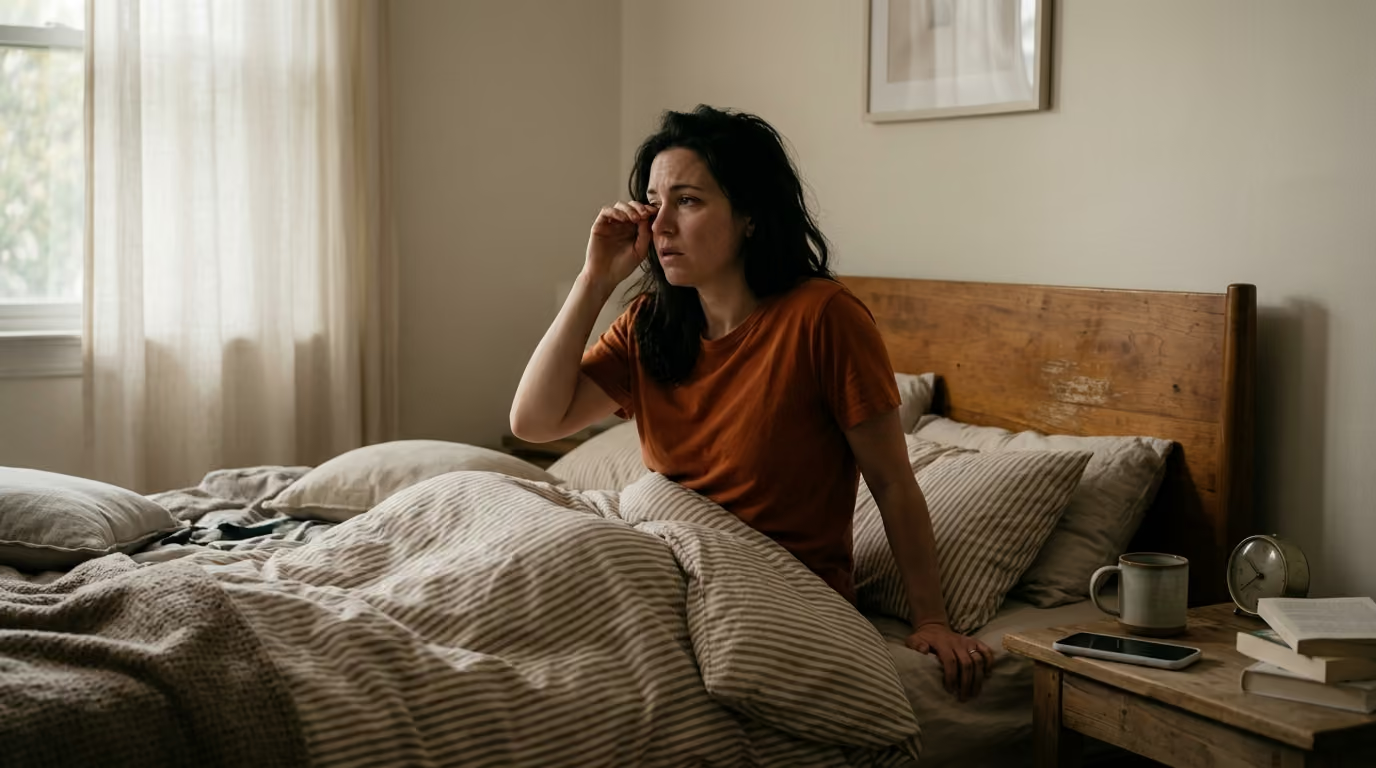

Physical training load directly affects sleep architecture, recovery biology, autonomic nervous system balance, and individualized monitoring strategies.





Finding the right training dose is not about testing your physical limits until exhaustion. It is the practice of matching your physical workload to your body's capacity to repair, adapt, and restore equilibrium. Physical activity is a physiological stimulus that produces fatigue, while sleep and nutrition provide the biological environment for adaptation. When structured properly, exercise enhances sleep architecture, strengthens metabolic health, and supports daily vitality.
Exercise is a powerful tool to improve sleep quality and metabolic health. However, the benefits follow an inverted-U curve where excessive volume or poorly timed intensity can impair nocturnal recovery. Sustainable progress requires matching your training load to your current sleep, nutrition, and life stress.
Exercise influences sleep through several physiological mechanisms. When you contract skeletal muscle during physical activity, your body breaks down adenosine triphosphate for energy. This metabolic activity leads to the accumulation of adenosine in the basal forebrain. Adenosine functions as a primary driver of homeostatic sleep pressure, which is the internal biological drive to fall asleep. As adenosine builds throughout your waking hours, feelings of sleepiness naturally increase.
Physical activity also interacts directly with your circadian timing system and thermoregulation. During a workout, metabolic heat production raises your core body temperature. Following exercise, your body initiates a compensatory cooling response via peripheral vasodilation. This subsequent drop in core body temperature mimics the natural thermal down-regulation that precedes sleep onset. When timed correctly, this post-exercise cooling facilitates faster sleep onset and deeper slow-wave sleep.
Autonomic nervous system balance serves as another critical pathway linking exercise to recovery. Physical exertion demands high sympathetic nervous system activity, marked by elevated heart rate, increased blood pressure, and catecholamine release. As the body recovers post-workout, the parasympathetic branch takes over to lower heart rate and initiate tissue repair. Chronic high-volume training without sufficient rest keeps sympathetic tone elevated. This sustained autonomic strain can cause elevated nocturnal heart rate and frequent nighttime awakenings.
Endocrine signaling also mediates the relationship between physical training and nocturnal rest. Exercise stimulates the release of brain-derived neurotrophic factor, growth hormone, and daytime cortisol. Daytime cortisol spikes from physical activity help reinforce a robust circadian amplitude, promoting alertness during the day and melatonin secretion at night. Early in our research, we reviewed a study showing how just a few nights of poor sleep could significantly alter appetite hormones. It was a clear revelation. So many people were meticulously tracking their food but completely ignoring their sleep and stress levels. We immediately shifted our editorial focus to include recovery as a fundamental pillar of weight management alongside nutrition and movement.
The scientific literature examining exercise and sleep shows consistent positive associations, but the dose-response relationship is not linear. Umbrella reviews synthesizing dozens of randomized controlled trials demonstrate that regular physical activity improves sleep quality, total sleep time, and sleep efficiency. Both acute exercise sessions and long-term exercise programs reliably reduce the time it takes to fall asleep. The evidence base confirms that longer exercise sessions often yield greater subjective sleep improvements than very brief bouts.
However, research also indicates that more exercise does not automatically produce better sleep outcomes. Recent Bayesian analyses and dose-response reviews in adult populations reveal an inverted-U or J-shaped curve. For instance, data in older adults indicate that subjective sleep quality improves at a minimal dose of roughly 195 MET-minutes per week. Benefits appear to peak between 440 and 527 MET-minutes per week, with a tolerated upper dose near 820 MET-minutes per week. Beyond optimal ranges, additional exercise volume yields diminishing returns and may increase the risk of sleep disruption.
MET-minutes combine activity intensity with duration. For example, walking at a moderate pace of 3.5 METs for 30 minutes three times weekly equals 315 MET-minutes per week. While MET-minutes offer a convenient standard for public health research, they have distinct limitations for structured athletic training. They do not account for mechanical muscle damage, eccentric loading, near-failure resistance training, or psychological strain. A 500-MET-minute week of gentle walking creates very different recovery demands than a 500-MET-minute week of heavy squats and sprint intervals.
The concept of the stimulus-to-fatigue ratio helps explain why training dose must be managed carefully. Every exercise session produces an adaptive stimulus alongside a measurable physiological fatigue cost. Low-intensity steady-state movement generates moderate cardiovascular stimulus with minimal systemic fatigue, allowing high weekly frequency. In contrast, maximal-effort intervals or high-volume resistance training taken to muscular failure generate substantial central nervous system fatigue and muscle tissue disruption. Balancing this ratio ensures you accumulate sufficient training stimulus without overwhelming your adaptive reserve.
Exercise intensity influences cardiovascular strain, hormonal output, and neuromuscular recovery requirements. Moderate-intensity continuous training generally supports healthy sleep by increasing slow-wave sleep without excessive autonomic stress. High-intensity interval training and heavy resistance training provide potent metabolic stimuli, but they demand longer parasympathetic recovery times. Systematic reviews show that high intensity is not inherently damaging to sleep, provided the total volume remains within recoverable limits.
The timing of your workout relative to your bedtime plays a major role in sleep quality. A long-held belief suggested that evening exercise invariably disrupts sleep by elevating core temperature and stimulating adrenaline release. Comprehensive systematic reviews have clarified this topic. Evening exercise does not consistently impair nighttime sleep for most healthy adults. However, vigorous or maximal exercise ending within one hour of bedtime can increase sleep-onset latency, reduce sleep efficiency, and increase wakefulness after sleep onset.
Late-night high-intensity training can shift the timing of nocturnal melatonin release. Vigorous exercise causes a temporary elevation in core body temperature and sympathetic nervous system tone that can persist for several hours. When you complete hard intervals right before bed, your body may struggle to reach the lower core temperature necessary for deep sleep. In contrast, moderate-intensity exercise finished two to four hours before sleep allows sufficient time for body cooling and autonomic normalization.
Because individual sensitivity to late-day training varies widely, a structured two-week timing experiment can help determine your personal threshold:
Training age refers to the number of years you have spent performing structured, progressive physical training. It fundamentally alters your technical competence, muscular efficiency, and physiological tolerance for workload. A novice exerciser experiences rapid neuromuscular adaptations from very low training volumes. Because novel movements induce significant muscle damage and inflammation, beginners require conservative training doses and frequent rest days to avoid excessive systemic fatigue.
As an individual progresses to an intermediate training status, their body adapts to routine mechanical stress. Intermediate trainees require higher training volumes, greater relative intensity, or more targeted movement variations to continue making progress. However, an intermediate lifter or runner also lifts heavier absolute loads or covers greater distances. This higher absolute workload generates greater systemic and connective-tissue fatigue, making proactive recovery management essential.
Advanced athletes possess high physiological efficiency and can tolerate substantial training volumes. They frequently utilize deliberate, short-term overloads to spur continued adaptation. However, the margin between productive training and non-functional fatigue becomes exceptionally narrow at advanced levels. Advanced trainees must carefully distribute intensity throughout the week, incorporate planned deload periods, and strictly protect sleep duration to prevent performance plateaus.
Age-related biological changes also influence the appropriate training and recovery balance. Adolescents require eight to ten hours of sleep per night to support ongoing growth, brain development, and athletic recovery. Middle-aged and older adults frequently face reduced tissue elasticity, slower protein synthesis, and more fragmented baseline sleep. For older adults, modest exercise volumes performed consistently provide excellent sleep and metabolic benefits without exceeding joint or systemic recovery limits.
Shift workers and frequent travelers face unique circadian challenges that modify their recoverable training dose. When biological rhythms are misaligned due to night shifts or rapid time zone changes, baseline physiological stress is already high. In these situations, scheduling intense workouts during periods of circadian misalignment can exacerbate sleep deficits and impair recovery. Training sessions should be aligned with the individual's actual wake episode rather than standard clock hours, with total intensity adjusted downward during periods of severe circadian strain.
Excessive training is not defined solely by the number of hours you spend in the gym or the miles you run. It represents an imbalance where the combined load of training stress, psychological stress, and biological demands exceeds your recovery capacity. When your recovery resources cannot match total physiological strain, your body enters a state of accumulated fatigue. This continuum progresses from functional overreaching to non-functional overreaching and, ultimately, overtraining syndrome.
Functional overreaching involves a short, deliberate increase in training load that causes a temporary drop in performance. After a brief period of reduced training or passive rest, the body supercompensates and performance improves. Non-functional overreaching occurs when excessive training continues without adequate rest, leading to performance stagnation or decline that takes weeks to resolve. Overtraining syndrome is a severe, multi-system condition characterized by persistent performance decrements, neuroendocrine dysfunction, mood disturbances, and frequent illnesses that may require months of medical management to reverse.
Recognizing the early warning signs of excessive physiological stress helps prevent non-functional overreaching:
Sleep disruption is frequently an early indicator of excessive training load, but it is not a standalone diagnostic test. Fragmented sleep can stem from work stress, excessive caffeine, alcohol intake, sleep apnea, or hormonal fluctuations. Interestingly, systematic reviews in endurance athletes show that overreaching often reduces objective sleep efficiency on polysomnography by approximately two percentage points without altering subjective sleep ratings. Athletes may feel they slept adequately even while their autonomic nervous system remains agitated, highlighting the importance of tracking both subjective feelings and objective performance trends.
Training monotony represents another overlooked contributor to excessive physiological strain. Performing the exact same workout intensity and duration day after day prevents localized tissues and the central nervous system from completing full recovery cycles. Even if the absolute daily volume is moderate, a lack of variation increases strain. Incorporating distinct light days, varied modalities, and at least one passive rest day each week reduces monotony and supports physiological durability.
Many individuals assume that if a 30-minute workout improves sleep quality, a two-hour workout will double the benefit. Research clearly demonstrates that exercise follows a law of diminishing returns. Beyond an optimal training window, additional volume increases cortisol, muscular inflammation, and autonomic arousal. When training volume exceeds your adaptive capacity, sleep continuity and total sleep time often decline.
Popular health advice frequently warns against all exercise after 6:00 p.m. While performing maximal-effort intervals 30 minutes before bed can increase sleep latency, moderate or structured vigorous exercise finished two hours before bedtime is well tolerated by most people. Melatonin timing and nocturnal core temperature normalize quickly when sufficient cool-down time is provided. Individual monitoring is far more accurate than universal prohibitions.
Wearable fitness trackers provide helpful estimates of resting heart rate, sleep duration, and heart-rate variability. However, they cannot measure local muscular damage, mental fatigue, joint inflammation, or metabolic fuel availability. A wearable device might display a high readiness score while your muscles remain severely damaged from eccentric loading. Wearable data should inform your decisions, but it should never override physical symptoms or performance trends.
Some fitness enthusiasts view passive rest days as lost time that halts physical progress. In reality, physical exercise only provides the stimulus for improvement; the actual tissue remodeling, glycogen replenishment, and mitochondrial adaptations occur during periods of rest and sleep. Skipping rest days prevents full recovery and increases the likelihood of chronic fatigue. Scheduled rest is an active component of progressive training.
While the scientific literature regarding exercise, sleep, and recovery is robust, several methodological limitations must be considered. A substantial portion of overreaching and athletic sleep research has been conducted on young, healthy, male endurance athletes. These findings may not fully translate to post-menopausal women, older adults managing chronic health conditions, or recreational lifters with demanding professional careers. Biological differences in thermoregulation, hormonal profiles, and baseline sleep architecture can influence individual recovery responses.
Another limitation involves the measurement tools used across clinical and commercial settings. Gold-standard sleep assessment requires polysomnography in a sleep laboratory, which measures brain waves, eye movements, and muscle activity. Most commercial sleep trackers rely on photoplethysmography and accelerometry to estimate sleep stages. While these devices track total sleep time reasonably well, their estimations of deep and rapid-eye-movement sleep carry significant error margins.
Exercise studies also face challenges in controlling for confounding lifestyle variables. In free-living studies, participants experience varying degrees of work-related psychological stress, nutritional fluctuations, caffeine timing, and social obligations. A sudden drop in sleep quality during a training program might reflect personal stress or late-day caffeine intake rather than the physical training dose itself. Furthermore, research on severe overtraining syndrome is naturally limited because ethics committees do not permit researchers to deliberately push human subjects into long-term systemic illness.
Finally, exercise cannot serve as a standalone remedy for undiagnosed medical sleep disorders. While regular physical activity can reduce symptoms of mild insomnia or sleep apnea, it does not replace medical continuous positive airway pressure therapy or cognitive behavioral therapy for chronic insomnia. Individuals experiencing severe daytime sleepiness, chronic snoring, witnessed breath cessation, or restless legs should seek clinical evaluation rather than attempting to resolve these symptoms through exercise alone.
To find your ideal training dose, you must establish a consistent, low-friction monitoring routine. Tracking your training alongside basic recovery metrics allows you to identify subtle trends before minor fatigue turns into persistent overreaching. You do not need expensive laboratory equipment to monitor recovery effectively. A simple daily log combining subjective ratings with basic training metrics provides actionable insights.
Each morning, record four subjective metrics on a simple 1 to 5 scale, where 1 represents very poor and 5 represents optimal:
Alongside these morning scores, log your daily training load using the session rating of perceived exertion method:
> Session Load = Session Duration (minutes) × Session RPE (scale of 1 to 10)
For example, a 45-minute moderate strength session rated at an RPE of 6 yields a session load of 270 units. A 60-minute hard interval session rated at an RPE of 9 yields a load of 540 units. Tracking this product helps you monitor weekly load spikes and avoid sudden, unsustainable surges in training volume.
Use your daily recovery metrics and recent performance data to categorize your readiness to train each day:
Your sleep duration is near your baseline, morning energy is high, muscle soreness is manageable, and your motivation to train is strong. Your resting heart rate is stable, and you have no symptoms of illness. In this state, you should proceed with your scheduled workout, including high-intensity intervals or heavy strength training.
You experienced one or two nights of fragmented sleep, your perceived effort during recent sessions was higher than normal, or you are experiencing moderate muscle soreness and elevated work stress. Rather than forcing a high-stress session, modify the workout:
You have experienced three or more consecutive nights of disrupted sleep, your performance is declining across multiple sessions, you feel persistent fatigue, or you exhibit early signs of viral illness. In a Red State, pushing through a demanding workout adds unproductive physiological stress:
Analyzing real-world scenarios demonstrates how adjusting training variables resolves sleep and recovery challenges.
A 42-year-old beginner decides to improve metabolic health by running five days per week and lifting weights four days per week. Within three weeks, they experience persistent leg soreness, night waking, and low daytime energy.
The Cause: An abrupt increase in training frequency, volume, and mechanical impact that far exceeded their current recovery capacity.
The Adjustment: The individual reduces training to three full-body strength sessions and two easy 20-minute walking sessions per week, with two full rest days. Sleep continuity returns within one week, and strength improves steadily.
A 36-year-old intermediate lifter trains from 7:30 p.m. to 8:30 p.m. three nights per week. They fall asleep within 15 minutes at 10:30 p.m. and wake up feeling refreshed.
The Cause: Their two-hour window between workout completion and bedtime allows sufficient time for core body temperature and sympathetic tone to decline.
The Adjustment: No schedule change is necessary. Evening training is entirely sustainable when personal sleep architecture and daytime alertness remain unimpaired.
A 48-year-old recreational cyclist performs high-intensity indoor intervals from 8:30 p.m. to 9:30 p.m. and struggles to fall asleep before 1:00 a.m.
The Cause: High catecholamine levels, elevated core temperature, and high autonomic arousal right before their planned bedtime.
The Adjustment: The cyclist shifts the high-intensity interval sessions to the early morning or weekend afternoons, reserving late-evening slots for light stretching or mobility. Sleep latency immediately drops from 90 minutes to under 20 minutes.
An advanced resistance trainee increases weekly training volume from 12 sets per muscle group to 22 sets, taking every set to muscular failure. After four weeks, their joint soreness worsens, strength numbers decline, and objective sleep efficiency drops.
The Cause: Accumulating excessive muscular damage and central fatigue that exceeds the body's rate of protein synthesis and autonomic recovery.
The Adjustment: The lifter implements a one-week deload at 50 percent volume, followed by a maintenance dose of 12 to 14 sets per muscle group performed with one to two repetitions in reserve. Strength progression resumes, and sleep efficiency normalizes.
A marathon runner reports that their subjective sleep quality feels fine, but their wearable device shows a consistent drop in sleep efficiency and an increase in resting heart rate. Concurrently, their standard training pace feels increasingly difficult.
The Cause: Non-functional overreaching where physiological strain manifests objectively in cardiovascular and sleep metrics before the athlete consciously perceives severe sleep disruption.
The Adjustment: The runner reduces total weekly mileage by 30 percent, removes tempo runs for two weeks, and prioritizes carbohydrate intake around workouts. Resting heart rate normalizes, and running economy improves.
A 39-year-old individual cuts daily calorie intake aggressively while simultaneously doubling their weekly cardiovascular training to accelerate fat loss. They develop insomnia, intense food cravings, and morning exhaustion.
The Cause: Low energy availability. When dietary energy intake is insufficient to cover both basic physiological functions and exercise expenditure, the body down-regulates reproductive and metabolic hormones, elevating nocturnal cortisol.
The Adjustment: The individual raises calorie intake to a modest, sustainable deficit, reduces cardio volume, and prioritizes dietary protein and carbohydrates around training sessions. Sleep patterns stabilize, and daytime fatigue resolves.
The objective, physical work performed during an exercise bout. Examples include total kilometers run, kilograms lifted, sets completed, or mechanical watts produced on a stationary bicycle.
The individual biological and psychological stress response elicited by the external load. Internal load is influenced by baseline fitness, sleep debt, nutritional status, ambient temperature, and psychological stress.
A planned, short-term increase in training volume or intensity that induces temporary fatigue and minor performance reductions. When followed by appropriate rest, it leads to supercompensation and enhanced athletic performance.
A state of prolonged imbalance between training stress and recovery that results in sustained performance stagnation or decline. Recovery requires several weeks of reduced training load and targeted rest.
A physiological state occurring when dietary energy intake is insufficient to support normal physiological functions after subtracting the energy expended during exercise. It can disrupt endocrine balance, bone health, metabolic rate, and sleep quality.
Yes, but you should adjust the intensity and structure of the session. A single night of poor sleep rarely impairs basic muscular strength, but it reduces cognitive focus, increases perceived exertion, and elevates injury risk during complex movements. In an Amber State, reduce total training volume, avoid lifting to muscular failure, and replace high-speed intervals with steady, low-intensity movement.
Your physiology does not distinguish between physical stress from the gym and psychological stress from your career or personal life. Both activate the sympathetic nervous system and draw upon the same pool of adaptive resources. If your work stress surges, your recoverable training dose decreases. When overall life stress is high, lowering your training volume preserves health and prevents non-functional overreaching.
Both aerobic exercise and resistance training enhance sleep quality and sleep efficiency. Aerobic training tends to have a pronounced effect on homeostatic sleep pressure and slow-wave sleep duration. Resistance training improves sleep continuity, reduces nighttime awakenings, and supports metabolic stability. Combining moderate aerobic exercise with progressive resistance training generally provides the most comprehensive health and sleep benefits.
If you have reduced your training volume, improved your nutrition, and eliminated late-day stimulants for several weeks without an improvement in sleep, your sleep difficulties may not be exercise-related. Conditions such as obstructive sleep apnea, clinical insomnia, restless legs syndrome, and endocrine imbalances require specialized evaluation. Consult a qualified healthcare professional or sleep specialist for a comprehensive clinical assessment.
WeightRestart shares research-led guidance on weight loss, metabolism, nutrition, strength, appetite, sleep and recovery. Our goal is to make complex health information clear, practical and useful for people building progress they can maintain.



Learn how to build a weight-management approach around better information, realistic expectations and habits you can keep using.
read the blog