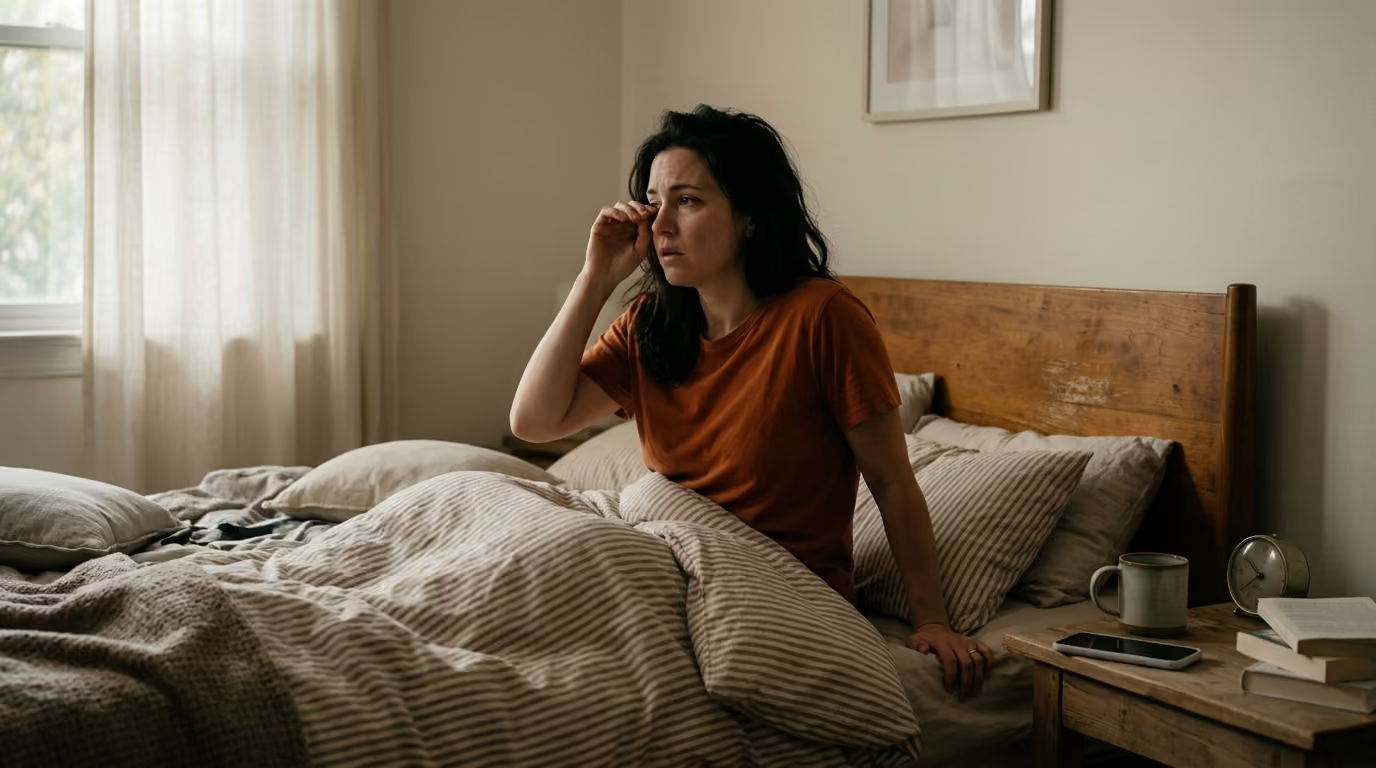

Waking up exhausted after a hectic workweek requires a science-backed recovery strategy that goes far beyond simply sleeping in on Saturday morning.





Sleep debt is the cumulative difference between the amount of sleep your brain and body require and the amount you actually obtain. It is not an ordinary financial ledger where lost hours can be cleanly paid back on a Saturday morning. This guide examines the biology of cumulative sleep loss, evaluates what the scientific evidence says about weekend recovery sleep, and details practical protocols to help you restore cognitive and metabolic health after sleep disruption.
Sleep debt is the biological deficit that builds when sleep quantity or quality falls below physiological needs. It is not a character flaw or a failure of will. When sleep is restricted, the body triggers complex hormonal, neurological, and metabolic compensations that cannot be erased by a single long sleep session. Understanding how recovery works across different biological systems allows you to manage sleep loss effectively without falling into a cycle of chronic depletion.
Sleep debt accumulates whenever you obtain less sleep than your physiological baseline over consecutive days or weeks. The American Academy of Sleep Medicine recommends that adults obtain at least seven hours of sleep per night on a regular basis. When you regularly sleep fewer than seven hours, your body experiences cumulative sleep restriction. This is distinct from acute sleep loss, which involves a single short night or brief disruption.
The biological mechanism driving sleep debt involves the continuous accumulation of sleep pressure. Throughout your waking hours, the brain metabolizes adenosine triphosphate for energy, producing adenosine as a byproduct. Adenosine binds to specific receptors in the brain, gradually increasing homeostatic sleep drive. During consolidated, high-quality sleep, the brain clears this adenosine accumulation. When sleep is cut short, residual adenosine remains bound to receptors, meaning you begin the next day with baseline fatigue already elevated.
Early in our research, we reviewed a study showing how just a few nights of poor sleep could significantly alter appetite hormones. It was a clear revelation. So many people were meticulously tracking their food but completely ignoring their sleep and stress levels. We immediately shifted our editorial focus to include recovery as a fundamental pillar of weight management alongside nutrition and movement.
When sleep restriction persists, recovery is rarely uniform across your entire physiology. Scientists evaluate sleep recovery across four distinct functional domains:
This reflects your personal perception of fatigue, mood, and sleepiness. After a single night of recovery sleep, many people report feeling refreshed and alert. However, subjective recovery is often deceptive. Research shows that subjective alertness can rebound long before objective brain function and metabolic stability return to baseline.
This domain encompasses sustained attention, working memory, processing speed, and psychomotor vigilance. When sleep debt builds, the brain experiences brief attentional lapses known as microsleeps. During these lapses, neural firing temporarily pauses, leading to delayed reaction times and impaired judgment. Restoring optimal neurobehavioral function often takes several consecutive nights of sufficient sleep.
Sleep loss alters glucose tolerance, increases evening cortisol levels, and disrupts appetite-regulating hormones like leptin and ghrelin. It also increases systemic inflammatory markers and alters autonomic nervous system balance. These metabolic disruptions do not normalize instantly when you sleep in on non-work days.
Your master circadian clock, located in the suprachiasmatic nucleus of the brain, regulates 24-hour rhythms of body temperature, hormone secretion, and cellular repair. Drastic shifts between weekday wake times and weekend sleep-in schedules create circadian misalignment. This misalignment can disrupt sleep architecture, making subsequent nights of sleep less restorative.
The evidence regarding weekend catch-up sleep is mixed and depends heavily on whether the sleep loss is acute or chronic. In controlled laboratory settings, researchers have tested whether two nights of unrestricted sleep can undo the damage of five nights of sleep restriction. The results indicate clear limits to what weekend recovery can achieve.
In a landmark study summarized by the National Institutes of Health, participants were divided into three groups over several weeks. One group slept nine hours each night, a second group was restricted to five hours per night, and a third group had five hours of sleep for five days followed by two days of unrestricted weekend recovery. The participants in the weekend recovery group gained only about three extra hours of sleep across the two recovery days. Furthermore, the weekend catch-up group experienced reduced insulin sensitivity in muscle and liver tissue, and their metabolic disruptions resumed immediately once sleep restriction returned.
The quality of evidence from laboratory studies is robust regarding metabolic outcomes under repeating schedules. These trials demonstrate that periodic catch-up sleep does not protect against the metabolic consequences of continuous, cyclical weekday sleep restriction. The biological stress of cycling between deprivation and compensation may impair insulin signaling and appetite regulation just as much as steady restriction.
Observational population studies, however, present a more nuanced picture. In large health surveys, individuals who report getting catch-up sleep on weekends sometimes show slightly lower risks of certain cardiovascular and inflammatory markers compared to short sleepers who never catch up. Yet observational studies cannot prove causation. People who are able to sleep longer on weekends may have lower total stress, more control over their schedules, or fewer severe medical conditions.
A large population analysis found that among individuals with severe sleep debt, defined as a deficit greater than 90 minutes per night, only about 18.2 percent successfully balanced that deficit on the weekend. The researchers concluded that weekend sleep extension and napping compensated for severe sleep debt in only about one in four individuals. For the vast majority of adults, relying on Saturday and Sunday leaves a substantial physiological deficit unaddressed.
Recovery duration depends on the severity of the deficit and the specific biological system being evaluated. A single night of reduced sleep can often be stabilized within one to two nights of sufficient sleep. Cumulative sleep restriction over weeks or months, however, triggers deeper neurobiological adaptations that take significantly longer to reverse.
In a clinical study investigating induced sleep deficiency and subsequent recovery, participants underwent chronic sleep restriction followed by extended recovery days. While their subjective sleepiness improved after the first night of recovery sleep, objective attentional lapses and microsleeps remained elevated. In fact, psychomotor vigilance did not fully return to baseline levels until approximately twelve days of stable, adequate sleep had been completed.
This delay highlights why relying on intuition after sleep loss can be dangerous. When you adapt to chronic sleep restriction, you lose accurate insight into your own cognitive impairment. You may feel entirely capable of driving or making complex decisions, while your reaction times remain equivalent to someone with elevated blood alcohol concentrations.
The timing of sleep before a deficit occurs also influences recovery speed. Controlled studies on sleep banking have demonstrated that individuals who deliberately extend their sleep opportunity for a week before entering a period of sleep restriction maintain higher vigilance and recover faster. Having a baseline of optimal sleep provides a buffer against acute disruption, whereas entering a short night with pre-existing sleep debt magnifies cognitive decline.
When an isolated event disrupts your sleep, such as an early flight or an unexpected deadline, targeted short-term countermeasures can help manage daytime fatigue while protecting the following night.
A brief nap lasting between 15 and 20 minutes can reduce subjective sleepiness and improve short-term cognitive performance. Keeping the nap under 30 minutes prevents your brain from entering deep slow-wave sleep. Waking from deep sleep produces sleep inertia, a state of grogginess, disorientation, and sluggish cognitive function that can last for up to an hour. Schedule daytime naps before 2:00 p.m. so they do not reduce homeostatic sleep drive before your regular bedtime.
The National Institute for Occupational Safety and Health suggests combining caffeine with a brief nap when immediate alertness is required. Caffeine takes roughly 20 to 30 minutes to travel through the gastrointestinal tract and bind to adenosine receptors in the brain. If you consume a cup of coffee and immediately rest for 15 to 20 minutes, the alerting effect of the caffeine will coincide with the natural reduction of sleep pressure from the nap.
If you experience heavy eyelids, involuntary drifting across lanes, or frequent head nodding while driving, practical coping mechanisms like opening a window or playing loud music do not work. The National Institute for Occupational Safety and Health explicitly recommends pulling over in a safe location to nap or switching drivers. Do not schedule high-stakes negotiations, complex analytical tasks, or hazardous physical work immediately following a night of severe sleep loss.
After a poor night, avoid compensating by going to bed four hours early, which can cause midnight awakenings. Instead, move your bedtime earlier by 30 to 60 minutes and allow your body to wake naturally. Ensure your bedroom is cool, dark, and quiet to support consolidated sleep architecture.
When sleep debt accumulates over five to seven days of work or personal stress, a single intervention will not suffice. Recovering from cumulative sleep restriction requires a structured, multi-night plan that respects your circadian system.
The most common mistake after a difficult week is sleeping in three to four hours past your normal wake time on Saturday and Sunday. This substantial shift creates social jetlag, delaying your circadian phase. When Sunday night arrives, your internal biological clock will not signal sleepiness at your desired hour, initiating another week of sleep restriction. Keep your weekend wake time within 60 minutes of your weekday schedule.
Rather than adding hours in the morning, add sleep opportunity at the beginning of the night. Shift your bedtime earlier by 45 to 60 minutes across three to five consecutive evenings. This provides your brain with extended time in bed while keeping your circadian anchor intact.
If daytime fatigue impairs your ability to focus, use a 20-minute nap in the early afternoon as a bridge. This temporary reduction in adenosine relieves cognitive strain without eliminating the sleep drive necessary for the coming night. Do not extend these naps into multi-hour sleep periods.
During a multi-night recovery phase, eliminate habits that fragment sleep architecture. Avoid alcohol consumption within three hours of bedtime, as alcohol suppresses rapid eye movement sleep and increases middle-of-the-night arousals. Stop caffeine consumption at least eight to ten hours before your target bedtime to allow sufficient metabolic clearance.
Misunderstandings regarding sleep recovery often lead people to adopt habits that worsen chronic fatigue. Addressing these misconceptions helps establish realistic expectations for recovery.
Many people believe that losing ten hours of sleep over a workweek requires staying in bed for ten additional hours over the weekend. Sleep architecture does not function like a basic checking account. When you obtain recovery sleep, your brain prioritizes deep, slow-wave sleep and rapid eye movement sleep intensity rather than requiring a literal hour-for-hour repayment. Attempting to force excessive hours in bed often leads to prolonged awakenings and sleep fragmentation.
Subjective alertness is an unreliable indicator of cognitive restoration. Studies consistently demonstrate that individuals undergoing sleep restriction report feeling fine after brief recovery periods, even while laboratory tests show sustained attention lapses and slow reaction times. Relying entirely on how alert you feel can cause you to overestimate your focus and safety.
Some believe that sleeping late on Sunday stores up energy for planned late nights on Monday and Tuesday. While prior sleep extension can build temporary resilience, unpredictable weekend sleeping patterns often disrupt circadian timing instead. Sleeping late on Sunday makes it difficult to fall asleep Sunday night, starting the workweek in a deficit.
Preventing sleep debt from undermining your long-term health requires distinguishing between simple scheduling conflicts and underlying physiological challenges. Creating a sustainable sleep environment supports metabolic health and body composition without requiring rigid perfection.
Begin by understanding the difference between your key sleep metrics:
If you allocate seven hours of time in bed, you may only obtain six hours of total sleep time due to normal sleep latency and brief nighttime awakenings. To achieve seven hours of actual sleep, most adults need a scheduled sleep opportunity of seven and a half to eight hours.
Aligning your light exposure is one of the most effective tools for stabilizing sleep regularity. Get direct outdoor sunlight within 30 to 60 minutes of waking to set your central circadian pacemaker. In the evening, dim overhead lighting and limit bright screens two hours before bed to allow natural melatonin synthesis.
For shift workers or individuals facing unavoidable schedule disruptions, the American Academy of Sleep Medicine suggests using timed bright light exposure during waking hours to promote alertness. When transitioning off a night shift, wear dark sunglasses during the morning commute to prevent bright sunlight from delaying daytime sleep onset. Keep the sleeping room completely dark with blackout curtains, maintain a cool ambient temperature, and use white noise to block disruptive household sounds.
Not all persistent exhaustion stems from simple lifestyle-driven sleep debt. If you consistently allocate eight hours of quiet rest in bed yet wake up feeling unrefreshed, your fatigue may be caused by an underlying medical condition or sleep disorder.
Obstructive sleep apnea is a widespread condition characterized by repeated airway collapses during sleep, leading to oxygen desaturations and micro-arousals. Individuals with sleep apnea often spend eight or nine hours in bed without ever achieving restorative sleep architecture. Classic symptoms include loud snoring, gasping or choking during the night, morning dry mouth, and waking up with headaches.
Other clinical issues that mimic chronic sleep debt include:
If extended, high-quality sleep opportunities do not resolve your daytime fatigue within two weeks, seek an evaluation from a board-certified sleep physician or primary care provider.
The temporary period of grogginess, impaired alertness, and reduced cognitive performance that occurs immediately after waking. It is particularly intense when waking from slow-wave deep sleep.
A state in which your internal biological rhythms, including core body temperature and hormone secretion, are out of sync with your physical environment or your behavioral sleep-wake schedule.
A standard measure of sustained attention and reaction speed used in sleep research. It quantifies how quickly you respond to visual stimuli and tracks attention lapses or microsleeps caused by sleep debt.
No, sleep debt does not accumulate endlessly over years like a permanent financial record. Long-term insufficient sleep creates chronic physiological strain, increasing cardiovascular and metabolic risks. You do not need to sleep for hundreds of hours to clear old deficits. Establishing a consistent schedule with seven or more hours of nightly sleep will stabilize your current biological function over several weeks.
While alcohol acts as a central nervous system depressant and may shorten the time it takes to fall asleep, it significantly impairs sleep quality. Alcohol fragments sleep in the second half of the night, reduces rapid eye movement sleep, and increases airway resistance. Using alcohol to fall asleep results in light, non-restorative rest that worsens daytime fatigue.
If your work environment does not permit naps, focus on bright light exposure, physical movement, and hydration to manage afternoon fatigue. Step outside for a brisk ten-minute walk in natural sunlight during your lunch break to suppress melatonin and boost alertness. Protect your upcoming evening by eliminating screen use before bed and advancing your bedtime by 45 minutes.
Sleep restriction decreases circulating levels of leptin, a hormone that signals fullness, and increases ghrelin, a hormone that stimulates appetite. It also amplifies endocannabinoid signaling, increasing cravings for calorie-dense, carbohydrate-rich foods. Combined with the fatigue-induced reduction in spontaneous physical activity, chronic sleep debt makes maintaining a healthy body composition significantly more challenging.
WeightRestart shares research-led guidance on weight loss, metabolism, nutrition, strength, appetite, sleep and recovery. Our goal is to make complex health information clear, practical and useful for people building progress they can maintain.



Learn how to build a weight-management approach around better information, realistic expectations and habits you can keep using.
read the blog