
Sleep tracking technology reveals helpful recovery patterns and nighttime habits, but interpreting the data correctly prevents unnecessary stress about scores.





Sleep tracking is the practice of collecting behavioral and physiological data during rest to evaluate sleep patterns over time. It is not a clinical medical test, nor is it a definitive measurement of your brain waves or exact sleep architecture. When used with clear expectations, sleep tracking helps you observe broad lifestyle patterns and daytime recovery trends.
Consumer wearables, mobile applications, and sleep logs offer accessible insight into nighttime habits. However, relying too heavily on proprietary recovery scores can cause undue stress and sleep anxiety. This resource examines what sleep technology can measure, what it cannot measure, and how to use your data productively without letting numbers dictate how you feel.
Sleep is a foundational pillar of metabolic health, tissue repair, and appetite regulation. During healthy sleep, your body transitions through distinct stages that regulate autonomic tone, hormone secretion, and cellular restoration. Disrupted sleep impairs glucose tolerance, increases sympathetic nervous system activity, and alters hunger signaling.
Early in our research, we reviewed a study showing how just a few nights of poor sleep could significantly alter appetite hormones. It was a clear revelation. So many people were meticulously tracking their food but completely ignoring their sleep and stress levels. We immediately shifted our editorial focus to include sleep and recovery habits as a fundamental pillar of weight management alongside nutrition and movement.
When you experience insufficient sleep, your circulating levels of leptin drop while ghrelin levels rise. Leptin signals satiety to the hypothalamus, whereas ghrelin stimulates appetite. This hormonal shift drives cravings for calorie-dense foods, particularly refined carbohydrates. At the same time, poor rest reduces peripheral insulin sensitivity in skeletal muscle tissue.
Understanding your approximate sleep trends allows you to support broader metabolic health and weight management goals. When you consistently sleep well, cortisol rhythms normalize and daytime energy expenditure stabilizes. Tracking can highlight lifestyle friction, such as late meals or erratic bedtimes, that interferes with natural metabolic recovery.
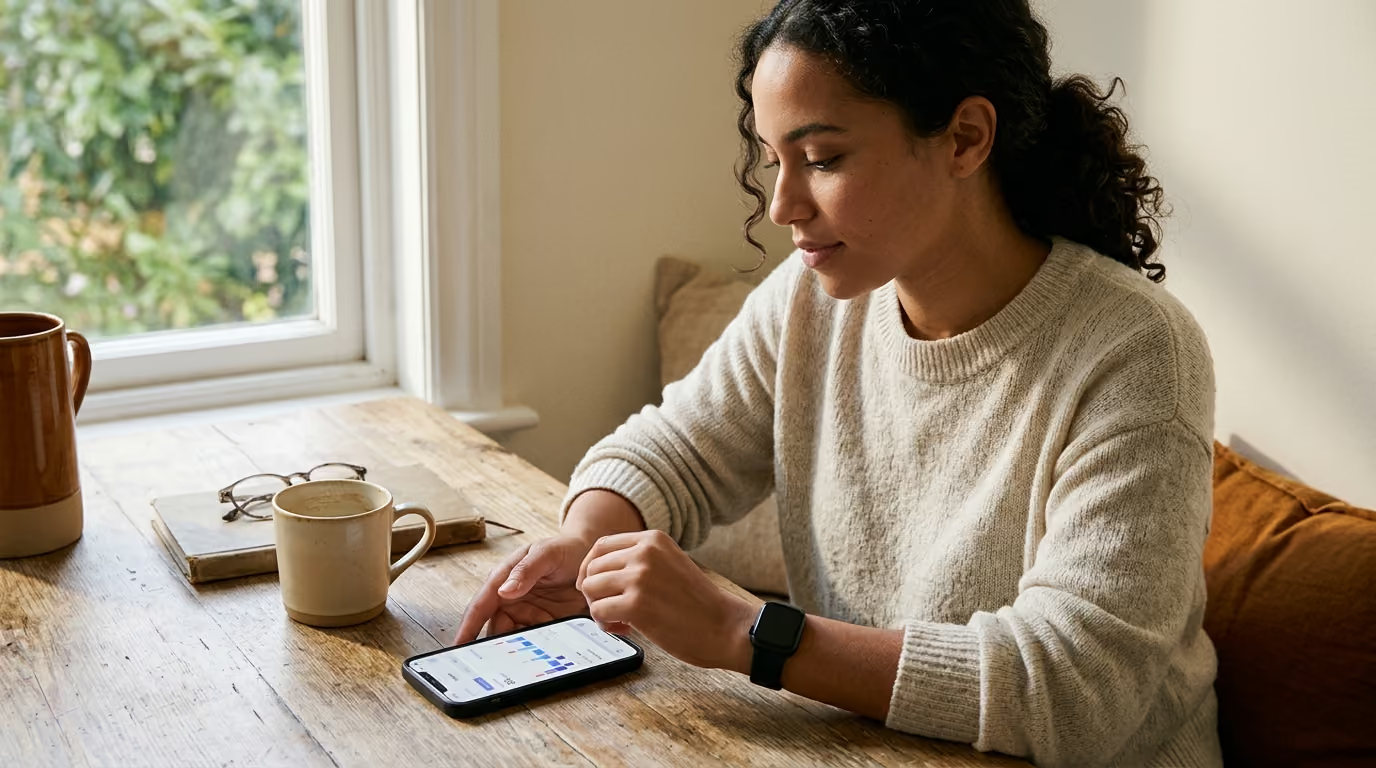
Commercial sleep devices rely primarily on accelerometers and optical photoplethysmography sensors. Accelerometers track physical movement, while optical sensors measure blood volume changes to estimate heart rate and heart rate variability. By combining these signals, algorithms infer whether you are asleep or awake.
Consumer wearables are generally effective at identifying when you are asleep. A 2024 validation study comparing Apple Watch, Fitbit, and Oura against polysomnography showed sleep-detection sensitivity of at least 95 percent across all three devices. This means that when a person is truly asleep, the wearable almost always detects that state.
However, commercial devices struggle significantly with wake detection. A 2020 study evaluating seven commercial sleep-tracking devices revealed wake-detection specificity ranging from 0.18 to 0.54. In simple terms, if you lie quietly in bed without moving, a tracker frequently classifies that wakefulness as light sleep.
Because of this sensor limitation, devices often overestimate total sleep duration. A 2025 validation study of six commercial wrist-worn devices found that most tools overestimated total sleep time compared to laboratory polysomnography. The average bias across devices ranged from 6.31 to 39.87 minutes.
Similar discrepancies appear in specific clinical populations. In people diagnosed with insomnia, activity trackers consistently overestimated total sleep duration and sleep efficiency. They also underestimated sleep latency and wakefulness after sleep onset. In a 2024 study of cancer survivors, Fitbit recorded an average of 14.6 minutes more total sleep and 7.1 percentage points higher sleep efficiency than subjective sleep logs.
Commercial wearables function well as broad trend indicators for healthy adults. They reveal whether you slept roughly seven hours or five hours on a given night. They cannot, however, provide laboratory-grade precision to the exact minute.
Most wearable companion applications display detailed breakdowns of light sleep, deep slow-wave sleep, and rapid eye movement sleep. These colorful charts give the impression of clinical precision. In reality, stage tracking is an algorithmic estimate rather than a direct physiological measurement.
Clinical sleep staging requires polysomnography. Polysomnography measures electrical brain activity via electroencephalography, eye movements through electrooculography, and muscle tone via electromyography. Consumer wearables do not measure brain waves or ocular motion. Instead, they attempt to guess your sleep stage based on motion, heart rate shifts, and skin temperature.
Research shows that wearable stage classification is far less reliable than basic sleep detection. The 2024 validation study published in the Journal of Medical Internet Research found stage-detection sensitivity ranging from only 50 percent to 86 percent. Device-specific stage sensitivity fluctuated widely between different hardware brands and sleep stages.
The same study noted that Oura device-classified sleep stages matched polysomnography epochs approximately 77 to 80 percent of the time. While this represents sophisticated engineering, an error margin of 20 to 23 percent is substantial. A 2020 study in the Journal of Clinical Sleep Medicine concluded that consumer wearables are unsuitable replacements for polysomnography in assessing sleep stages.
When an app reports that you achieved 42 minutes of deep sleep, that number is an inference. It should not be treated as a definitive health metric. Day-to-day fluctuations in estimated REM or deep sleep often reflect algorithm variations rather than actual changes in neurological recovery.
The overall quality of evidence for consumer sleep tracking is mixed, depending entirely on the intended use case. For general duration estimates and multi-night consistency, the evidence base is robust. For clinical diagnostics, sleep stage analysis, and disorder treatment, the scientific evidence is weak or emerging.
Medical authorities maintain a clear stance on consumer sleep technology. The American Academy of Sleep Medicine states that consumer wearables cannot currently diagnose or treat sleep disorders. Most commercial devices lack clearance from the Food and Drug Administration for diagnostic purposes.
Research published across medical journals highlights several distinct boundaries in the evidence base:
The evidence supporting wearables for broad duration tracking is strong. Multiple peer-reviewed validation studies demonstrate that commercial devices correlate well with research actigraphy. They reliably capture general sleep schedules, weekend shifts, and overall time in bed.
The evidence supporting sleep-stage accuracy is mixed and device-dependent. Furthermore, little independent evidence validates the composite readiness or recovery scores generated by proprietary algorithms. These scores combine varied physiological signals into a single number using non-transparent formulas.
The evidence does not support using commercial wearables to self-diagnose sleep apnea, chronic insomnia, or restless legs syndrome. Relying on consumer data instead of seeking medical evaluation can delay necessary clinical care.
Using tracker data to understand hunger and daily habit patterns or general recovery trends is scientifically defensible. Using that same data to evaluate clinical sleep architecture is not supported by current research.
The popularity of health wearables has fostered several widespread misunderstandings about sleep data. Addressing these myths helps prevent unnecessary frustration and misguided lifestyle changes.
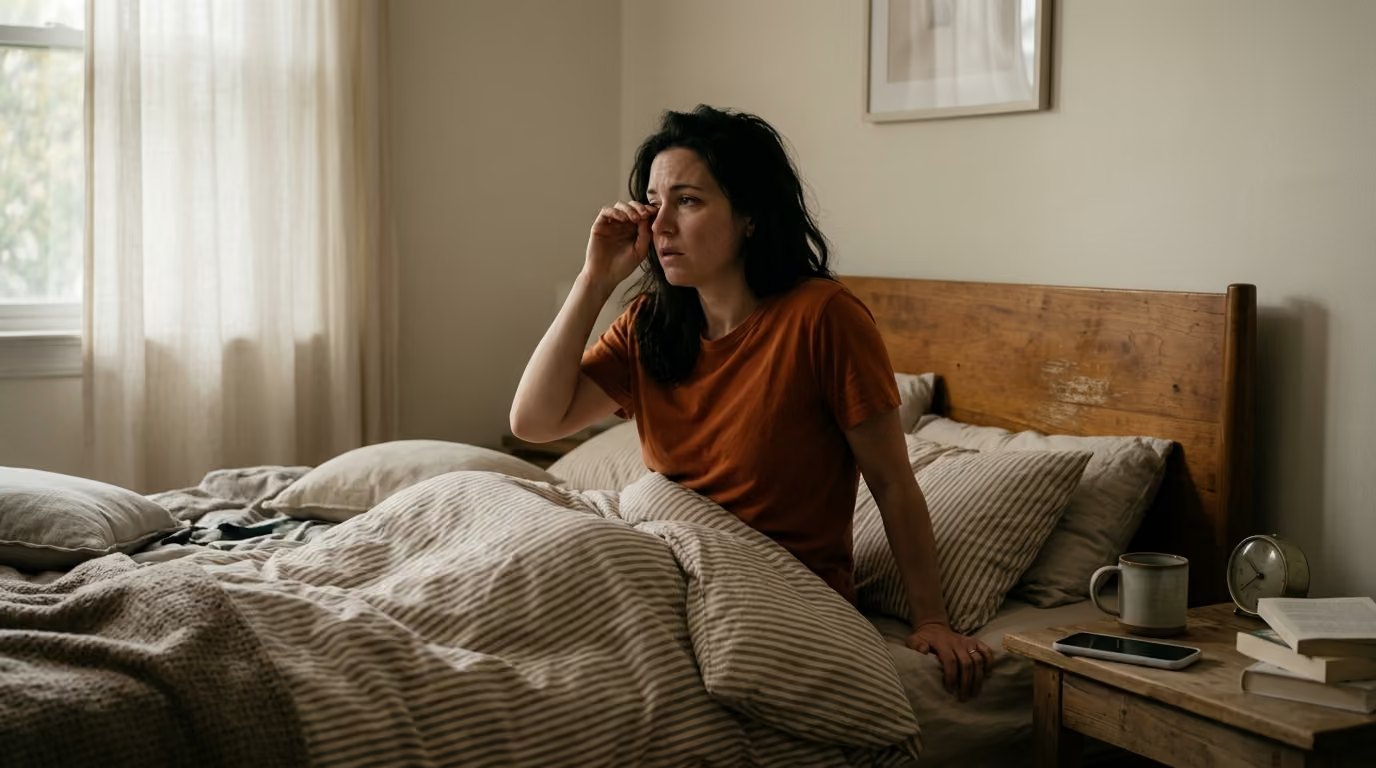
Many users wake up feeling rested, check their wearable score, and feel immediate dismay when they see a low number. This reaction illustrates the power of psychological framing. A low algorithmic score does not automatically mean your physical recovery was inadequate.
Proprietary scores weigh variables like resting heart rate, sleep latency, and estimated sleep stages. If your device misclassified quiet wakefulness or experienced an optical sensor glitch, your score will plummet. Letting a single number dictate your mood or energy expectations creates a self-fulfilling cycle of fatigue.
When people see low total sleep time on their tracker, a common response is to spend extra time lying in bed. This habit often backfires. Spending prolonged periods awake in bed weakens the psychological association between the bed and sleep.
Over time, extending time in bed can increase nighttime awakenings and worsen sleep efficiency. Sleep quality depends on physiological sleep drive and circadian alignment rather than sheer hours spent under the covers.
Many people assume a commercial ring or watch performs a mini sleep study every night. As established by clinical research, consumer sensors only record surface proxies of rest. A wearable detects pulse rate and wrist motion, whereas a sleep clinic measures neurological activity, airflow, respiratory effort, and blood oxygenation simultaneously.
Sleep tracking becomes counterproductive when data collection generates anxiety rather than clarity. In clinical sleep medicine, an obsessive preoccupation with perfecting wearable sleep metrics is known as orthosomnia.
The term orthosomnia was introduced in a 2017 case series published in the Journal of Clinical Sleep Medicine. Clinicians described patients who developed persistent insomnia and severe anxiety while trying to optimize their wearable sleep data. These patients frequently distrusted clinical advice because their personal device reported conflicting numbers.
Fixating on nighttime metrics triggers sympathetic nervous system arousal. When you feel pressured to achieve a high sleep score, bedtime becomes a performance test. This psychological pressure elevates evening cortisol and heart rate, directly preventing the relaxation required for sleep onset.
A 2024 general-population study evaluated orthosomnia characteristics using markers of wearable ownership, insomnia symptoms, and sleep-related perfectionism. The researchers observed that sleep anxiety varied depending on how rigidly individuals interpreted their data. Tracking is particularly risky for individuals prone to perfectionism or health anxiety.
However, tracking does not automatically harm everyone. A 2023 study examining insomnia patients using a wearable device found that tracking did not inherently worsen sleep worries for all participants. The outcome depends entirely on how the individual relates to the information.
Warning signs that sleep tracking has become counterproductive include:
If you recognize these behaviors, pausing data collection is a constructive step toward rebuilding a healthy relationship with rest.
The most effective method for evaluating rest is a triangulated approach. Rather than relying solely on an automated device, you combine wearable trends, a structured sleep diary, and your subjective experience.
A structured sleep log provides critical context that sensors cannot capture. The Consensus Sleep Diary is a validated tool widely used in clinical sleep medicine. It records bedtime, estimated latency, awakenings, final wake time, and perceived sleep quality.
Research shows that wearables and subjective diaries capture complementary dimensions of sleep. A 2022 study in the journal Sensors showed substantial agreement between wearables and sleep diaries for total sleep duration and time in bed. However, agreement was poor for sleep interruptions and sleep efficiency.
A Duke University analysis found that wearable metrics explained only 2.5 to 16.2 percent of the variance in subjective sleep quality. This finding proves that subjective restfulness is not a mirror image of device data. Both data streams provide unique, meaningful insights.
To build a balanced sleep tracking protocol, follow these structured steps:
Before looking at your phone or wearable in the morning, pause and ask yourself three questions. How refreshed do I feel on a scale of 1 to 5? Do I feel mentally alert? Did I wake up feeling physically restored? Rating your subjective state first prevents device scores from biasing your perception.
Keep a simple paper log or digital note beside your bed. Record your approximate bedtime, estimated time to fall asleep, remembered awakenings, and morning wake time. Note any relevant evening variables such as late meals, alcohol, intense exercise, or unusual psychological stress.
Avoid analyzing your wearable data on a night-to-night pass or fail basis. Research in sleep medicine indicates that multiple nights of data are necessary for reliable measurement. A 2017 study found that at least five to six nights are required to establish reliable baseline estimates for actigraphic sleep metrics.
Review your numbers once a week. Look for broad patterns rather than isolated outliers. Are your bedtimes consistent within a 30-minute window? Does your resting heart rate spike on nights following late dinners?
Use tracking to answer specific, narrow questions about your lifestyle. For example, you might test whether moving your final caffeine intake to 12:00 PM improves sleep latency over two weeks. Compare the two-week block against your previous baseline, evaluating both your diary ratings and wearable duration trends.
To learn more about how recovery habits influence daily vitality, explore our comprehensive sleep, stress, and recovery resources.
While consumer sleep technology continues to evolve, several clear scientific limitations exist. Understanding these boundaries prevents unrealistic expectations and misinformed health decisions.
First, consumer algorithms are proprietary and frequently updated without public validation. When a manufacturer updates its companion software, your sleep metrics may shift overnight due to code alterations rather than physiological changes. This lack of standardization makes long-term historical comparisons challenging.
Second, device accuracy drops significantly in clinical populations. People with chronic insomnia, sleep apnea, periodic limb movement disorder, or circadian rhythm disorders exhibit sleep patterns that confuse consumer sensors. For example, an individual with severe sleep apnea may remain physically still while experiencing repeated oxygen desaturations, leading a wearable to falsely report restful sleep.
Third, commercial trackers cannot account for psychological sleep depth or mental restoration. Sleep is a complex neurobiological process involving memory consolidation, synaptic pruning, and glymphatic clearance. Wrist-based motion sensors cannot quantify these cognitive recovery mechanisms.
Finally, wearable sleep research has historically focused on healthy young adults. Findings from validation studies may not apply equally to older adults, shift workers, or individuals managing complex chronic health conditions. For deeper reading on evidence evaluation across health topics, visit our weight-loss science research library.
Understanding common clinical sleep terminology helps you interpret both wearable metrics and research studies accurately.
Polysomnography is the gold-standard diagnostic tool used in clinical sleep medicine. It continuously records multiple physiological parameters throughout the night, including brain waves, eye movements, skeletal muscle activity, heart rhythm, and respiratory airflow.
Sleep-onset latency represents the amount of time it takes to transition from full wakefulness to sleep. In healthy adults, a normal sleep latency typically falls between 10 and 20 minutes.
Wake after sleep onset refers to the total number of minutes spent awake after initial sleep onset and before final awakening. While occasional brief awakenings are normal, elevated wake time often indicates fragmented sleep architecture.
Sleep efficiency is the mathematical ratio of total sleep time divided by total time spent in bed, expressed as a percentage. A sleep efficiency score of 85 percent or higher is generally considered healthy in adult populations.
To use sleep data effectively without falling into obsessive habits, apply these evidence-based guidelines:
Some modern smartwatches feature blood oxygen monitoring and algorithms designed to flag breathing disturbances. While these features can alert you to potential irregularities, they cannot formally diagnose obstructive sleep apnea. If you snore loudly, wake up gasping, or experience excessive daytime sleepiness, you need a formal clinical evaluation.
Consumer devices estimate deep sleep using heart rate patterns and physical immobility. Sensor displacement, a loose wristband, or natural variations in autonomic tone can lead the algorithm to miscategorize your sleep stages. If you wake up feeling clear, alert, and energized, trust your subjective recovery over the device estimate.
Continuous tracking is not necessary for everyone. Wearing a tracker for two to three weeks provides sufficient data to establish your baseline duration and schedule consistency. Once you understand your general patterns, you can wear the device periodically to check progress or troubleshoot specific routine changes.
If viewing sleep data creates dread, performance pressure, or morning distress, remove the device immediately. Take a break from all digital tracking for at least three to four weeks. Focus entirely on standard sleep hygiene habits, such as keeping a dark bedroom, setting a steady schedule, and logging your rest with a simple pen-and-paper diary.
WeightRestart shares research-led guidance on weight loss, metabolism, nutrition, strength, appetite, sleep and recovery. Our goal is to make complex health information clear, practical and useful for people building progress they can maintain.



Learn how to build a weight-management approach around better information, realistic expectations and habits you can keep using.
read the blog