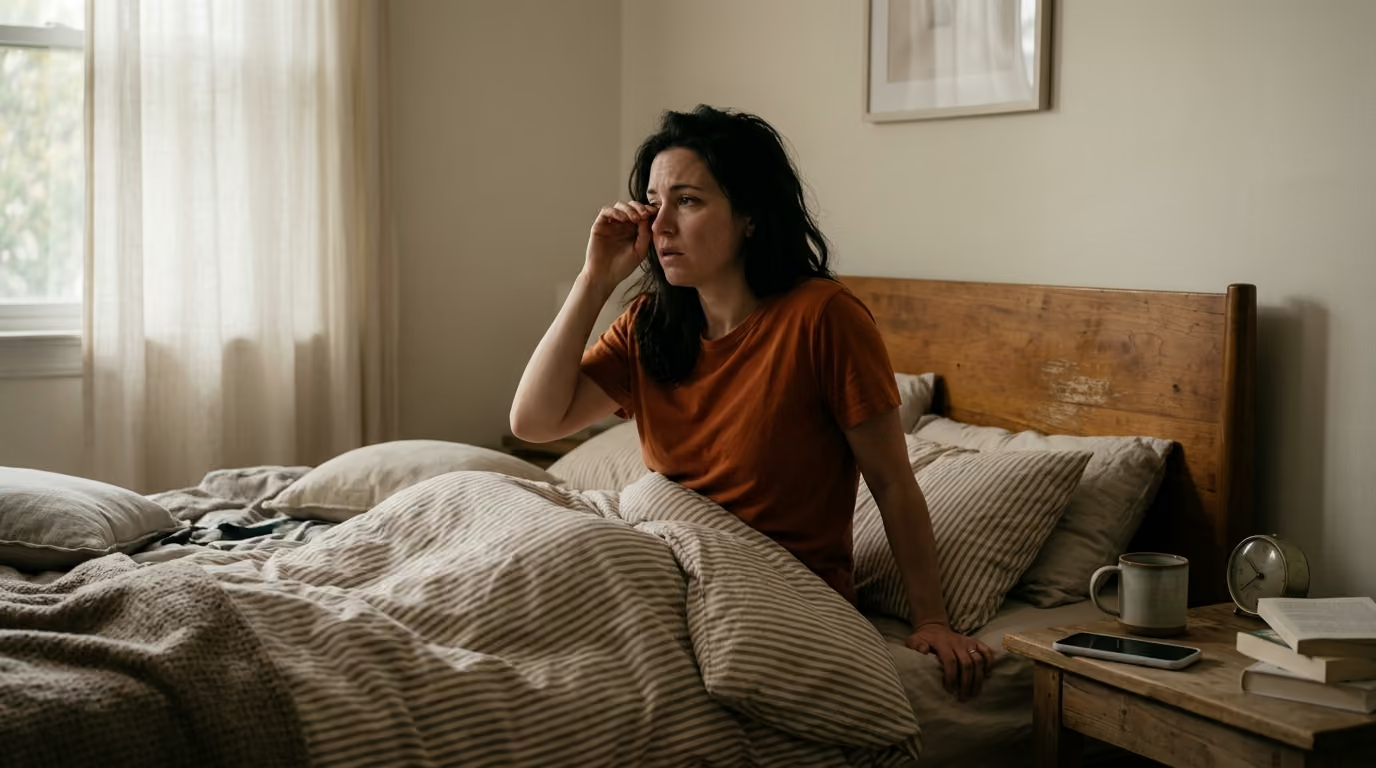

Three biological systems governing rest, anxiety, and metabolism often require clinical care when everyday lifestyle changes fail to produce lasting health results.





You wake up at 3:00 AM with a racing mind, staring at the ceiling and calculating how many hours of sleep you have left. By mid-afternoon, your energy crashes, leaving you with intense cravings for sugary or high-fat snacks just to stay alert. You try to cut calories and push through an exhausting evening workout, but your scale refuses to budge. Over time, sleep becomes even more elusive, stress levels climb, and frustration sets in.
Sleep disruption, chronic psychological stress, and weight changes frequently lock together in a self-reinforcing cycle. When sleep is short or fragmented, appetite signals shift and metabolic recovery suffers. In response, stress makes regular meal planning, physical activity, and consistent bedtimes difficult to sustain. Understanding when self-guided lifestyle tweaks are enough, and when to seek specialized professional help, is essential for long-term health.
Sleep disruption and stress are not just mental states. They trigger measurable physiological shifts that alter appetite, energy expenditure, and nutrient partitioning. Understanding these mechanisms helps explain why willpower alone is rarely the solution to weight-related challenges.
When your body is deprived of adequate sleep, your endocrine system alters the hormones that govern hunger and satiety. Leptin, a hormone produced by adipose tissue that signals fullness to the brain, tends to decrease during periods of sleep restriction. At the same time, ghrelin, a peptide produced mainly in the stomach that stimulates appetite, frequently rises.
These hormonal shifts create a biological drive to consume more energy, particularly from carbohydrates and fats. In controlled laboratory settings, sleep restriction increases subjective hunger scores and elevates overall caloric intake. Brain imaging studies show that sleep deprivation increases sensitivity in reward centers when viewing high-calorie foods. Meanwhile, executive function in the prefrontal cortex declines, making it harder to resist immediate food rewards.
Sleep loss also influences how the body utilizes and stores energy. In clinical trials where participants underwent caloric restriction while sleeping either 8.5 hours or 5.5 hours per night, total weight loss remained similar between groups. However, the composition of that lost weight changed dramatically.
Participants with restricted sleep lost significantly less fat mass and lost a higher proportion of fat-free lean mass. Sleep deprivation disrupts growth hormone release and increases evening cortisol, which impairs muscle protein synthesis and recovery. Even when total energy balance is managed through diet, poor sleep compromises metabolic health by sacrificing muscle tissue.
Stress activates the sympathetic nervous system and the hypothalamic-pituitary-adrenal axis, releasing cortisol and catecholamines. Acute stress can temporarily suppress appetite as part of the fight-or-flight response. However, chronic low-grade stress maintains elevated evening cortisol levels, which promotes central fat storage and increases cravings for palatable foods.
Prolonged stress also causes chronic fatigue, reducing spontaneous physical movement throughout the day. This reduction in non-exercise activity thermogenesis significantly lowers daily caloric output without conscious awareness. When high stress and sleep deprivation combine, they impair insulin sensitivity in peripheral tissues, creating unfavorable metabolic conditions.
In our experience, people often blame their character when standard diet advice fails them. For years, I watched smart, capable people blame themselves when standard diet advice failed them. They would cut calories drastically, run themselves into the ground, and inevitably regain the weight. It was heartbreaking to see. I realized we were treating a complex biological and psychological system like a simple math problem. That was the turning point when I knew our team had to focus on metabolic health, sleep, and habits rather than just restriction.
Understanding the quality of current scientific evidence helps set realistic expectations for sleep interventions and weight management. Not all claims in the wellness industry carry equal scientific backing.
The evidence demonstrating that sleep restriction increases appetite, food cravings, and total energy intake is robust. Multiple randomized crossover studies have shown that restricting adult sleep to four or five hours per night consistently leads to an additional intake of 250 to 500 calories daily.
Furthermore, the data showing that poor sleep impairs muscle retention during weight loss is strong and supported by well-controlled metabolic ward studies. Clinical guidelines from the American Academy of Sleep Medicine consistently emphasize the role of sleep duration in cardiometabolic health and endocrine regulation.
While sleep restriction clearly drives weight gain and metabolic disruption, the evidence that extending sleep will automatically cause significant weight loss is mixed. Extending sleep in chronically sleep-deprived individuals often improves insulin sensitivity and reduces late-night snacking. However, sleep extension alone does not consistently produce large reductions on the scale without corresponding adjustments to nutrition, stress, and physical activity.
Much of the population data linking short sleep to obesity relies on observational surveys from organizations like the Centers for Disease Control and Prevention. While these studies show strong correlations between sleeping fewer than seven hours and higher rates of obesity, hypertension, and diabetes, they cannot prove direct causation. Socioeconomic conditions, shift work, chronic health conditions, and psychological distress all confound these associations.
Navigating the healthcare and wellness landscape can feel overwhelming. A structured five-step triage process helps you match your specific symptoms to the most appropriate professional intervention.
The first priority in any evaluation is safety. If excessive daytime sleepiness creates an immediate risk of motor vehicle accidents or workplace injuries, urgent medical assessment is required.
Similarly, if chronic stress or sleep disruption is accompanied by severe depression, hopelessness, thoughts of self-harm, or substance misuse, professional mental health support must take precedence over weight-loss goals. Self-guided lifestyle programs are completely inappropriate during an acute mental health crisis.
Not all sleep problems are behavioral or stress-related. Obstructive sleep apnea is a common, serious medical condition where the upper airway repeatedly collapses during sleep.
Key clinical signs that warrant a medical evaluation rather than lifestyle coaching include:
The American Academy of Sleep Medicine distinguishes between short-term sleep disruption and chronic insomnia disorder. Short-term insomnia is a normal reaction to acute stressors, such as job changes, family illness, travel, or bereavement. It typically resolves once the stressor passes or the individual adapts.
Chronic insomnia disorder, however, involves difficulty falling asleep, staying asleep, or waking too early despite adequate opportunity for sleep. To meet clinical criteria, these difficulties must occur at least three nights per week, persist for at least three months, and cause significant daytime impairment. Chronic insomnia requires structured clinical treatment rather than generic sleep tips.
Determining why a habit is difficult to sustain clarifies the right professional to consult:
Many people respond to weight or sleep stalls by adopting more extreme protocols. When an intervention increases food preoccupation, triggers binge eating, causes sleep anxiety, or demands unsafe sleep restriction, the strategy itself is amplifying the problem. A healthy plan improves daily physical and psychological function without creating new anxieties.
Different problems require different tools. Here is how to choose the right level of support for your current situation.
Self-directed changes are appropriate when your sleep and stress difficulties are mild, recent, and clearly linked to a temporary situation. Your daytime functioning should be intact, with no signs of sleep apnea or clinical depression.
A safe self-guided protocol focuses on foundational sleep and metabolic behaviors:
Health coaching is ideal when your primary challenge is translating knowledge into consistent daily action. A qualified coach provides structured accountability, assists with habit design, and helps you navigate real-world obstacles like busy work schedules.
Coaching is effective for:
Coaches do not diagnose or treat medical disorders, chronic insomnia, clinical anxiety, or eating disorders. A competent coach will refer you to licensed clinicians if underlying disorders emerge.
Licensed mental health professionals address the emotional and cognitive drivers of stress, poor sleep, and weight challenges. Therapy is the appropriate intervention when unmanaged anxiety, rumination, depressive symptoms, or trauma undermine your physical health.
Psychotherapy can help you:
CBT-I is the gold-standard, first-line treatment for chronic insomnia disorder, strongly endorsed by the American Academy of Sleep Medicine and the American College of Physicians. Unlike general sleep hygiene, which is often insufficient for chronic sleep issues, CBT-I is a structured, four to eight-week protocol delivered by a trained clinician.
CBT-I includes five core components:
A board-certified sleep physician should evaluate persistent sleep difficulties that do not respond to behavioral interventions or present with physical symptoms.
Seek a sleep medicine consultation if you experience:
Sleep evaluations often include overnight in-lab polysomnography or home sleep apnea testing to accurately diagnose or rule out obstructive sleep apnea, central sleep apnea, narcolepsy, or periodic limb movement disorder.
Your primary care provider is an essential ally when metabolic or sleep changes occur alongside unexplained physical symptoms. Many systemic medical conditions can mimic lifestyle-related fatigue, stress, and weight changes.
A comprehensive medical workup should assess:
If your stress and weight management struggles involve binge eating, purging, extreme calorie restriction, or compulsive exercise, weight-loss programs are contraindicated. These patterns indicate an eating disorder that requires specialized clinical treatment.
The American Psychiatric Association recommends eating-disorder-focused cognitive behavioral therapy or interpersonal psychotherapy as first-line treatments for binge eating disorder and bulimia nervosa. These treatments focus on normalizing eating patterns, resolving dietary restriction, and addressing the underlying emotional functions of disordered eating behaviors.
Reviewing practical scenarios illustrates how symptoms map to appropriate care levels.
Certain populations face unique biological and environmental hurdles that require customized care pathways.
Rotating and overnight shift workers experience chronic circadian misalignment. Their biological clocks conflict with social schedules and daylight exposure. Standard advice like sleeping at 10:00 PM is unhelpful for this group.
Shift workers benefit from specialized circadian management:
Parents of infants or individuals caring for ill relatives face fragmented sleep opportunities. Their sleep loss is driven by external caregiving demands rather than internal sleep pathology.
For caregivers, standard sleep restriction therapy is inappropriate and potentially unsafe. Support should focus on practical workload sharing, protecting dedicated daytime rest windows, and setting non-punitive health expectations. Nutritional plans must prioritize quick, nutrient-dense meals that require minimal preparation.
Hormonal shifts during perimenopause significantly alter sleep architecture and body composition. Declining estrogen and progesterone levels can cause vasomotor symptoms like night sweats, nocturnal awakenings, mood volatility, and central fat redistribution.
Women experiencing sleep and metabolic disruption during this transition should seek a comprehensive evaluation from a gynecologist or endocrinologist. Evidence-based treatments, such as hormone replacement therapy, non-hormonal medications for hot flashes, and CBT-I, can restore sleep quality and support metabolic health.
Musculoskeletal pain from conditions like osteoarthritis, fibromyalgia, or past injuries disrupts sleep continuity. In return, poor sleep amplifies central pain sensitivity, creating a vicious cycle of discomfort and physical inactivity.
Management requires a coordinated, multidisciplinary approach:
Several persistent myths prevent people from getting the specific help they need.
Generic sleep hygiene advice, such as keeping the room dark, avoiding caffeine, and taking warm baths, is helpful for maintaining healthy sleep. However, clinical guidelines from the American Academy of Sleep Medicine show that sleep hygiene alone is ineffective for chronic insomnia disorder. Chronic insomnia is maintained by conditioned arousal and maladaptive sleep habits, which require the active behavioral techniques found in CBT-I.
While losing excess weight can reduce the severity of obstructive sleep apnea in many individuals, it is not a guaranteed cure. Airway anatomy, craniofacial structure, and neuromuscular tone also play major roles in sleep apnea.
Furthermore, weight loss does not fix chronic insomnia, circadian rhythm disorders, or restless legs syndrome. Sleep disorders must be evaluated and treated as distinct clinical issues.
Smartwatches and fitness trackers are useful for identifying general activity patterns and sleep timing trends. However, they lack the multi-channel physiological monitoring required to diagnose sleep disorders.
A wearable cannot reliably identify obstructive sleep apnea, parasomnias, or sleep architecture stages. Relying on a commercial device to rule out a medical sleep disorder can delay essential clinical care.
When people struggle with sleep, their natural instinct is to go to bed earlier or stay in bed longer in the morning. For someone with insomnia, spending excessive time awake in bed weakens the biological association between the bed and sleep. This practice leads to sleep fragmentation, tossing and turning, and increased performance anxiety around sleep.
When weight increases after starting a new prescription, people often assume they simply lost control of their eating habits. In reality, many medications directly alter hypothalamic appetite pathways, insulin sensitivity, or metabolic rate. Addressing this requires an open, collaborative discussion with the prescribing doctor to evaluate alternative medications or dosages.
While sleep and stress management are foundational to health, it is important to recognize what the science does not support.
Improving sleep quality and duration creates favorable hormonal and neurological conditions for weight management. However, sleep optimization is not a standalone weight-loss therapy. A person sleeping eight hours per night will not lose weight without an appropriate balance of nutrition, daily movement, and metabolic energy expenditure.
The general recommendation for adults aged 18 to 60 is at least seven hours of sleep per night. However, exact biological sleep needs vary among individuals based on genetics, activity levels, and overall health. Treating eight hours as an absolute mandate can induce unnecessary anxiety in people who naturally function well on slightly less sleep.
Much of the scientific literature on habit change assumes an individual has full control over their environment, schedule, and food choices. In reality, socioeconomic factors, caregiving responsibilities, shift-work demands, and safe neighborhood access significantly impact sleep and stress. Clinical guidance must always be adapted to match a person's real-world constraints.
If you are navigating the combined challenges of poor sleep, chronic stress, and weight stalls, follow these actionable steps:
Review this guide whenever your health circumstances change, such as starting a new medication, transitioning to a different work schedule, entering a new reproductive stage, or hitting an unexplained plateau in your metabolic health.
Making sustainable progress requires matching the right type of support to your specific biological and psychological barriers rather than relying on unsustainable restriction.
WeightRestart shares research-led guidance on weight loss, metabolism, nutrition, strength, appetite, sleep and recovery. Our goal is to make complex health information clear, practical and useful for people building progress they can maintain.



Learn how to build a weight-management approach around better information, realistic expectations and habits you can keep using.
read the blog