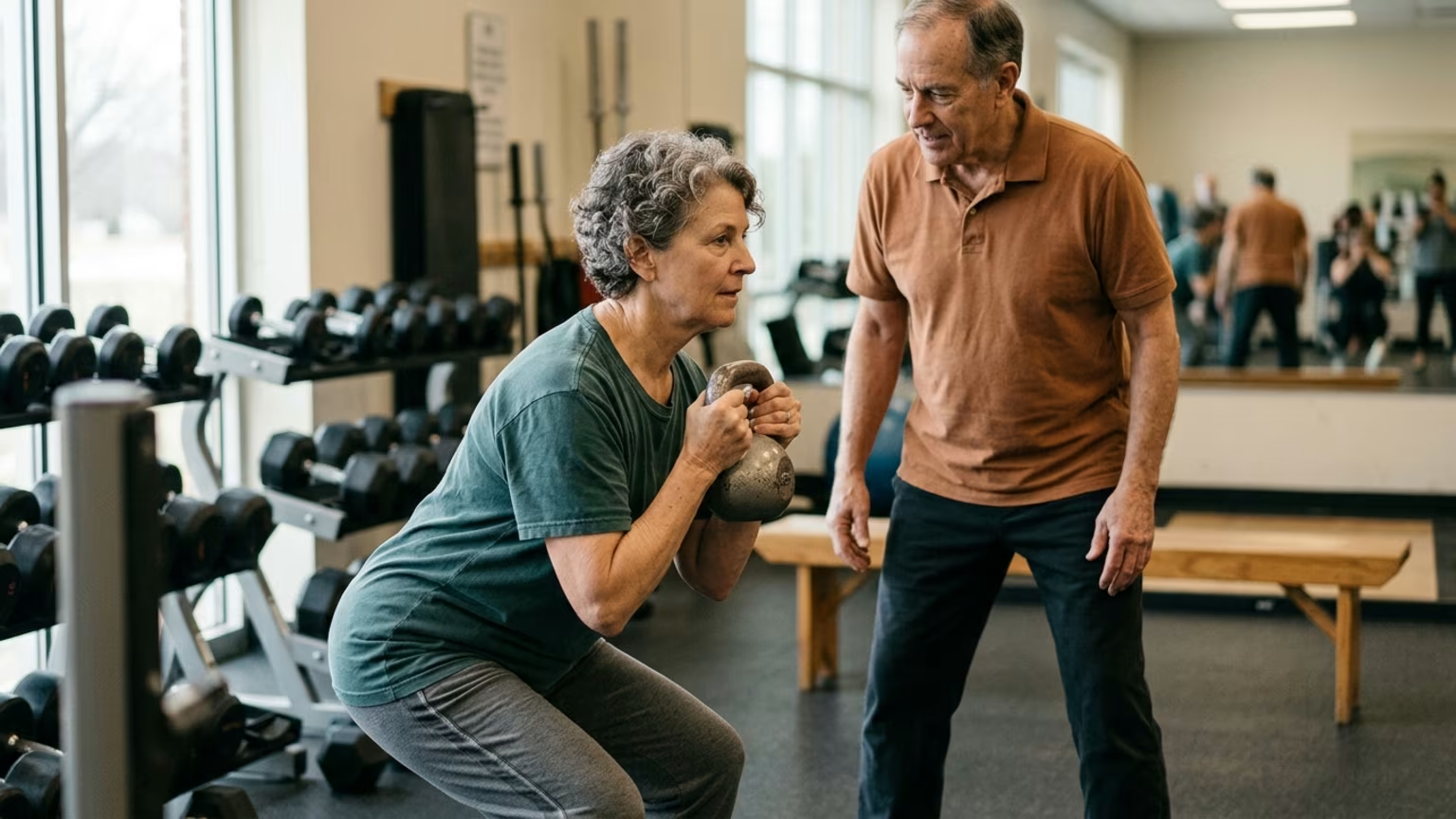

A new report suggests one weekly strength session preserves mobility for older adults. We examine the eccentric exercise claims and practical limitations.





On October 3, 2026, Kompas.id published an AI-translated report by Ester Lince Napitupulu regarding strength training for older adults. The article prominently quotes Christopher Hurst. Hurst is identified as a senior research associate at Newcastle University in Australia. He states that one strength-training session per week can produce significant strength gains.
The report notes that this frequency is particularly effective for people who are just starting to exercise. Hurst recommends aiming for muscle-strengthening activity once or twice a week. He advises covering the legs and hips alongside the back and abdomen. The routine should also target the chest, shoulders, and arms. He strongly emphasizes long-term consistency over exercising every single day.
At WeightRestart, we translate complex metabolic research into practical, everyday habits for adults. We know that many people aged 35 to 60 feel frustrated by extreme fitness culture. Simplistic fitness advice often demands intense, daily workouts that are completely unsustainable. A once-weekly target offers a research-led, shame-free alternative for building long-term health.
The article explicitly highlights the psychological barriers that prevent many adults from starting a routine. It points to a lack of confidence and a general uncertainty about how to begin. The report also identifies a fear of injury and discomfort with traditional fitness centers. These very real concerns frequently derail well-intentioned efforts to improve physical health.
We believe in a body-neutral approach that focuses on metabolic health rather than aesthetic extremes. Recognizing these participation barriers is absolutely crucial for creating lasting behavior change. Burnout from rigid workout regimens is a massive pain point for our readers. This reporting suggests that a highly accessible, low-barrier entry point is entirely valid.
Adults seeking sustainable health do not need to rely on simplistic solutions or exhausting routines. The focus should remain on realistic weight-management decisions that fit into a busy life. A single weekly session provides a manageable foundation for navigating the hype of modern fitness. It allows individuals to prioritize recovery and sleep alongside their active movement.
The Kompas report describes strength training as working muscles against a physical resistance. It lists examples such as using weights, machines, resistance bands, and bodyweight exercises at home. The routine can include foundational movements like squats, step-ups, push-ups, and leg presses. The article places a special emphasis on the unique value of eccentric exercise.
Eccentric exercise refers to the specific phase in which a muscle lengthens under load. This controlled lengthening creates mechanical tension and stimulates the underlying muscle fibers. The report provides excellent examples that do not require any special fitness equipment. These accessible movements include chair squats, heel drops, and wall push-ups.
Ken Nosaka is quoted in the report advocating for these specific types of movements. The article identifies him as the director of sports science and exercise at Edith Cowan University. He views eccentric movements as a potentially lower-effort, highly practical option for beginners. This perspective aligns perfectly with designing training around real life.
The article clarifies that effective strength work should still feel appropriately challenging. Muscles need to feel tense and fatigued at the end of a given set. Interestingly, the report says a lighter load performed for 20 to 25 repetitions may be effective. It suggests this can produce improvements similar to a heavier load performed 10 times.
This specific comparison requires the physical effort to remain high throughout the extended set. However, the report does not specify the exact loads or necessary rest periods. It also lacks a complete, step-by-step training protocol for this lighter-load approach. Readers should view this as a general biological mechanism rather than a rigid rule.
Understanding these mechanisms empowers adults to make better-informed weight-management decisions. You can achieve meaningful muscle tension without stepping into a crowded, intimidating gym. Mastering the eccentric phase of a wall push-up or a chair squat builds foundational capability. This approach perfectly supports strength training for body recomposition in midlife.
The report emphasizes targeting the legs and hips as a foundational physical priority. These large muscle groups are essential for navigating daily life safely. Engaging the back and abdomen builds core stability for functional tasks. This comprehensive approach ensures the entire body receives adequate mechanical tension.
Building a routine without special equipment removes a massive participation barrier. Traditional gyms often prioritize complex machines that easily intimidate beginners. Relying on accessible movements like a wall push-up changes this dynamic entirely. It empowers adults to take immediate action in the comfort of their own homes.
Mainstream fitness media frequently exaggerates the benefits of minimal exercise routines. The Kompas.id report suggests that five minutes a day of eccentric movements may improve overall health. However, the article absolutely does not provide the underlying study details to support this specific claim. It omits critical data like the participants, sample size, and intervention duration.
Without a comparison group or numerical results, readers cannot independently evaluate the findings. The report does not establish that one weekly session produces universal, guaranteed outcomes. It lacks evidence showing identical results across every age, health condition, or specific training history. We advise treating the five-minute claim as an attributed expert statement only.
It is equally important to separate muscular strength from overall metabolic weight loss. The article focuses exclusively on muscle strength, daily function, and physical independence in older adults. It does not report any outcomes related to weight loss, appetite regulation, or body composition changes. Navigating the hype requires distinguishing between mobility benefits and metabolic health markers.
At WeightRestart, we address the entire ecosystem of weight management and long-term behavior change. We never frame weight change as simply a matter of individual willpower. Sustainable progress depends heavily on managing appetite, optimizing nutrition, improving sleep, and adjusting your environment. A weekly strength session supports mobility but will not independently overhaul your metabolic health.
The exercises mentioned in the report are illustrative examples rather than a complete individualized program. Finding the minimum effective dose for busy adults requires careful personal experimentation. The article rightly advises beginning gradually and adapting exercises to your own individual needs. People should definitely seek qualified professional supervision when dealing with joint pain or chronic conditions.
Confusion over conflicting nutrition and diet research is a major pain point today. When news reports omit study details, that confusion only deepens for the average reader. We promise clear, research-led guidance that makes this scientific uncertainty visible and understandable. A once-weekly routine is an excellent start, but it requires realistic expectations.
A crucial nuance is that strength and mobility do not automatically equal fat loss. The article focuses entirely on muscle strength and daily physical capability. It completely omits any detailed discussion of metabolic health outcomes or energy balance. Readers must remember that changing body composition requires a highly multi-faceted approach.
We translate complex clinical research into simple, actionable steps for everyday life. When a report lacks detailed study metrics, we focus on the fundamental biological principles instead. The principle of progressive overload remains true regardless of the weekly training frequency. However, assuming that a brief five-minute daily habit replaces a comprehensive health plan is unrealistic.
A highly defensible takeaway is that a manageable strength habit is an excellent starting point. The report quotes Hurst strongly advocating for long-term consistency rather than demanding daily training. Adults can confidently consider supported, accessible movements like chair squats and wall push-ups. These low-barrier options successfully support a sustainable approach to midlife strength and physical capability.
The most realistic payoff centers entirely on maintaining everyday physical function. The report directly connects muscle-strengthening activity to mobility and independent living. This includes critical daily tasks such as standing from a chair, climbing stairs, and carrying groceries. These functional improvements are profoundly valuable for adults seeking to protect their long-term health.
Future clinical studies must specify detailed protocols to move beyond generalized expert advice. Researchers need to clearly report sample sizes, specific training loads, and exact rest periods. They must also measure how these minimal routines interact with broader metabolic health markers. Until more precise data emerges, the practical priority is to start slowly and remain consistent.
We will continue monitoring the emerging science around training frequency and metabolic health. Future guidelines will likely offer more precise, tailored frameworks for different populations and goals. For now, adults should focus on safe, gradual progression without any fitness industry hype. Building a consistent, sustainable habit remains the most reliable path to lifelong physical resilience.
We also need long-term studies detailing how these minimal routines specifically affect joint health. The current reporting does not explain how to modify these minimal exercises for complex chronic conditions. People with existing joint pain require very specific, individualized training programming. Until this detailed data arrives, qualified professional supervision remains highly recommended for vulnerable groups.
The conversation around strength training is slowly shifting away from extreme fitness culture. Researchers are finally validating accessible, realistic methods for everyday adults seeking sustainable health. This transition makes navigating the hype versus reality much easier for the average person. A sensible, consistent habit will always outlast an overly complex, unverified training protocol.
WeightRestart shares research-led guidance on weight loss, metabolism, nutrition, strength, appetite, sleep and recovery. Our goal is to make complex health information clear, practical and useful for people building progress they can maintain.






Learn how to build a weight-management approach around better information, realistic expectations and habits you can keep using.
read the blog