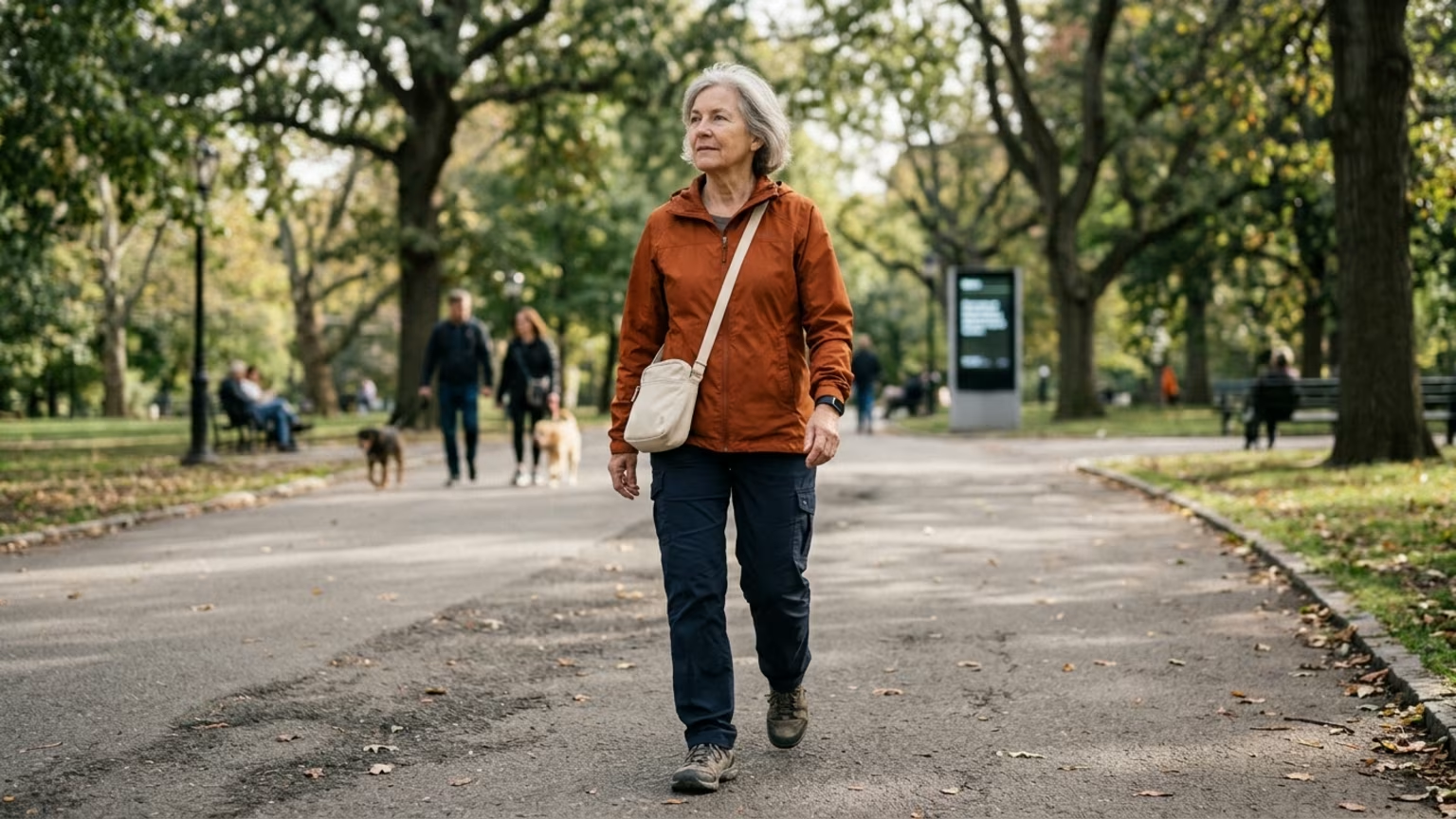

A 2026 BMJ meta-analysis reviewed 124 trials to evaluate how brisk walking and combined aerobic-resistance exercise support bone mineral density in adults over 40.





On September 9, 2026, The BMJ published new findings regarding exercise and bone mineral density. A network meta-analysis reviewed how different types of movement impact bone health in middle-aged and older adults. The scope of this research is substantial, reflecting a growing focus on sustainable aging. The analysis pooled 124 randomized trials, creating a massive dataset for researchers to evaluate.
These underlying trials involved 18,429 participants aged 40 and older. By combining data from so many separate studies, researchers can compare exercise methods that were not directly tested against each other. The overall finding was that structured exercise was associated with a smaller age-related decline in bone mineral density. This provides a helpful foundation for adults looking to support their physical longevity.
Researchers looked at multiple exercise categories in their extensive analysis. These categories included brisk walking or jogging, resistance training, mixed aerobic exercise, and combined aerobic and resistance training. They also evaluated mind-body exercise and whole-body vibration according to reports. The goal was to identify which forms of movement offer the most reliable skeletal protection.
Reports indicate that brisk walking or jogging showed favorable estimates for bone density at several sites. Combined aerobic-resistance exercise also demonstrated favorable results for the lumbar spine specifically. These findings offer practical insights for adults seeking accessible ways to maintain their skeletal health.
Our bones are living tissues that constantly remodel themselves based on physical demands. Weight-bearing activities create necessary mechanical stress throughout the entire skeletal system. This mechanical stress signals the body to maintain or build bone density over time. Without this physical stimulus, the body gradually loses bone mass as a normal part of aging.
The Government of Jersey advises regular weight-bearing and muscle-strengthening activity to support this biological process. Activities like brisk walking require your bones to support your body weight against gravity with each step. This regular impact provides a necessary signal for ongoing bone preservation. Non-weight-bearing activities simply do not provide this exact same mechanical force.
By moving your body weight across the ground, you force the skeletal structure to adapt to impact. This adaptation process requires consistent repetition over time. Occasional walks will not provide the sustained mechanical signal needed to meaningfully maintain bone density. Adults must incorporate these habits into their daily lives with sensible regularity.
For instance, government guidance notes that swimming and cycling can benefit general fitness and joint flexibility. However, these activities do not put enough force on the bones to strengthen them. This distinction highlights why metabolic health and physical resilience require specific forms of stress. Movement must quite literally load the skeleton to effectively preserve it.
A sustainable plan for physical resilience often combines different forms of mechanical loading. While a brisk walk provides a steady stimulus, it is not the only way to support your skeleton. Muscle-strengthening exercises pull on the bones through the attachments of your tendons. This pulling action creates another powerful mechanism for preserving bone mineral density as we age.
WeightRestart focuses on evidence-based, sustainable ways to improve metabolic health and overall body composition. Building consistent daily walking habits can serve as a steady foundation for this physical health ecosystem. Relying on a single form of movement is rarely the most optimal choice for long-term capability. A varied approach to exercise helps address the entire ecosystem of weight management and skeletal support.
Mainstream media coverage might easily interpret this study as absolute proof that daily walking completely prevents bone loss. Women's Health reports that osteoporosis and fragility fractures affect more than 200 million people worldwide. Because the condition is so widespread, health headlines often exaggerate the protective power of a single exercise type. However, the available data requires a much more measured and careful interpretation.
A research summary of the analysis described the overall certainty of evidence as low to moderate. The Women's Health report also noted that the underlying 124 trials varied in design and were not all equally high quality. The findings are based on pooled evidence from existing trials rather than a single new standardized experiment. Claiming that walking guarantees a halt to age-related bone loss overstates what the evidence actually establishes.
The data also reveals areas where the supporting evidence is surprisingly thin. A separate source summary points out a specific limitation regarding the total hip measurements in the study. Some of the favorable total-hip evidence for brisk walking or jogging was based on only 68 participants across three trials. This small sample size is a strong reason to avoid treating exercise rankings as definitive or entirely complete.
Public health guidance reflects this nuanced reality by prioritizing safety and balance. The Government of Jersey suggests combining lower-impact walking with muscle-strengthening exercise at least twice weekly if possible. They also warn that higher-impact activities like jogging or running may not be suitable for everyone. People diagnosed with osteoporosis are advised to consult a physiotherapist or exercise specialist before starting a new programme.
Weight-management messaging must also remain measured in this context. These sources concern bone health and exercise rather than establishing that walking alone produces specific body-composition changes. Changing your physical shape involves a complex interplay of appetite, nutrition, habits, and movement. We translate complex metabolic science into practical steps without pushing extreme, unsustainable workout regimens.
Integrating a manageable walking routine is about building long-term habits without shame or fitness industry exaggeration. This approach perfectly aligns with a body-neutral perspective on movement and metabolic health.
The analysis did yield specific numerical estimates for bone density preservation across multiple body sites. Brisk walking or jogging had favorable estimates at the lumbar spine, femoral neck, and total hip. One summary reports a lumbar-spine mean difference of 0.013 g/cm² for brisk walking or jogging. The exact same lumbar-spine estimate was reported for combined aerobic-resistance exercise.
This reported estimate included a 95 percent credible interval of 0.006 to 0.021. This means the researchers are reasonably confident the true average effect falls within that narrow range. These numbers represent a modest attenuation of age-related bone decline rather than a massive increase in new bone mass. Still, preserving even small fractions of density is highly meaningful for long-term physical capacity.
While this number appears quite small on paper, it represents an important shift in biological momentum. Age-related bone decline is a natural process that slowly diminishes structural integrity over decades. Slowing down that rate of decline is a significant victory for preventative health. It means older adults can potentially maintain their independence and mobility for much longer.
The study summaries also describe a nonlinear dose-response relationship for these skeletal benefits. Researchers estimated that roughly 400 MET-minutes per week could provide a minimally important lumbar-spine change. For the femoral neck and total hip, the estimated dose was about 600 MET-minutes per week. These targets help quantify how much movement might be necessary to see measurable skeletal benefits.
Women's Health translates that 600 MET-minute figure into roughly two to three hours of brisk walking or jogging weekly. This translation offers a helpful benchmark for planning your weekly movement routine. However, it is an approximate, study-derived figure rather than a rigid requirement for everyone. A complete approach to health often pairs this aerobic base with structured strength work.
Focusing on Strength Training for Bone Health, Posture, and Physical Resilience provides a complementary stimulus to walking. Adults seeking sustainable health can start by gradually building toward regular walking if they can do so safely. This steady accumulation of activity supports the body without requiring burnout from extreme exercise programs. Consistency with these moderate habits generally outweighs the intensity of any single workout session.
What to watch next is how future clinical trials directly measure actual fracture outcomes rather than just bone mineral density. The current meta-analysis focuses heavily on bone density markers, and fracture outcomes currently have lower-certainty evidence. We need larger, highly controlled studies over longer periods to see how specific exercise combinations translate into fewer broken bones. It will be important for future research to clearly define standardized doses of combined aerobic and resistance training.
Until those definitive trials are completed, the best evidence still supports a varied, sensible exercise routine. A sustainable mix of walking, appropriate strength training, and professional guidance remains the most logical approach to preserving lifelong mobility.
WeightRestart shares research-led guidance on weight loss, metabolism, nutrition, strength, appetite, sleep and recovery. Our goal is to make complex health information clear, practical and useful for people building progress they can maintain.




Learn how to build a weight-management approach around better information, realistic expectations and habits you can keep using.
read the blog