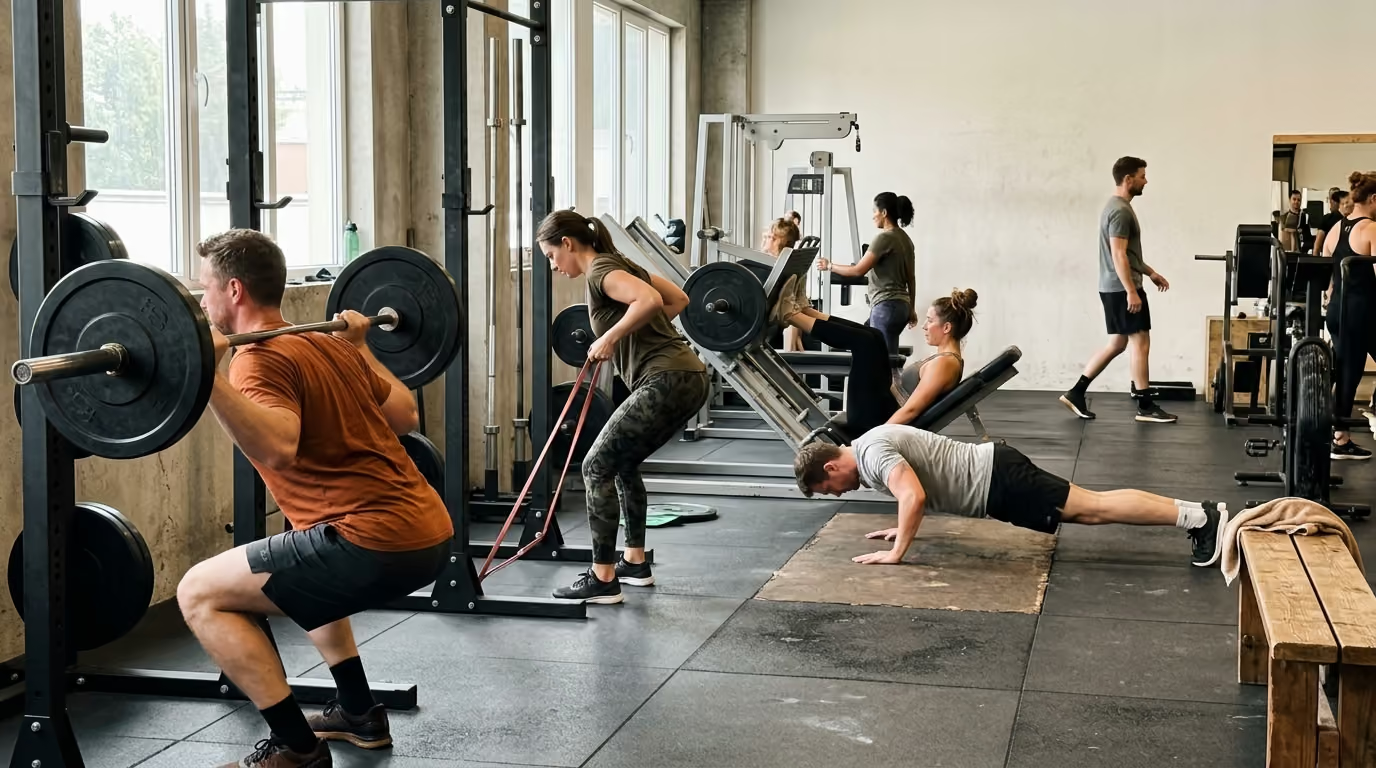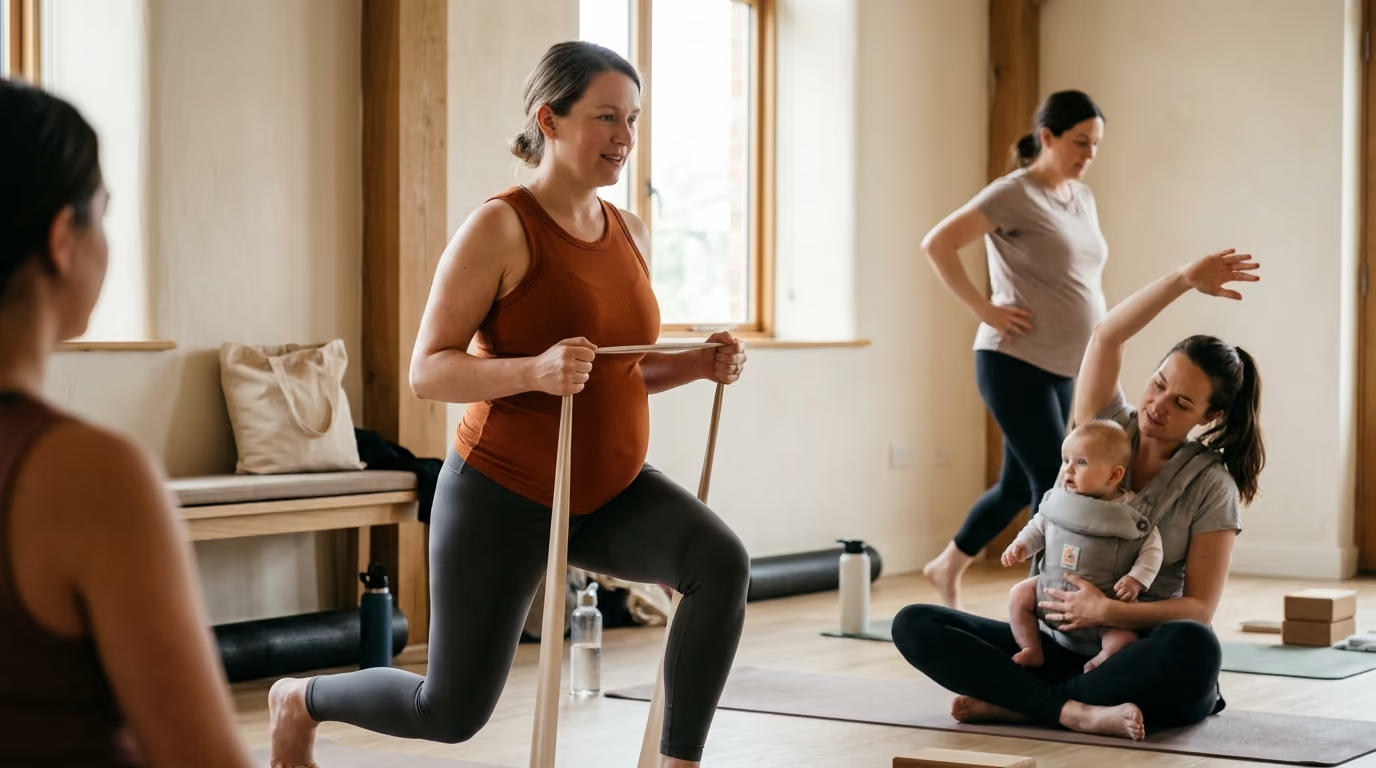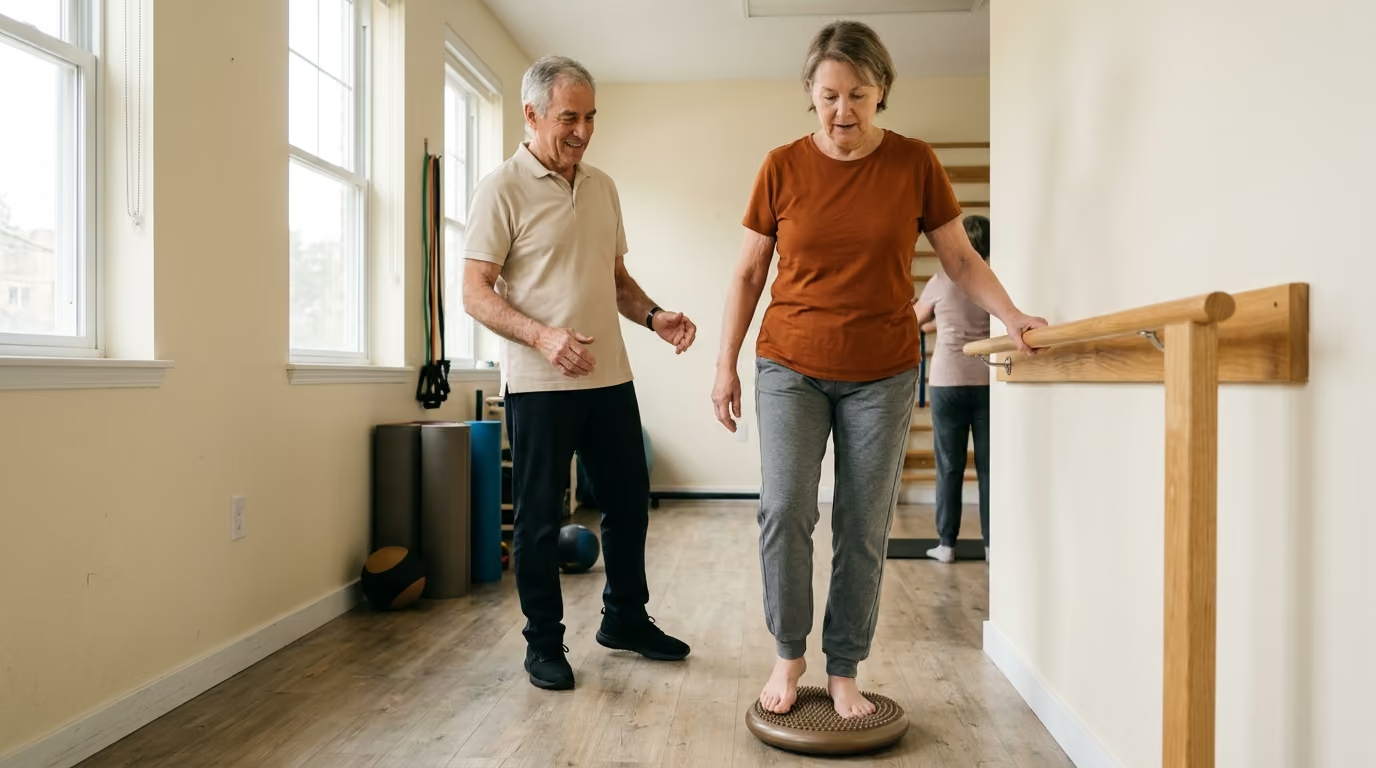

Functional strength training and targeted balance exercises help older adults prevent dangerous falls and maintain their physical mobility for lifelong independence.





Many adults find themselves searching online for solutions after noticing an unexpected stumble on the stairs, a sudden hesitation when stepping off a curb, or a feeling of stiffness when getting out of a low armchair. These subtle shifts in physical confidence often lead people to ask why their stability is declining and what specific exercises can restore their surefootedness. This resource provides a clear, evidence-based guide to rebuilding balance, lower-body strength, and functional mobility for lasting physical independence.
Maintaining functional independence as you age requires preserving your capacity reserve, which is the buffer between daily physical demands and your body's maximum capability. Real-world balance depends on the coordination between rapid force production, lower-body functional strength, sensory integration, and reactive stepping. Combining progressive resistance training with dynamic balance and gait drills creates a protective buffer against falls, mobility loss, and everyday injury.
Balance is often described simply as the ability to stand on one foot without falling over. In clinical physiology, balance represents the continuous management of your center of mass over a changing base of support. Your body maintains equilibrium through a complex network of sensory inputs, central processing, and muscular responses.
The sensory side of balance relies on three distinct systems that feed data to the brain simultaneously:
Your brain constantly combines these three signals to calculate your position in space. If one stream of information becomes impaired, the remaining systems must work harder to compensate. When lighting is poor or visual input is reduced, your nervous system must rely heavily on foot sensation and inner-ear feedback to maintain upright stability.
Balance is divided into static, dynamic, anticipatory, and reactive control. Static balance involves holding a steady posture while standing still. Dynamic balance requires stabilizing your body while moving through space, such as when walking or climbing stairs.
Anticipatory postural control occurs when your nervous system prepares your muscles before an intentional movement occurs. For example, your body shifts its center of mass backward slightly before you take a forward step.
Reactive postural control operates when an unexpected perturbation occurs. If your foot catches on an uneven sidewalk or a pet runs in front of your path, reactive control triggers rapid stepping or torso adjustments to prevent a fall. Real-world independence depends on training both anticipatory and reactive responses rather than focusing only on static poses.
Lower-body functional strength provides the mechanical power needed to execute these nervous-system commands. Maximal strength represents the absolute peak force your muscles can produce against resistance. Muscular power represents how quickly your muscles can generate that force. Rate of force development describes how fast your neuromuscular system can activate motor units from a resting state.
Rate of force development and muscular power often decline faster with age than absolute muscle mass. When you trip over a rug, your brain has only a fraction of a second to plant a recovery foot and brake your forward momentum. If your muscles cannot produce rapid force in that narrow window, a fall occurs even if your slow-speed strength is adequate.
The foot and ankle complex serves as the direct mechanical interface between your body and the ground. Ankle dorsiflexion, which is the ability to pull your toes toward your shin, ensures adequate toe clearance during the swing phase of walking. Weakness in the tibialis anterior muscle or stiffness in the calf complex increases the risk of tripping over low obstacles.
Plantarflexion strength, produced by the gastrocnemius and soleus muscles, generates forward propulsion during gait and stabilizes the ankle during single-leg support. The small intrinsic muscles within the arch of the foot adjust to uneven terrain and provide tactile feedback to the somatosensory network. Building capacity in these lower-leg structures is essential for maintaining steady walking mechanics.
The interplay between capacity, task demands, and environmental factors explains why mobility changes over time. Capacity encompasses your current physical and cognitive resources, including joint mobility, strength, reaction time, and confidence. The task represents what you are trying to accomplish, such as carrying a heavy laundry basket or stepping onto a moving escalator.
The environment introduces external variables like dim lighting, slick floors, or crowded spaces. When task demands and environmental challenges exceed your physical capacity, balance failure occurs. Training expands your internal capacity so that daily tasks remain well within your safe working zone.
Lower-body function also influences psychological confidence, creating a continuous feedback loop. When leg strength or balance begins to decline, normal activities feel more demanding. This sensation can lead people to avoid stairs, outdoor walks, or unfamiliar environments.
Avoidance leads to further muscular deconditioning, joint stiffness, and diminished sensory practice. Over time, fear of falling develops, which alters walking mechanics, shortens step length, and increases fall risk. Structured strength and fitness training breaks this cycle by restoring physical capacity, expanding movement tolerance, and rebuilding self-efficacy.
The scientific evidence supporting balance and functional strength training for healthy aging is robust and consistent across clinical trials. Large-scale public health data demonstrate that mobility preservation is one of the most critical factors in maintaining long-term independence.
Public health research from the Centers for Disease Control and Prevention highlights the scale of fall-related challenges among older populations:
Clinical exercise interventions demonstrate substantial efficacy in reversing these statistics. World Health Organization guidelines emphasize that multicomponent exercise programs combining functional balance, strength, and gait training reduce fall rates by up to 23 percent.
A landmark Cochrane systematic review led by Sherrington and colleagues evaluated exercise interventions for preventing falls in community-dwelling older adults. The review concluded that exercise programs focusing on balance and functional movements reduced the overall rate of falls by 24 percent compared to inactive control groups. These programs also reduced the absolute number of people experiencing one or more falls by 13 percent.
When progressive resistance training is combined with functional balance work, the physiological benefits extend across multiple domains of daily life. A meta-analysis examining 92 studies with 5,932 participants evaluated the effects of resistance training on physical function in older adults. The researchers documented large improvements in overall muscular strength and moderate improvements in functional gait outcomes.
The largest positive effects occurred in the Timed Up-and-Go test, total walking distance, sit-to-stand speed, and self-selected gait velocity. These functional markers directly correlate with a person's ability to cross streets safely, navigate public spaces, and maintain independent living arrangements.
In our experience working with midlife and older adults on sustainable movement and body composition, shifting the focus from the scale to functional performance produces the most profound long-term outcomes. Many people spend decades focusing solely on generic weight loss, only to find their energy low and their physical capacity diminished due to lost muscle mass.
A 2025 meta-analysis published in the clinical literature reinforced this distinction. The researchers found that structured resistance exercise generated statistically significant improvements in grip strength, flexibility, static and dynamic balance, and fall-related self-efficacy.
Interestingly, these physical performance gains occurred without statistically significant changes in total skeletal muscle mass or body fat percentage. This finding demonstrates that neuromuscular adaptations, coordination improvements, and motor unit recruitment provide immense functional protection even before noticeable body composition changes appear.
The United States Preventive Services Task Force recommends exercise interventions for community-dwelling adults aged 65 and older who are at an increased risk of falling. The Task Force concluded with moderate certainty that exercise provides a moderate net benefit in reducing both fall occurrences and fall-related morbidity.
While multifactorial medical reviews addressing vision, medications, and home safety are valuable, physical exercise remains the foundational intervention with the strongest direct evidence for improving physical resilience.
Before beginning an exercise program, baseline assessments provide an objective measurement of your current strength, gait, and balance capacity. Standardized clinical tools allow you to track functional progress over time and identify areas needing targeted support.
The CDC STEADI framework begins with three simple questions to screen for elevated fall risk:
An affirmative answer to any of these questions indicates that a formal functional assessment is warranted. Acknowledging unsteadiness is not a sign of inevitable decline. It is an opportunity to introduce targeted exercises that address early strength and balance deficits.
The Timed Up-and-Go assessment measures functional mobility, walking speed, and turning control.
To perform this assessment:
In the CDC STEADI protocol, completing the sequence in 12 seconds or longer indicates an increased risk of falling. The evaluator should also observe qualitative movement patterns during the test.
Look for signs of hesitation when standing, physical instability while turning, uneven step lengths, or grabbing the chair for balance when sitting down. These qualitative observations often reveal whether the primary limitation is lower-body strength, turning coordination, or walking confidence.
The 30-second chair stand test evaluates lower-body muscular strength, dynamic balance, and local muscular endurance.
To perform this assessment:
If you must push off your thighs or use the chair surface with your hands to stand up, record a score of zero for the standardized test. Being unable to complete the movement without arm assistance highlights lower-body strength as a primary training priority. Tracking your completed repetitions over 8 to 12 weeks provides a direct measurement of lower-body functional recovery.
The four-stage balance test assesses static balance across progressively narrower bases of support.
To perform this assessment safely, stand near a sturdy counter or wall that you can touch if you lose balance:
An inability to hold the tandem stance or single-leg stance for the full 10 seconds indicates reduced balance control. These baseline assessments should be viewed as informative data points rather than fixed labels. Repeating these assessments every two to three months allows you to measure trends in stability, lower-body power, and movement efficiency.
Functional training focuses on movement patterns rather than isolated muscle groups. Training patterns that replicate everyday demands helps your nervous system coordinate joints and muscles during real-world tasks.
The sit-to-stand movement pattern is one of the most critical functional capabilities for lifelong independence. It requires coordinated extension of the hips and knees while maintaining torso control over shifting feet.
To train this pattern:
As your strength improves, progress this movement by lowering the seat height by two inches, eliminating arm support, or adding light resistance in a goblet position. Emphasize the lowering phase of the movement. Controlled descent builds eccentric quadriceps strength, which protects the knees and prevents abrupt falls into chairs.
The hip hinge develops the posterior chain, including the glutes, hamstrings, and spinal erectors. This pattern protects the lower back when lifting objects from the floor, gardening, or picking up household items.
To practice the hip hinge:
Once this movement pattern is consistent, progress to picking up a light kettlebell or dumbbell from an elevated block. Lifting from a raised surface reinforces safe mechanics before progressing to floor-level lifting.
Stair negotiation requires both concentric strength to climb upward and eccentric control to lower downward safely. Falls frequently occur during stair descent due to poor eccentric braking capacity in the quadriceps and calves.
To perform low step-downs:
Focus on keeping the supporting knee aligned with the middle toes rather than allowing it to buckle inward. Master a low four-inch step before progressing to standard eight-inch stair heights.
Walking is essentially a series of single-leg balance transitions. Single-leg drills strengthen the gluteus medius, which stabilizes the pelvis and prevents dynamic valgus collapse during gait.
Progress single-leg training through the following stages:
Always position yourself near a sturdy wall or counter during narrow-base exercises so you can regain stability immediately if needed.
Targeted foot and ankle exercises strengthen the interface between your body and the walking surface, improving toe clearance and ground feedback.
Incorporate these specific exercises:
These exercises improve dorsiflexion mobility, strengthen the calf complex, and help prevent the foot drop that leads to tripping on uneven surfaces.
Carrying objects while walking challenges the core musculature, grip strength, and dynamic postural control under changing loads.
To perform a suitcase carry:
Suitcase carries train the lateral core and hip stabilizers to keep your torso upright when carrying real-world items like shopping bags or luggage.
Reactive balance drills train your neuromuscular system to execute rapid recovery steps when balance is disrupted.
To practice reactive stepping safely:
Reactive training conditions your motor cortex and spinal pathways to initiate quick, decisive foot placements when an unexpected loss of balance occurs.
Structuring a successful balance and functional strength routine requires consistent frequency, progressive overload, and adequate sleep and recovery. Rather than performing exhausting sessions infrequently, brief exposures spread across the week yield superior neuromuscular adaptations.
World falls prevention guidelines recommend that balance and functional training be performed at least three days per week for a minimum of 12 weeks to achieve meaningful reductions in fall risk. Combining two to three structured strength sessions with frequent, short balance sessions creates an effective weekly routine.
The table below outlines how to organize these training components across different functional baseline levels:
This template is designed for individuals who feel unsteady, are recovering from prolonged inactivity, or scored below average on baseline assessments.
This template is suited for adults who can perform everyday tasks independently but want to build a larger capacity reserve, improve stair navigation, and enhance dynamic stability.
This template is designed for active adults who want to maintain high physical independence, agility, and power for sports, hiking, and demanding recreational activities.
To ensure your body continues adapting, apply the principle of progressive overload by adjusting one variable at a time:
Adjusting these variables systematically ensures consistent physical adaptation without causing unnecessary joint irritation or excessive fatigue.
In daily life, movement rarely occurs in complete isolation. You frequently walk while talking to a companion, check your phone, look for street signs, or carry items. Dual-tasking splits cognitive attention between motor control and information processing.
Age-related changes can increase the cognitive effort required for balance and gait. When an unexpected obstacle appears while attention is divided, the risk of a trip or stumble increases. Dual-task training conditions your nervous system to maintain gait stability even when your mind is occupied.
You can incorporate dual-task training through several practical methods:
Dual-task exercises should be introduced only after the underlying movement pattern is stable and secure. If you notice your walking becomes disorganized, your feet begin dragging, or your balance falters significantly, stop the cognitive task immediately and refocus on stable movement mechanics.
Several persistent myths prevent adults from adopting the most effective balance and strength strategies. Addressing these misconceptions ensures your training time is spent on methods that yield genuine real-world improvements.
Standing motionless on one foot on a flat floor trains static stability, but everyday life rarely challenges balance in a fixed position. Real-world falls occur during dynamic transitions, such as turning around quickly, stepping over obstacles, slipping on ice, or rushing to answer a phone.
Relying solely on static single-leg standing leaves out critical movement demands like lateral deceleration, turning coordination, and rapid stepping reactions. Comprehensive balance training must incorporate dynamic weight shifts, stepping drills, and carrying tasks alongside single-leg work.
Walking is an outstanding baseline activity for cardiovascular fitness, metabolic regulation, and general health. However, walking on smooth, predictable sidewalks does not provide enough stimulus to build muscular power, preserve bone density, or challenge lateral stability.
Walking operates primarily in a straight line within the sagittal plane, requiring minimal lateral hip activation or rapid force development. To maintain functional resilience, you must supplement regular walking with multi-directional movements, resistance training, and specific balance challenges.
Many adults believe that if lifting weights does not produce visibly larger muscles, the exercise is not working. In the context of healthy aging, neural adaptations are just as valuable as muscle growth.
Strength training enhances motor unit recruitment, increases the firing rate of motor neurons, stiffens tendons to transfer force efficiently, and improves inter-muscular coordination. These neural adaptations significantly enhance reaction time, movement speed, and functional capacity even when total body composition changes very little.
Overprotecting the body by avoiding all challenging movement leads to a shrinking capacity reserve. When individuals avoid stairs, stop bending to the floor, or avoid stepping over low obstacles, the muscles and neural pathways responsible for those movements weaken from disuse.
The most effective strategy is controlled challenge with an appropriate safety margin. Using handrails, sturdy counters, and scalable exercise regressions allows you to expose your neuromuscular system to meaningful challenges safely.
Standing on foam pads, balance disks, or wobble boards is popular in fitness marketing, but unstable surfaces can actually reduce the amount of muscular force you can produce. If your primary goal is building leg strength or hip power, performing exercises on a firm, stable surface is far more effective.
Unstable surface training can be useful for specific ankle rehabilitation, but it is not necessary for developing the foundational functional strength required to prevent falls in daily life.
While balance and functional strength training is safe and beneficial for most adults, specific medical conditions require customized adaptations and professional oversight. Understanding these limitations ensures training remains safe and effective.
Individuals with osteoporosis or a history of fragility fractures must approach movement selection carefully to protect the spine and hips:
Diabetic neuropathy or chemotherapy-induced peripheral neuropathy reduces sensory feedback from the mechanoreceptors in the soles of the feet:
Knee and hip osteoarthritis can cause joint pain, stiffness, and reduced range of motion, but completely avoiding movement worsens joint health over time:
Individuals with conditions like Benign Paroxysmal Positional Vertigo (BPPV), Parkinson's disease, or a history of stroke require specialized clinical care:
Exercise should be paused immediately, and medical evaluation sought, if you experience any of the following symptoms during training:
Understanding these clinical boundaries ensures you can tailor your routine to your individual health status while building physical resilience safely.
To translate this research into a sustainable routine, use this practical implementation checklist:
Building functional strength and balance is not about pursuing extreme athletic feats. It is about consistently reinforcing the foundational movement patterns that protect your independence, mobility, and confidence throughout life.
WeightRestart shares research-led guidance on weight loss, metabolism, nutrition, strength, appetite, sleep and recovery. Our goal is to make complex health information clear, practical and useful for people building progress they can maintain.



Learn how to build a weight-management approach around better information, realistic expectations and habits you can keep using.
read the blog