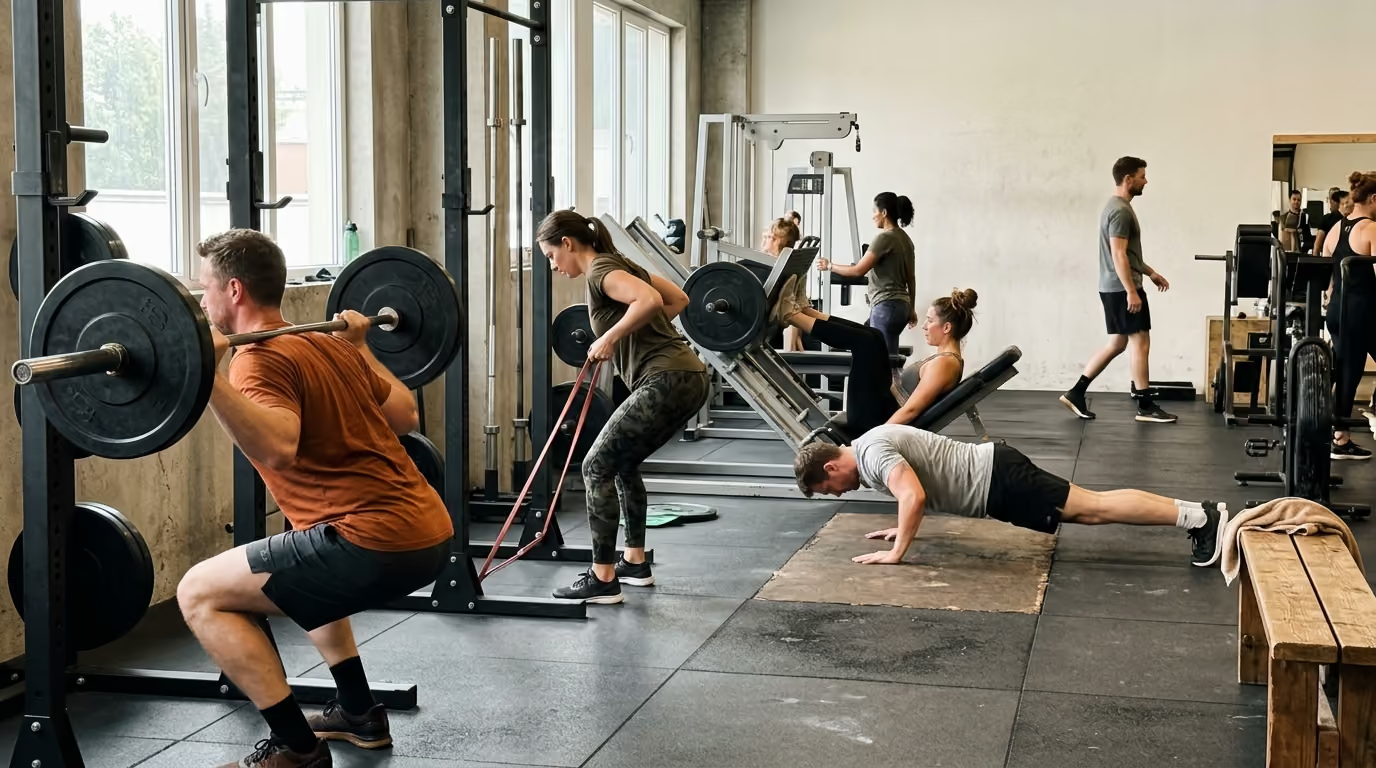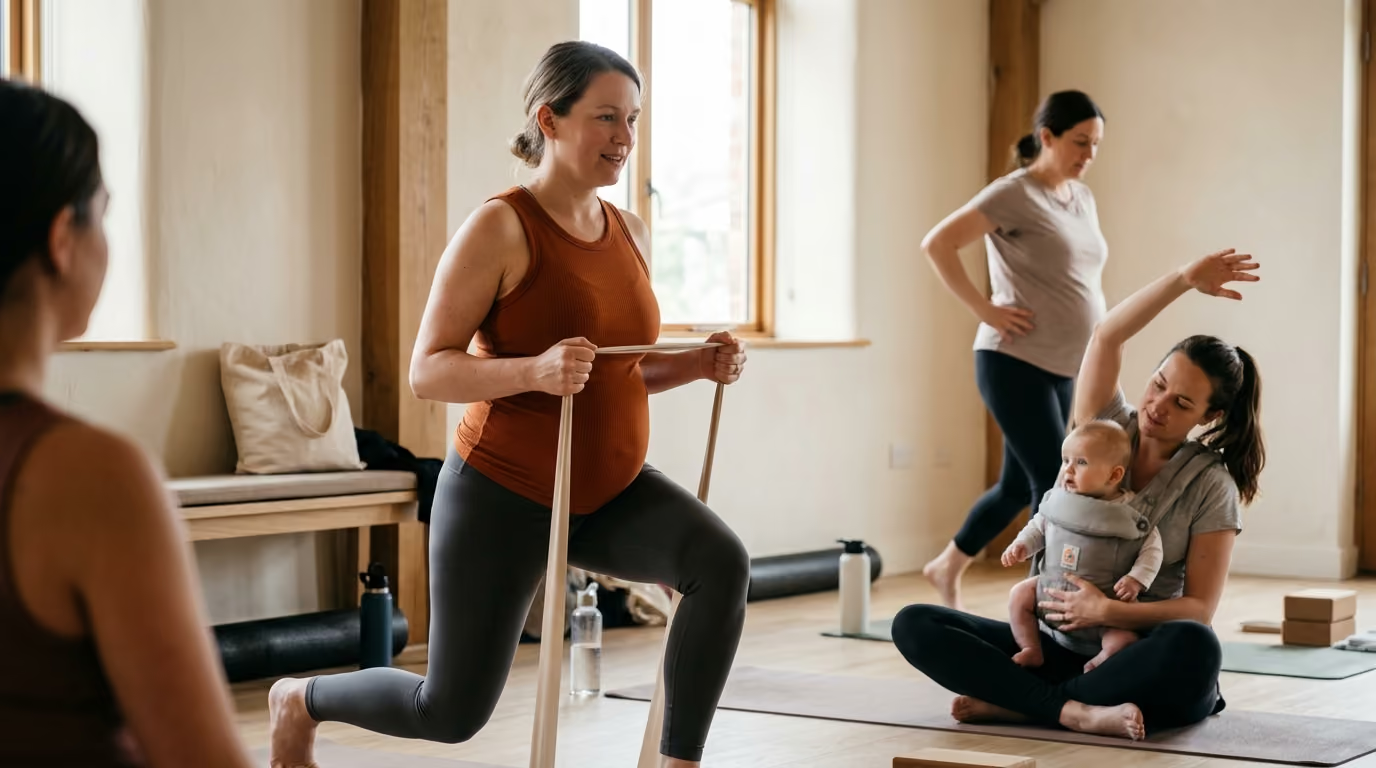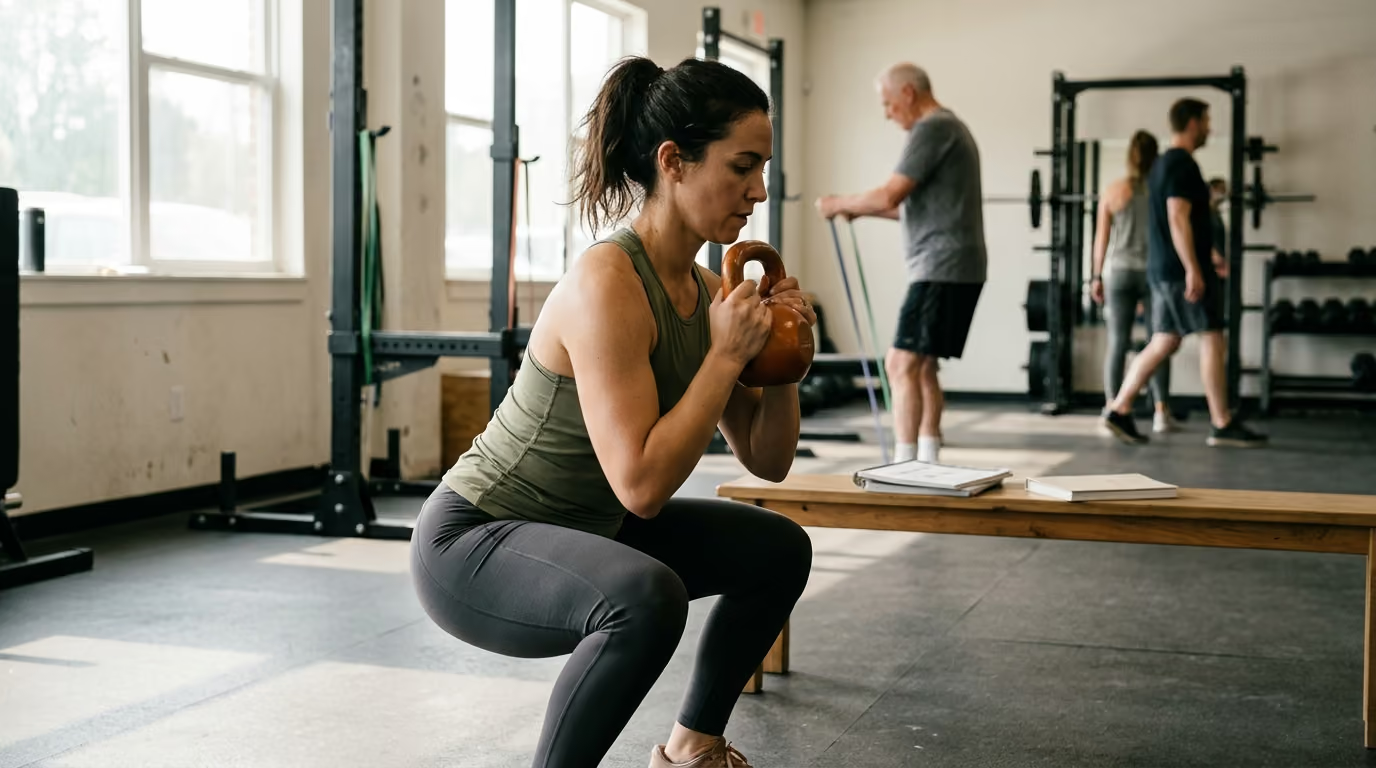

A customized resistance training program protects your joints and builds muscle efficiently by organizing your weekly workouts around foundational human movement patterns.





Exercise selection is not a quest for a universally perfect exercise. It is a systematic decision-making process that matches movement patterns to your specific goals, joint structure, training history, and available equipment. By organizing your training around foundational movement patterns rather than rigid exercise names, you can build a resilient, strong, and metabolically healthy body in any training environment.
This comprehensive guide breaks down the primary human movement patterns, reviews the underlying exercise science, and provides a clear blueprint for choosing and modifying exercises across commercial gyms, home setups, and bodyweight environments.
Exercise selection is the intentional choice of specific resistance movements to stimulate target muscle groups and neuromuscular patterns. It is not an arbitrary list of trendy movements or an attempt to copy the exact routine of an elite athlete. When done correctly, exercise selection creates a high training stimulus while keeping joint stress and systemic fatigue at manageable levels.
Choosing the right exercise requires balancing several competing demands. Your current joint tolerance, individual anatomy, equipment access, and skill level all dictate which variation will deliver the best return on investment. An exercise that builds significant strength for one person might cause persistent joint irritation for another.
Understanding exercise selection through the lens of movement patterns removes dogmatic thinking from your training. You no longer need to debate whether a barbell back squat is strictly better than a leg press or a split squat. Instead, you can evaluate each option based on how effectively it trains the target pattern within your current physical context.
This approach gives you complete flexibility across your lifespan. When life circumstances change, such as traveling, training at home, or managing a joint flare, you can substitute equivalent exercises without losing progress. You can read more about sustainable movement strategies in our strength and body composition guides.
Resistance exercise works by applying mechanical tension to skeletal muscle fibers. When you lift a load through a range of motion, mechanosensors within the muscle cells detect this strain and initiate intracellular signaling pathways. These pathways trigger muscle protein synthesis, leading to muscle fiber hypertrophy and increased tendon stiffness over time.
Neuromuscular adaptations also play a major role, particularly during the initial stages of a new exercise. The central nervous system improves motor unit recruitment, firing frequency, and intermuscular coordination. As your nervous system becomes more efficient at coordinating a movement pattern, you can produce more force with less wasted energy.
Movement patterns group exercises by their primary mechanical actions rather than isolated muscle names. The human body rarely moves in single-joint isolation during daily life. Grouping exercises into patterns like squats, hinges, pushes, and pulls reflects how your skeletal structure and muscle groups coordinate to produce multi-joint force.
This mechanical framework relies on several core concepts:
A movement pattern describes the foundational mechanical trajectory performed by the body, regardless of the tool used. For example, a barbell back squat, a goblet squat, and a machine leg press all train the squat pattern. They share similar joint actions at the hips and knees, even though the external stability and spinal loading differ.
A repetition maximum represents the maximum load you can lift for a specific number of repetitions with sound technique. A one-repetition maximum reflects your absolute single-repetition capacity. An eight-repetition maximum represents a load that permits exactly eight clean repetitions before technical breakdown occurs.
Repetitions in reserve measures how many additional repetitions you could have completed before reaching muscular failure. A set ending at two repetitions in reserve means you stopped two repetitions short of absolute failure. This metric allows you to manage fatigue and train at an effective intensity without exhausting your nervous system.
The scientific literature on resistance training has expanded significantly over the past two decades. We now have clear, robust evidence regarding how equipment selection, training volume, proximity to failure, and range of motion influence physical adaptations.
Many traditional training philosophies claim that free weights are inherently superior to machines for building strength and muscle. However, modern research paints a more nuanced picture. A systematic review examining free-weight versus machine training found no meaningful differences between modalities for muscle hypertrophy or power development.
Strength gains tend to follow the principle of specificity. Individuals who train with free weights gain more strength on free-weight tests, while those who train on machines gain more strength on machine tests. A separate meta-analysis confirmed that both free weights and machines produce similar improvements in muscle mass and strength without increasing joint discomfort.
Machines offer high external stability, allowing you to drive target muscles close to fatigue without balance limitations. Free weights require greater active stabilization and multi-planar control, which develops specific coordination for free-standing tasks. An effective program can incorporate both tools based on individual needs and equipment access.
Training volume refers to the total amount of productive work performed over a given period. It is commonly quantified as the number of challenging weekly sets per muscle group. The relationship between volume and muscle growth is graded, meaning that increasing set volume generally leads to greater gains up to a certain point.
A comprehensive meta-analysis of resistance training volume found a clear dose-response relationship between weekly sets and muscle hypertrophy. Each additional set per week was associated with an increase in muscular adaptations. Higher-volume conditions produced approximately four percent greater muscle growth than lower-volume conditions.
However, more volume is not infinitely better. Excessive volume can outpace your ability to recover, leading to joint strain, poor sleep, and reduced performance. You can explore how recovery constraints interact with exercise volume in our guide to sleep and recovery strategies.
Reaching absolute momentary muscular failure is not required to stimulate strength or muscle hypertrophy. A meta-analysis comparing training to failure versus non-failure training revealed that both approaches produce similar strength gains. Staying within a range of one to three repetitions in reserve provides an optimal stimulus while keeping fatigue manageable.
A 2024 meta-regression confirmed that strength adaptations remain robust across a wide spectrum of proximity to failure. While muscle hypertrophy may benefit slightly from sets taken closer to failure, taking heavy compound lifts to absolute failure increases injury risk and technique breakdown. Saving high-effort sets for stable machines or isolation movements provides a safer stimulus.
Training through a full, comfortable range of motion generally produces superior outcomes compared to partial repetitions. A systematic review concluded that full-range resistance training maximizes muscle strength and lower-limb muscle growth more effectively than partial ranges.
Resistance training through a full range of motion also enhances flexibility. A meta-analysis demonstrated that loaded resistance training significantly improves joint range of motion, matching the improvements seen with dedicated stretching protocols. The goal is to use the largest range of motion that your joints can comfortably control without pain or technical deterioration.
To build an adaptable routine, you must understand how to execute the fundamental movement patterns across commercial gyms, home setups, and minimal-equipment environments. Each pattern serves a distinct mechanical purpose and can be tailored to your physical capabilities.
The squat pattern is characterized by simultaneous flexion and extension of the hips and knees with a relatively upright torso. It trains the quadriceps, gluteal muscles, and adductors while demanding core stability.
In a commercial gym, you can choose from high-bar back squats, front squats, safety-bar squats, hack squats, and leg presses. High-stability options like the hack squat or leg press allow you to direct high mechanical tension to the quadriceps without fatiguing your lower back.
In a home gym, excellent options include dumbbell goblet squats, double-kettlebell front squats, and barbell front squats. Elevating your heels on small weight plates can help you achieve deeper knee flexion if ankle mobility is limited.
In a no-equipment setting, you can use bodyweight squats, tempo squats with a three-second lowering phase, wall sits, and assisted single-leg squats from a chair. You can adjust the difficulty by changing the speed of each repetition or pausing at the bottom.
To coach this pattern effectively:
The hinge pattern emphasizes hip flexion and extension with minimal knee bend, keeping the shins relatively vertical. It targets the posterior chain, including the gluteus maximus, hamstrings, and spinal erectors.
Commercial gym variations include conventional deadlifts, Romanian deadlifts, trap-bar deadlifts, cable pull-throughs, and 45-degree back extensions. The Romanian deadlift is particularly effective for loading the hamstrings and glutes through a deep stretch.
Home gym lifters can perform dumbbell Romanian deadlifts, kettlebell swings, single-leg deadlifts, and barbell hip thrusts. Using resistance bands anchored under the feet provides continuous tension at the top of the hip lockout.
No-equipment variations include bodyweight single-leg Romanian deadlifts, glute bridges, elevated single-leg hip bridges, and hamstring walkouts. You can also perform sliding leg curls on a smooth floor using a towel.
Key coaching cues for the hinge include:
The unilateral lower-body pattern involves split-stance or single-leg actions that challenge hip stability, balance, and leg strength independently. Unilateral work helps address side-to-side strength discrepancies and reduces the total spinal load needed to challenge the legs.
Commercial gym trainees can utilize walking lunges, barbell Bulgarian split squats, machine step-ups, and front-foot elevated split squats. These exercises place high local demand on the quads and glutes while requiring minimal total external weight.
Home gyms are well-suited for dumbbell split squats, reverse lunges from a step, and rear-foot elevated split squats. Holding a single dumbbell on one side challenges your lateral hip stabilizers and core musculature.
No-equipment settings can rely on bodyweight split squats, reverse lunges, lateral lunges, and single-leg step-downs from a sturdy household step. Holding onto a wall or doorway allows you to remove balance limitations and focus entirely on muscular effort.
Practical progression steps for unilateral leg training:
Horizontal pushing moves resistance away from the chest in a plane perpendicular to the torso. This pattern strengthens the pectoralis major, anterior deltoids, and triceps brachii.
Commercial gyms provide barbell bench presses, dumbbell flat and incline presses, selectorized chest press machines, and cable flyes. Machine presses offer exceptional stability for training the chest safely near muscular fatigue.
Home gym environments can utilize flat dumbbell bench presses, floor presses, and resistance-band push-ups. The dumbbell floor press is particularly valuable for individuals who experience shoulder discomfort at the bottom of a standard bench press.
No-equipment training relies heavily on push-up progressions. You can scale push-ups precisely by altering your body angle, moving from wall push-ups to incline push-ups on a countertop, standard floor push-ups, and feet-elevated push-ups.
Coaching cues for horizontal pressing:
Vertical pushing involves driving a resistance overhead in line with the torso. It targets the deltoid musculature, upper pectoralis, and triceps, while demanding upper-body mobility and core stability.
Commercial gym options include standing barbell overhead presses, seated dumbbell shoulder presses, landmine presses, and machine overhead presses. Seated machine presses remove balance constraints, allowing direct loading of the shoulder muscles.
Home gym lifters can perform standing single-arm kettlebell presses, seated dumbbell overhead presses, half-kneeling landmine presses, and banded overhead presses. The landmine press offers an angled pressing path that is gentle on sensitive shoulder joints.
No-equipment options include pike push-ups, elevated pike push-ups from a chair, and wall-assisted handstand hold progressions. You can also use isometric towel presses overhead to build positional strength.
Guidelines for vertical pressing:
Horizontal pulling brings resistance toward your torso, primarily recruiting the latissimus dorsi, rhomboids, middle trapezius, posterior deltoids, and elbow flexors. It supports posture and balances anterior pressing volume.
Commercial gyms feature seated cable rows, chest-supported machine rows, single-arm dumbbell rows, and barbell bent-over rows. Chest-supported rows are exceptional because they remove lower-back fatigue as a limiting factor.
Home gym settings can use single-arm dumbbell rows supported on a bench, bent-over kettlebell rows, and resistance-band seated rows. Door-anchor attachments allow you to replicate horizontal cable rows effectively with elastic bands.
No-equipment environments can utilize inverted rows under a sturdy dining table, doorframe rows, or towel isometric rows. When performing inverted rows at home, always verify that your support structure is secure and capable of holding your weight.
Form cues for horizontal pulling:
Vertical pulling draws resistance down from overhead or pulls your body up toward an anchor point. It develops the latissimus dorsi, teres major, lower trapezius, and biceps.
Commercial gym equipment includes lat pulldowns with various grip attachments, assisted pull-up machines, and standard chin-up bars. Lat pulldowns allow precise load adjustments across all strength levels.
Home gyms benefit greatly from a securely installed doorway pull-up bar, resistance bands for assisted chin-ups, and band pulldowns anchored high over a door. Band pulldowns provide a steady pulling stimulus when a full pull-up is not yet accessible.
No-equipment settings face real challenges with vertical pulling. Safe options include high-angle doorframe pulls, isometric pull-downs using a knotted towel, or supine floor slide pulldowns. Installing a secure pull-up bar remains the best long-term solution for home training.
Essential coaching points:
Loaded carries involve walking or maintaining posture while supporting an external load. This pattern builds total-body work capacity, grip strength, shoulder stability, and lateral core control.
Commercial gym options include heavy dumbbell farmer carries, trap-bar carries, and sled pushes or drags. Sled work provides exceptional lower-body conditioning and metabolic stress with minimal eccentric muscle damage.
Home gym lifters can perform suitcase carries with a single heavy dumbbell, front-rack kettlebell carries, or bear-hug sandbag carries. Carrying a load on only one side forces the contralateral oblique muscles to brace intensely against lateral flexion.
No-equipment variations can include loaded backpack carries, walking lunges over distance, or stair climbs. You can fill a sturdy backpack with books to create an adjustable, compact load.
Coaching cues for carries:
The trunk muscles function primarily to transfer force and stabilize the spine against external loads. Training should include exercises that resist movement in multiple planes as well as controlled dynamic movement.
Commercial gyms offer cable Pallof presses, cable woodchops, captain's chair leg raises, and ab-wheel rollouts. The cable Pallof press is a premier anti-rotation exercise that challenges the entire core cylinder.
Home gyms can utilize resistance-band Pallof presses, side planks, bird-dogs, and ab rollouts. Resistance bands provide increasing resistance as you push away from your body during anti-rotation holds.
No-equipment settings provide dozens of effective core movements, including front planks, side planks, dead bugs, hollow body holds, and bird-dogs. These movements teach you to resist extension and rotation without placing shear stress on your spine.
Core training classifications:
You can learn more about structuring these fundamental patterns alongside overall conditioning in our strength training and fitness resources.
Fitness culture often repeats rigid rules that create unnecessary anxiety for trainees. Addressing these myths helps you make informed, flexible decisions about your routine.
A widespread belief is that every exercise has a single ideal form that everyone must follow. In reality, human skeletal anatomy varies dramatically from person to person. Differences in femoral neck angle, hip socket depth, limb-to-torso ratios, and shoulder geometry mean that optimal technique looks different on different bodies.
A person with long femurs and a short torso will naturally lean forward more during a squat than someone with short femurs and a long torso. Forcing everyone into the same visual template causes joint irritation and reduces performance. Good form is defined by joint control, stable mechanics, and pain-free execution, not a rigid cosmetic standard.
The claim that machines lack functional value is unsupported by biomechanical research. While free weights require multi-planar stabilization, machines allow you to isolate and overload specific muscle groups with minimal balance interference.
If your goal is to build quadriceps mass, a leg press or hack squat is just as functional as a barbell back squat. Machines are especially valuable when you want to train hard while managing fatigue in your lower back or core. An intelligent training plan uses both tools where they serve your goals best.
Many people believe that a set is wasted unless they reach the point where the weight cannot move another inch. Research consistently demonstrates that stopping one to three repetitions short of failure produces comparable muscle growth and strength adaptations with significantly less fatigue.
Training to failure on complex compound lifts like deadlifts or squats increases the risk of technical breakdown and joint strain. It also creates disproportionate central nervous system fatigue, compromising the quality of the remaining sets in your workout. Managing your effort using repetitions in reserve keeps your training productive and sustainable.
Strength training remains vital as we age, supporting metabolic health, preserving bone density, and maintaining daily function. However, joint wear, previous injuries, and osteoarthritis require thoughtful modifications rather than abandoning resistance exercise altogether. You can review our research in weight science to understand how maintaining muscle tissue supports long-term metabolic health.
When dealing with joint discomfort, you do not need to avoid all physical sensations. The key is distinguishing between normal muscular effort, acceptable mild discomfort, and symptoms that signal tissue irritation.
A practical framework used in clinical rehabilitation is the traffic-light system:
Always apply the 24-hour rule: if joint discomfort or swelling is noticeably worse the morning after training, the previous session exceeded your current tissue capacity. Reduce the load, volume, or range of motion in the next session.
When an exercise triggers uncomfortable joint symptoms, work through this systematic hierarchy before dropping the movement pattern entirely:
Resistance exercise is entirely safe and highly recommended for individuals with osteoarthritis. Clinical guidelines emphasize that regular loading strengthens the surrounding muscles, improves joint lubrication, and reduces chronic pain. Even individuals with severe knee osteoarthritis can participate in structured resistance training with excellent outcomes.
For older adults, resistance training combats sarcopenia, which is the age-related loss of muscle mass and physical function. The National Strength and Conditioning Association emphasizes that older trainees should focus on multi-joint patterns that mirror daily life, such as sit-to-stands, step-ups, hip hinges, rows, and carries. Using stable supports allows you to train with meaningful intensity while minimizing balance concerns.
To see how these principles work in practice, let us examine three realistic training scenarios with distinct constraints and goals.
Goal: Build foundational strength, improve mobility, and establish a consistent routine.
Programming Strategy: Perform this full-body routine two to three times per week on non-consecutive days. Focus on mastering clean mechanics and building movement confidence before increasing difficulty.
Goal: Maximize muscle retention and metabolic health using adjustable dumbbells and a bench.
Programming Strategy: Distribute these exercises across an Upper/Lower split or a three-day full-body rotation. Ensure that weekly volume reaches roughly 10 challenging sets per major muscle group. Combining this routine with supportive daily nutrition provides the necessary building blocks for body recomposition.
Goal: Build upper-body pushing and pulling strength without aggravating anterior shoulder pain.
Programming Strategy: By replacing barbell bench pressing with a neutral-grip dumbbell floor press, the lifter eliminates painful shoulder extension at the bottom of the lift. The landmine press replaces the vertical overhead press, providing a comfortable 45-degree pressing angle that preserves shoulder mechanics.
Progressive overload is the gradual increase of stress placed upon the body during resistance training. Without progression, your muscles adapt to the current workload and physical improvements plateau. Fortunately, adding more weight to the bar is only one of several valid progression methods.
Double progression is one of the most reliable systems for intermediate and home lifters. You choose a repetition target range, such as 8 to 12 repetitions. You keep the load constant across all sets until you can complete all prescribed sets at the top end of the range with good form.
Once you achieve 12 repetitions on every set, you increase the resistance by a small amount, typically 2 to 5 percent. With the heavier weight, your repetitions will naturally drop back toward the lower end of the range, such as 8 repetitions. You then repeat the process, working back up toward 12 repetitions over several weeks.
If you have limited weight plates or train with fixed-weight implements, you can progress simply by adding repetitions. Increasing a set of goblet squats from 10 repetitions to 14 repetitions at the same load represents a meaningful increase in total training volume and muscular endurance.
When performing bodyweight exercises, you progress by altering your body's leverage relative to gravity. For push-ups, you can progress through a clear mechanical hierarchy:
Increasing your controlled range of motion is a powerful form of progression. Lowering your squat an inch deeper under full control requires greater muscular recruitment and flexibility.
Similarly, slowing down the eccentric phase increases time under tension without requiring heavier weights. Adding a two-second pause at the bottom of a split squat removes elastic rebound and forces the muscles to generate force from a dead stop. This builds substantial strength and joint stability.
Applying these progression models systematically supports sustainable metabolic health management over years rather than weeks.
Building an effective strength routine comes down to a few practical principles:
Yes, bodyweight training can build significant strength and muscle mass, especially when you are starting out. The key is using leverage progressions to keep the exercises challenging within your target repetition range. However, progressing pulling movements and lower-body maximum strength becomes difficult over time without external loads like bands, dumbbells, or pull-up bars.
An exercise is likely a poor match for your current structure if it consistently produces sharp, pinching joint pain, causes symptoms that linger for more than 24 hours, or forces you into awkward compensatory movement patterns. If adjusting your stance, grip, tempo, and range of motion does not resolve the discomfort, substitute an alternative exercise within the same movement pattern.
Constantly changing exercises prevents you from mastering movement skill and tracking progressive overload. It is far more effective to stick with the same core movement patterns for 8 to 12 weeks at a time. Change an exercise only when you hit a prolonged plateau, experience joint irritation, or need a fresh stimulus to maintain motivation.
Most effective full-body or split workouts include 4 to 6 exercises per session. This allows you to train several primary movement patterns with high quality and focus without accumulating excessive fatigue. Performing too many exercises in one workout often reduces the effort and intensity you can bring to each set.
WeightRestart shares research-led guidance on weight loss, metabolism, nutrition, strength, appetite, sleep and recovery. Our goal is to make complex health information clear, practical and useful for people building progress they can maintain.



Learn how to build a weight-management approach around better information, realistic expectations and habits you can keep using.
read the blog