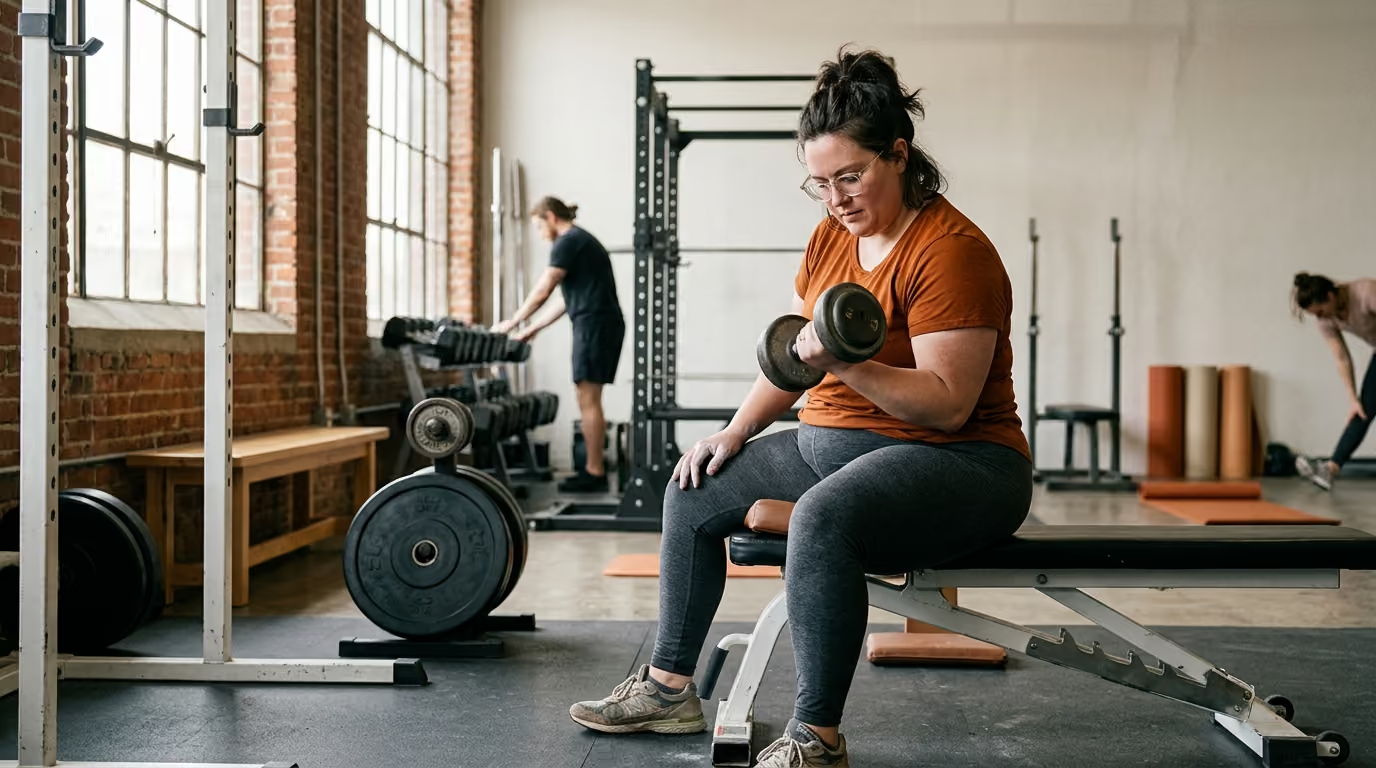

Inclusive strength training helps individuals in larger bodies build muscle mass, protect their joints, and improve metabolic health through practical movement adaptations.





Many people search for how to start strength training when living in a larger body, managing joint pain, or dealing with gym intimidation. The standard fitness advice often assumes that every beginner has full mobility, standard equipment access, and an interest in aggressive weight loss. This guide provides a definitive framework for building muscular strength, protecting joints, and navigating fitness spaces with confidence regardless of your starting point or body size.
Inclusive strength training views body size, mobility limitations, and equipment barriers as practical design factors rather than personal shortcomings. Meaningful physical adaptations occur when exercises match an individual's current capacity, structural mechanics, and comfort levels. By focusing on progressive load management, stable positions, and functional movement patterns, adults of any size can safely develop muscle tissue, improve metabolic function, and build lasting physical resilience.
Muscular tissue acts as a primary driver of metabolic health, glucose disposal, and structural protection. When muscles contract against external resistance, they experience mechanical tension and cellular stress. These signals stimulate muscle protein synthesis, which preserves or increases fat-free mass over time. For adults in larger bodies or those with reduced baseline mobility, this adaptation provides essential joint stability and functional capacity.
Resistance exercise fundamentally alters body composition even when scale weight remains unchanged. Systematic reviews and meta-analyses show that resistance training in adults with overweight or obesity produces significant reductions in fat mass alongside increases in lean mass. Pooled data indicate average reductions of approximately 1.6 kilograms of fat mass and increases of 0.8 kilograms of lean mass from structured lifting programs. Furthermore, when combined with dietary changes, resistance exercise preserves vital muscle tissue that might otherwise be lost during caloric deficits.
Skeletal muscle also serves as the largest site for insulin-mediated glucose clearance in the human body. Contracting muscles pull glucose directly from the bloodstream through insulin-independent pathways. This mechanism helps stabilize blood sugar, improves insulin sensitivity, and reduces systemic inflammatory markers. Understanding these biological pathways reinforces that movement provides profound metabolic benefits independent of weight loss. You can learn more about these mechanisms through evidence-led strength and fitness principles.
The quality of scientific evidence supporting resistance training for body composition, strength development, and metabolic regulation is exceptionally robust. Decades of randomized controlled trials consistently confirm that progressive overload strengthens connective tissue, increases bone mineral density, and enhances neuromuscular coordination. These physiological benefits apply across all body sizes, ages, and baseline fitness levels when programs are properly scaled to individual tolerance.
Physical inactivity is rarely an individual failure of willpower. The World Health Organization reports that nearly one-third of adults worldwide, representing approximately 1.8 billion people, did not meet baseline activity guidelines in 2022. In the United States, National Health Interview Survey data showed that while adherence to physical activity guidelines among adults with obesity rose from 9.4 percent in 1997 to 15.0 percent in 2018, it remained stubbornly low overall. These statistics highlight substantial structural, environmental, and social barriers rather than a widespread lack of personal motivation.
Weight stigma within fitness environments represents a significant obstacle to regular participation. Research demonstrates that weight teasing, discrimination, and internalized stigma are directly associated with reduced physical activity levels. When commercial gyms feature narrow equipment spacing, fragile furniture, and unsolicited weight commentary, they create hostile environments. A person avoiding a conventional gym is often making a rational choice to protect their mental and physical well-being.
Physical infrastructure creates concrete limitations for larger individuals. Standard commercial exercise machines often feature restrictive seat widths, low maximum weight capacities, and narrow entry pathways. The U.S. Access Board guidelines for sports facilities recommend clear floor space of at least 30 by 48 inches for accessible equipment. These guidelines also specify that accessible benches should measure 17 to 19 inches high and withstand a minimum of 250 pounds of force. When facilities fail to meet these basic criteria, they actively exclude larger and disabled exercisers.
Creating genuine access requires facilities to address the complete user journey. This journey includes accessible parking, wide locker-room benches, armless seating in waiting areas, and appropriately spaced equipment. Instructors and fitness professionals must also adopt respectful, weight-neutral communication. Exercisers deserve safe spaces that support physical progression without moralizing body size or prescribing mandatory weight loss.
Biomechanical adaptation means modifying an exercise to fit the human body rather than forcing the body into an arbitrary movement template. Body mass naturally alters balance demands, center of mass, joint angles, and soft-tissue clearance. A person carrying significant abdominal or thigh mass may find standard ranges of motion uncomfortable or physically impossible. Adjusting foot placement, grip width, and torso angles allows for effective muscle loading without joint impingement.
Relative load is far more relevant than absolute resistance when selecting weights. An empty bar or even unweighted body movement may represent a maximal effort for one person, while another requires substantial external load. A practical baseline involves training at a Rate of Perceived Exertion of 5 to 7 on a 10-point scale. This range leaves two to four controlled repetitions in reserve, which stimulates muscular adaptation while minimizing excessive fatigue.
Position stability dictates exercise safety and effectiveness. Seated, supported, or wall-assisted positions reduce balance demands and lower the risk of falls. A seated chest press or a machine row provides the same target muscle recruitment as a standing barbell variation. Starting in supported positions allows the nervous system to focus entirely on force production rather than equilibrium.
Range of motion should always be tailored to individual comfort and skeletal anatomy. While standard fitness media often insists on deep squats or chest-to-bar presses, forcing these depths can cause unnecessary joint stress. Beginning with a partial range of motion builds tissue tolerance safely. You can gradually increase your movement depth over several weeks as mobility and tissue strength naturally improve.
A comprehensive strength program can be built around six fundamental movement patterns. These include knee-dominant movements, hip-dominant movements, horizontal pushes, horizontal pulls, vertical pushes or pulls, and core stabilization. Every pattern can be adapted to accommodate larger bodies, reduced mobility, or limited equipment access. You can find more practical frameworks in our guide to strength, movement, and body composition strategies.
The sit-to-stand from an elevated surface serves as the foundational knee-dominant exercise for beginners. Choose a sturdy, armless chair or a weight bench elevated with secure risers so your hips sit slightly higher than your knees. Place your feet wider than shoulder-width with your toes turned outward at a comfortable 15 to 30-degree angle. Lean your torso forward slightly from the hips to align your center of mass over your midfoot. Press firmly through your entire foot to stand upright, pause for a second, and then lower your hips back down under complete control.
Supported partial squats offer an excellent progression once chair transfers feel effortless. Stand facing a sturdy counter, a power rack, or a wall-mounted support bar. Hold the support lightly with both hands to assist with balance and reduce knee joint pressure. Lower your hips back and down to a comfortable depth, pause briefly, and drive upward through your heels. Perform 2 sets of 6 to 10 repetitions, focusing on a smooth lowering tempo.
The hip hinge targets the posterior chain, including the glutes and hamstrings, without overloading the lower back. Stand approximately six inches in front of a wall with your feet set wide and knees soft. Push your hips backward toward the wall while keeping your spine straight and chest lifted. Touch your glutes to the wall, pause to feel the tension in the back of your thighs, and then drive your hips forward to return to standing.
Cable or band pull-throughs provide consistent resistance across the entire hip-extension range of motion. Secure a resistance band to a sturdy anchor point at knee height. Straddle the band, face away from the anchor, and grasp the band handles between your legs. Step forward to create light tension, hinge at your hips while maintaining a neutral spine, and then squeeze your glutes to stand tall. This movement avoids the spinal compression often experienced with traditional barbell deadlifts.
The wall push-up is an accessible and scalable upper-body pressing exercise. Stand facing a flat wall at arm's length, placing your palms flat against the surface at shoulder height. Step your feet back slightly to create a comfortable incline, keeping your body in a straight line from head to heels. Bend your elbows to lower your chest toward the wall, pause for one second, and push back to the start position. Adjusting your foot distance from the wall instantly increases or decreases the difficulty.
Seated cable or band rows build upper-back and postural strength with minimal lower-body fatigue. Sit on a sturdy, wide bench or chair facing a resistance band anchored at chest height. Grasp the handles with arms extended and sit tall with your shoulders relaxed downward away from your ears. Pull the handles toward your lower ribs by driving your elbows backward, squeezing your shoulder blades together at the finish. Slowly extend your arms forward to complete each repetition.
Loaded carries and isometric holds build trunk stability and grip strength without requiring floor transfers. The seated anti-rotation press uses a lateral band anchor to challenge trunk stability. Sit tall in a sturdy chair with a resistance band anchored to your side at chest level. Hold the band with both hands at the center of your chest, press your hands straight forward, pause against the rotational pull, and return your hands to your chest.
Supported suitcase holds build unilateral core strength and enhance carrying capacity for daily tasks. Stand tall next to a sturdy counter while holding a dumbbell or kettlebell in one hand. Maintain an upright posture without leaning toward or away from the weight for 15 to 30 seconds. Switch sides and repeat, using the nearby counter for balance assistance if needed. This exercise directly improves your ability to carry groceries and navigate uneven terrain safely.
Joint discomfort should never be ignored, but it does not require stopping all physical activity. Clinical guidelines for osteoarthritis emphasize that low-impact movement and progressive strengthening are primary treatments for joint health. Exercise stimulates synovial fluid circulation, which nourishes cartilage and reduces stiffness over time. The key is distinguishing between normal muscular effort and potential joint irritation.
A traffic-light monitoring system provides a clear framework for managing symptoms during and after exercise:
Managing osteoarthritis requires careful volume control rather than complete rest. Research confirms that walking up to 10,000 steps per day does not accelerate osteoarthritis progression when managed within personal tolerance. Furthermore, modest reductions in body weight of roughly 5 percent can significantly decrease knee joint forces during daily walking. However, strength gains and symptom relief occur even when body weight remains entirely constant. To explore more about the relationship between body weight and metabolic health, read our coverage on metabolic and weight science.
Equipment selection plays a major role in creating a safe and sustainable strength routine. Home training offers total privacy, customizable pacing, and zero commute barriers. A minimalist home gym can consist of a set of resistance bands with door anchors, a sturdy armless chair, and a pair of adjustable dumbbells. Commercial gyms provide a wider variety of load options, but require careful evaluation of equipment dimensions.
Workout apparel is a functional access tool rather than a fashion statement. Garments should prevent painful skin chafing, stay securely in place, and allow unrestricted movement. High-waisted leggings or athletic shorts with wide, reinforced waistbands prevent fabric from rolling down during seated or bending exercises. Anti-chafing balms applied to inner thighs and underarms prevent skin breakdown during repetitive movements.
Footwear must provide a stable, wide base of support for standing exercises. Running shoes with thick, squishy foam soles can reduce balance and increase ankle wobble during squats or carries. Look for wide-width cross-training shoes or minimalist footwear with flat, firm soles. If finding supportive athletic shoes is difficult, performing home exercises in non-slip socks or bare feet on a firm mat can improve ground feel and foot stability.
Defining progress solely through bathroom scale readings overlooks the most significant adaptations of resistance training. Scale weight fluctuates constantly due to fluid retention, digestive contents, sodium intake, and hormonal shifts. When you build dense muscle tissue while simultaneously losing body fat, your total scale weight may remain static. Tracking multidimensional performance markers provides a more accurate and motivating picture of your physical development.
Celebrating these functional milestones reinforces lasting habit formation. When you focus on what your body can accomplish rather than what it weighs, exercise becomes an empowering practice. For deeper insights on sustainable health habits, browse our sustainable weight management resources.
A widespread misconception suggests that individuals in larger bodies must focus exclusively on cardio and diet to lose weight before lifting weights. This advice is physiologically backward and counterproductive. Resistance training builds the metabolic engine, preserves lean muscle tissue, and enhances joint integrity from day one. Postponing strength work until a lower body weight is achieved increases the likelihood of muscle loss, metabolic slowdown, and injury when lifting is finally attempted.
Many fitness media outlets imply that an exercise must involve high impact, burpees, or heavy barbells to deliver results. In reality, skeletal muscle tissue only responds to mechanical tension and metabolic stress, regardless of the position. A seated chest press using resistance bands can produce identical muscular recruitment to a standard barbell bench press when performed with adequate intensity. Seated and low-impact variations provide high-quality training stimuli while protecting vulnerable joints from excessive wear.
Popular fitness culture often glorifies complete exhaustion, heavy sweating, and severe post-workout soreness as proof of an effective workout. In truth, excessive soreness is merely a sign of unaccustomed muscle damage, not optimal adaptation. Training to total failure dramatically increases recovery demands, elevates injury risks, and impairs consistency. A well-designed routine leaves you feeling capable, energized, and ready to train again in forty-eight hours.
While resistance training is exceptionally safe for most people, specific clinical conditions require individualized medical clearance and adapted protocols. Adults with poorly controlled hypertension, significant cardiovascular disease, or unmanaged diabetic neuropathy should consult their physician before starting a new regimen. Exercise raises blood pressure acutely during heavy lifting, making proper breathing technique essential. Never hold your breath during exertion; exhale smoothly through the hardest part of the lift.
Individuals with severe joint degeneration, recent joint replacement surgeries, or spinal pathology must work within specific orthopedic guidelines. Generic exercise programs found online cannot account for surgical hardware limitations or specific contraindications. Physical therapists and certified clinical exercise physiologists can design specialized progressions that accommodate structural limitations while maintaining training momentum.
Rapid weight loss resulting from bariatric surgery or weight-loss medications presents another unique scenario. During periods of rapid weight loss, the body risks losing significant amounts of skeletal muscle alongside adipose tissue. Progressive resistance training is critical during this phase to protect functional capacity and resting metabolic rate. However, nutritional intake, protein adequacy, and hydration must be monitored carefully to prevent severe fatigue and nutritional deficiencies.
Finally, adults managing lymphedema, chronic swelling, or skin integrity issues must exercise with proper skin protection and gradual volume increases. Repetitive friction or ill-fitting compression garments can irritate sensitive tissues. Progressing slowly allows connective tissues and the lymphatic system to adapt safely to increased physical demands.
Fat-free mass refers to all body components that do not contain fat, including skeletal muscle, bones, organs, water, and connective tissues. Maintaining or increasing this mass through resistance training supports higher resting energy expenditure and physical strength.
Internalized weight stigma occurs when an individual applies negative societal stereotypes and prejudices about body size to themselves. This psychological burden is clinically linked to increased stress, gym avoidance, and reduced long-term physical activity adherence.
Rate of Perceived Exertion is a subjective scale, typically from 1 to 10, used to measure workout intensity. Repetitions in Reserve describes how many additional, clean repetitions an exerciser could complete before reaching muscular failure. Training at an exertion rating of 6 to 7 typically correlates to leaving two to four repetitions in reserve.
Building a sustainable strength routine requires simple, consistent actions rather than extreme overhauls:
Use this practical checklist to launch your inclusive strength routine over the next seven days:
WeightRestart shares research-led guidance on weight loss, metabolism, nutrition, strength, appetite, sleep and recovery. Our goal is to make complex health information clear, practical and useful for people building progress they can maintain.



Learn how to build a weight-management approach around better information, realistic expectations and habits you can keep using.
read the blog