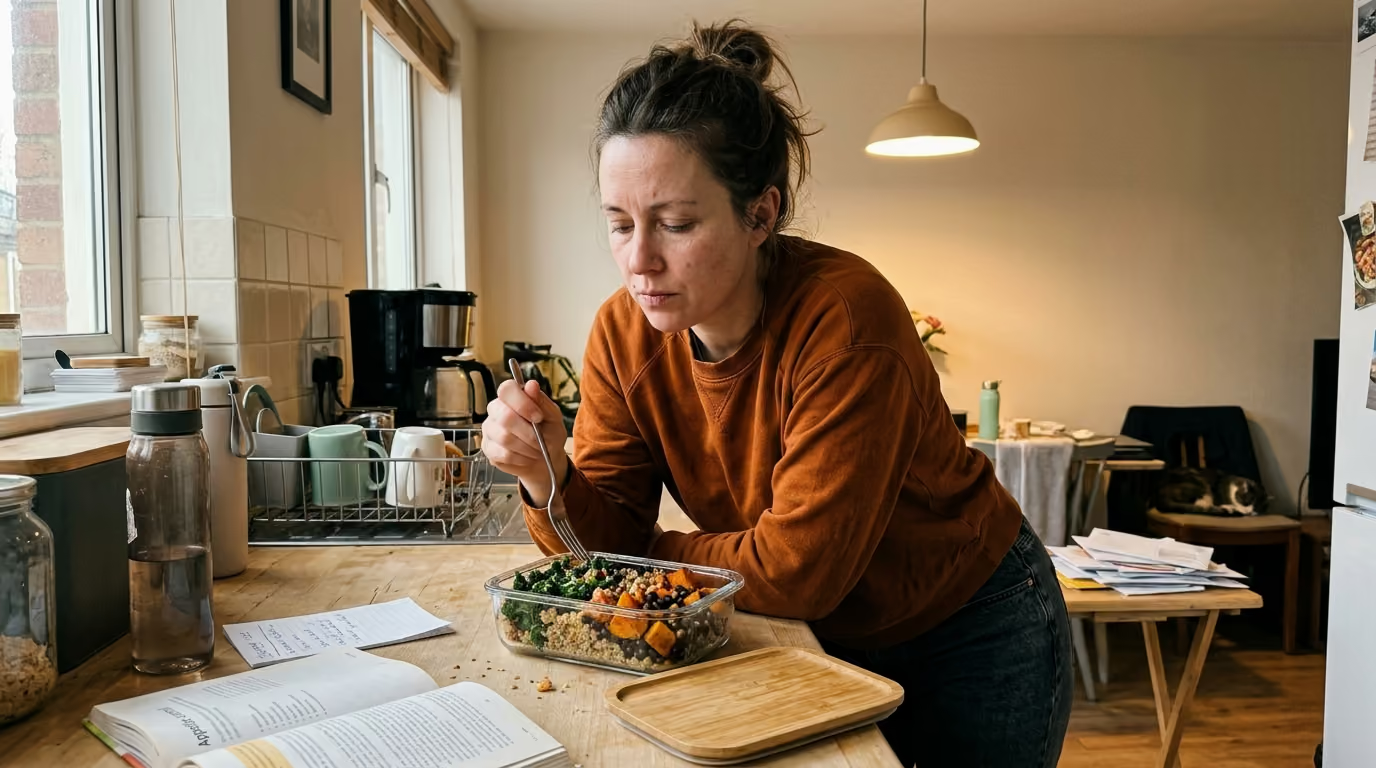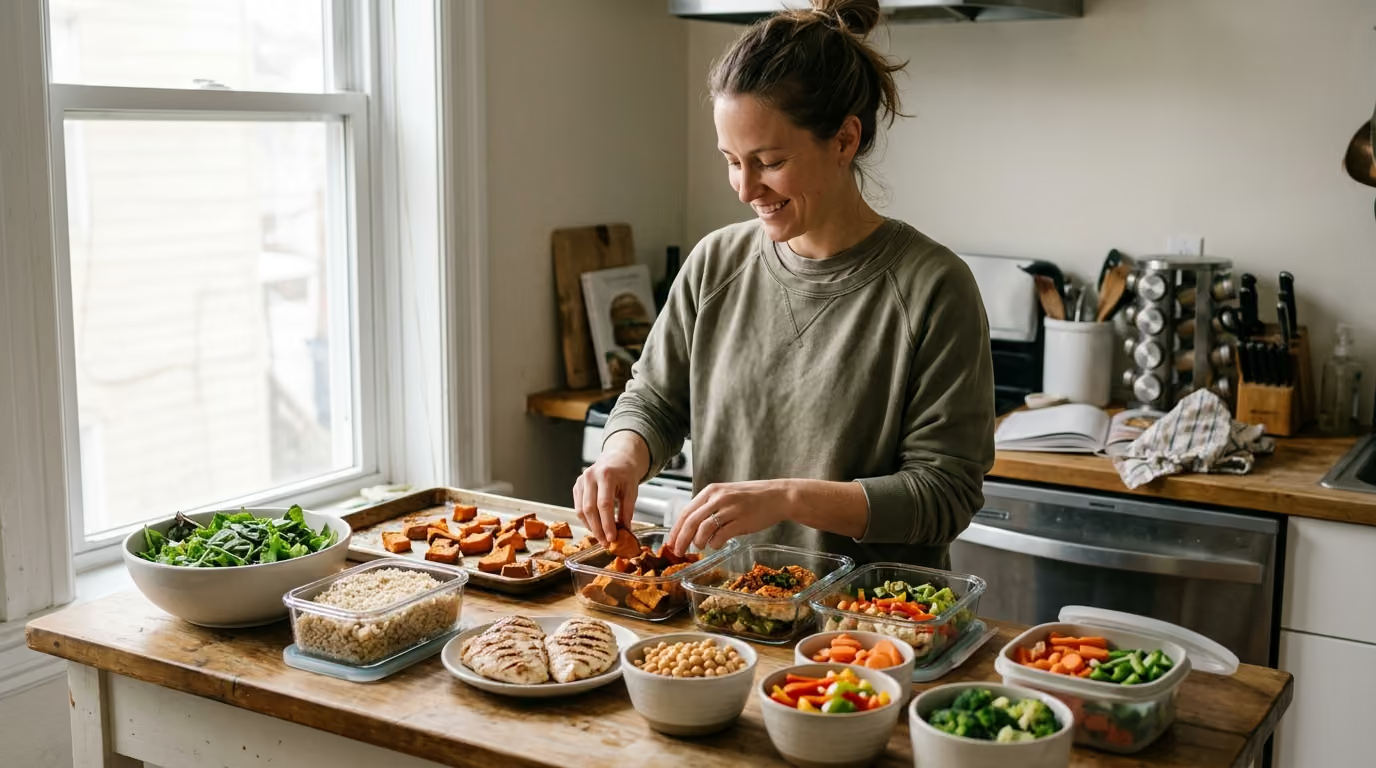

Strict Sunday batch cooking often triggers intense food fatigue, but preparing flexible staple components keeps your weekday dinners both quick and enjoyable.





Traditional nutrition advice often treats meal preparation as a test of personal discipline. Popular culture suggests that cooking one large recipe on Sunday, dividing it into identical plastic containers, and eating the exact same lunch for five consecutive days represents the gold standard of healthy living. Yet this rigid strategy frequently leads to palate fatigue, food waste, and behavioral rebellion by midweek. A sustainable approach focuses on preparing versatile components rather than pre-assembled meals. This flexible system reduces daily decision fatigue while preserving personal choice, appetite regulation, and cultural variety.
Building a dependable eating pattern does not require total nutritional control or endless hours spent in the kitchen. When you stock your kitchen with adaptable foundations, healthy choices become the default option during demanding workweeks.
The human brain makes hundreds of food-related decisions every day. When work demands, family responsibilities, and fatigue accumulate, cognitive bandwidth declines sharply. In psychology, this phenomenon is recognized as decision fatigue. When mental energy is depleted, the brain naturally defaults to options that require the least immediate effort. Highly processed, calorie-dense convenience foods often fill this gap because they require zero preparation.
A flexible preparation framework functions as an environmental intervention. By shifting washing, chopping, and basic cooking to lower-stress periods, you alter your home food environment. You remove the friction of starting from scratch when physical and mental resources are low. This allows you to support long-term metabolic health without relying on pure willpower. You can learn more about how appetite and environment interact within evidence-based nutrition systems.
Beyond decision architecture, meal structure directly affects biological appetite signals. Eating identical, pre-portioned meals every day can trigger sensory-specific satiety issues or psychological restriction. Sensory-specific satiety describes the natural drop in pleasure derived from a specific food as you eat it repeatedly. When a diet feels monotonous, cravings for novel flavors and varied textures intensify.
A modular preparation model solves this problem by separating base ingredients from flavor systems. A simple batch of roasted chicken and brown rice can become a salsa-topped burrito bowl on Monday. On Tuesday, those same base ingredients can transform into a Mediterranean plate with lemon, herbs, and olive oil. This variety satisfies the biological need for sensory novelty while maintaining consistent nutrient density. To read more about how psychological drivers influence daily choices, explore our guide on appetite, habits, and eating psychology.
Appetite also fluctuates based on physical activity, sleep quality, stress levels, and hormonal rhythms. Rigid meal containers force you into a predetermined portion size that may not match your physical hunger on a given day. When hunger is high, an inflexible container can lead to under-eating followed by evening snacking. When hunger is low, feeling obligated to finish a heavy container overrides natural satiety cues. Modular components allow you to adjust carbohydrate, protein, and vegetable ratios dynamically at each meal.
The scientific literature shows a consistent association between advance meal planning, frequent home food preparation, and better overall diet quality. However, the quality of this evidence must be evaluated carefully to distinguish between correlation and causation.
A landmark cross-sectional study from the NutriNet-Santé cohort evaluated 40,554 French adults to examine the relationship between meal planning and dietary patterns. The researchers found that 57 percent of participants planned their meals at least occasionally. Those who planned meals showed a 13 percent higher likelihood of achieving high overall diet quality. They also had a 25 percent higher likelihood of consuming a diverse variety of foods. Furthermore, meal planning was inversely associated with obesity in both men and women.
While these findings are compelling, the authors explicitly emphasized that cross-sectional data cannot prove causality. Individuals who routinely plan meals often possess higher nutritional knowledge, higher household incomes, more predictable schedules, and greater access to kitchen equipment. Planning itself may not be the sole cause of improved health markers. Instead, it serves as a proxy for an organized home food environment and greater health interest.
Intervention studies examining home cooking reinforce these observational findings. An Australian dietary study evaluated home food preparation habits across different adult demographics. The researchers discovered that individuals who prepared dinner at home six or seven nights per week consumed significantly fewer daily kilojoules than those cooking at home once or not at all. The frequent home-cooking group averaged 9,054 kilojoules per day, compared to 9,627 kilojoules in the low-cooking group. Frequent home cooks also consumed less total dietary fat (81 grams versus 86 grams) and less total sugar (119 grams versus 135 grams).
Importantly, these dietary improvements occurred regardless of whether participants were actively trying to lose weight. A comprehensive systematic review of cooking interventions showed consistent improvements in cooking confidence, food literacy, and vegetable intake. However, the review also identified methodological limitations across the field. Fewer than half of the published studies utilized a controlled trial design, and many relied on small convenience samples and self-reported dietary recalls.
Modern digital health studies show similar positive associations. In a prospective analysis of digital precision-nutrition platform users, each additional weekly interaction with a meal-planning feature was associated with a 12 percent higher likelihood of diet-quality improvement. Weekly use of organized grocery-list features corresponded to a 15 percent increase. These data suggest that structured planning tools provide meaningful support, but they do not prove that extreme batch-cooking routines are necessary for metabolic health.
The Dietary Guidelines for Americans emphasize broad, customizable dietary patterns rather than rigid rules. Healthy eating patterns must adapt to personal preferences, cultural traditions, and practical budgets. The core takeaway from the literature is that having ready access to minimally processed, home-prepared foods is beneficial. The exact method you use to achieve that access can remain completely flexible.
To prevent burnout, you must understand the distinction between cooking finished meals and preparing modular ingredients. Rigid preparation systems demand that you cook a full recipe, package it into single-serving containers, and commit to eating it on a fixed schedule. Modular preparation treats your refrigerator like a personal salad bar or assembly line.
There are six distinct approaches to kitchen preparation:
Ingredient preparation involves cleaning, peeling, chopping, and storing raw components. Examples include washing salad greens, slicing bell peppers, and dicing onions. This preserves maximum culinary flexibility because the raw ingredients can be used in stir-fries, omelets, salads, or sheet-pan roasts later in the week.
Partial preparation completes a few cooking steps while leaving others for the day of consumption. You might marinate raw chicken breasts, parboil sweet potatoes, or make a homemade salad dressing. The final cooking step happens fresh, which preserves optimal food texture.
Full meal assembly combines all cooked ingredients into finished, single-serving dishes. While this maximizes convenience on hectic mornings, it offers zero flexibility once packed. It also tends to degrade food textures by day four.
Batch cooking means preparing a large volume of a single food item rather than a complex recipe. Cooking a large pot of black beans, roasting two trays of mixed root vegetables, or baking four pounds of chicken thigh meat represents batch cooking. These bulk anchors can be deployed across completely different meals throughout the week.
Batch assembly involves putting together multiple ready-to-eat dishes at once, such as rolling six breakfast burritos or layering several overnight oat jars. This works best for portable breakfasts and busy travel days.
Batch freezing is the deliberate practice of freezing cooked foods in portioned containers for future weeks. Making a double batch of lentil chili and immediately freezing half creates a high-quality convenience meal for emergencies.
Modular meal prep relies primarily on ingredient preparation, batch cooking of single components, and batch freezing. By keeping components separate, you eliminate the sensory fatigue of repetitive meals. You can review more practical frameworks in our section on sustainable weight management strategies.
Life rarely follows a perfectly predictable routine. A functional preparation system must be able to scale up or down depending on your available time, physical energy, and emotional bandwidth. If your routine only works when you have three free hours on a Sunday afternoon, it is doomed to fail during stressful seasons.
Use this three-level operational framework to match your preparation effort to your current capacity:
Use this level during low-energy weeks, illness, heavy travel, or severe work deadlines. The goal is friction reduction using smart convenience items:
Use this level during a standard week with normal energy and typical household routines:
Use this level when preparing for upcoming hectic seasons, postpartum periods, or intense work projects:
Recognize that Level 1 is just as valid as Level 3. A sustainable lifestyle relies on having an adaptable system that bends without breaking when life becomes demanding.
Food safety is the absolute foundation of successful meal preparation. Preparing food in advance creates potential windows for bacterial proliferation if proper temperature controls and storage practices are ignored. You must follow established scientific guidelines to keep your food safe and maintain its nutritional quality.
The United States Department of Agriculture (USDA) and the Food and Drug Administration (FDA) provide clear standards for safe food handling. Pathogenic bacteria multiply most rapidly in the danger zone between 40°F and 140°F. Your home refrigerator must always be maintained at or below 40°F, and your freezer must stay at 0°F or below. Use an inexpensive appliance thermometer to verify these temperatures regularly.
Follow the two-hour rule strictly. Perishable cooked foods must be refrigerated or frozen within two hours of preparation. When the ambient room temperature exceeds 90°F, such as during an outdoor summer meal, this window narrows to just one hour.
A common and dangerous mistake is placing a deep, scalding pot of soup or rice directly into the refrigerator. Thick volumes of dense food insulate heat in the center, keeping the internal core in the bacterial danger zone for hours. The USDA recommends dividing hot foods into shallow, wide containers, ideally two inches deep or less. This allows rapid heat dissipation and safe, uniform cooling.
Refrigerated storage limits must be respected regardless of how good the food smells or looks:
The USDA notes that cooked leftovers, meats, and poultry maintain optimal flavor and moisture for two to six months in the freezer. When freezing food, package items in airtight glass containers or press grains and meats flat inside freezer bags. Removing excess air prevents freezer burn and ice crystallization.
When you are ready to eat, reheat all refrigerated and frozen leftovers to an internal temperature of 165°F. Use a digital food thermometer to confirm this temperature in dense dishes, casseroles, and thick stews.
When cooking raw proteins during your prep session, adhere to minimum safe internal temperatures established by the USDA Food Safety and Inspection Service:
Never use smell or taste to evaluate food safety. Pathogenic bacteria that cause foodborne illness do not always produce foul odors, visible mold, or sour tastes. If a cooked dish has been sitting in your refrigerator for five or six days, discard it immediately.
A modular kitchen framework uses a basic formula: Protein + Fiber-Rich Carbohydrate + Vegetable + Flavor System + Crunch Element. With these core components prepped, assembling a balanced, satiating meal takes less than five minutes.
Here are five foundational meal modules that you can adapt to any cuisine or dietary preference:
By utilizing these modules, you can maintain consistency without monotony. For more habit-based nutrition strategies, explore our resources on hunger, appetite, and daily habits.
A common flaw in rigid meal plans is the assumption that every household member has the same appetite and schedule every day. In reality, shift workers, parents, and busy professionals face daily changes in schedule and physical hunger.
When managing variable hunger levels, never force yourself to eat an identical portion simply because it was packed into a container. If you have lower hunger on a sedentary rest day, build your meal around a protein anchor and leafy vegetables while reducing the dense starch portion. On days with high physical activity or intense strength workouts, simply double the grain or starch serving. Storing components in larger family-style glass dishes rather than pre-portioned single containers makes this flexible self-regulation effortless.
For shift workers and healthcare professionals working irregular overnight hours, the standard breakfast, lunch, and dinner framework breaks down. Focus instead on discrete eating opportunities spaced every four to five hours. Keep one portable cold meal, such as a chilled grain salad with chicken and vinaigrette, and one microwave-reheatable meal in your pack. Always carry shelf-stable backups like roasted chickpeas, whole almonds, or high-protein meat sticks to prevent emergency trips to hospital vending machines.
Household preferences can also cause friction when one person is pursuing health improvements while other family members prefer different foods. Component prep resolves this tension without requiring you to cook multiple entirely separate dinners.
Keep foundational components neutral:
Each family member can construct a plate matching their specific taste preferences, portion requirements, and dietary boundaries from the exact same core ingredients.
Limited cooking appliances should never be a barrier to healthy eating. You do not need a high-end kitchen, six matching appliances, or expensive specialty containers. A single sheet pan lined with parchment paper can roast your protein and two types of vegetables simultaneously. A basic three-quart slow cooker can braise versatile shredded beef, chicken, or bean chili while you work. A standard microwave is completely sufficient for steaming frozen vegetables, cooking whole potatoes, and reheating stored grains.
Navigating meal preparation successfully requires identifying and avoiding several pervasive myths and procedural mistakes.
A pervasive misconception is that using commercial convenience items is lazy or nutritionally inferior. In reality, strategic convenience is essential for long-term consistency. High-quality frozen vegetables are flash-frozen at peak ripeness, preserving vitamin and mineral content equivalent to fresh produce. Utilizing low-sodium canned beans, pre-cooked whole grains, bagged salads, and plain rotisserie chickens drastically cuts prep time while providing exceptional nutritional value.
Novice meal planners often attempt to map out 21 distinct meals and 14 snacks for the upcoming week. This level of rigidity inevitably shatters when a colleague invites you to lunch, an evening meeting runs late, or you simply crave something different. Instead, plan for roughly 60 to 70 percent of your weekly meals. Leave two or three evenings completely open for spontaneous social dinners, restaurant meals, or simple kitchen clean-outs.
Assembling entire salads or grain bowls with their sauces days in advance causes severe texture degradation. Acidic salad dressings break down delicate cell walls in raw greens, turning crisp romaine into soggy, unappetizing sludge within 24 hours. Keep sauces, wet dressings, and sliced tomatoes in separate small glass jars. Add them to your grain bowls, wraps, and salads immediately before serving to preserve satisfying culinary textures.
Many people cook seven days of food on Sunday afternoon and store every single container in the standard refrigerator through the following Sunday. As established by USDA guidelines, cooked meats and leftovers become hazardous after three to four days. To fix this, place Sunday through Wednesday meals in the refrigerator, and immediately transfer Thursday and Friday meals into the freezer. Move the frozen containers back to the refrigerator on Wednesday morning to thaw safely for the end of the week.
While modular meal prep is an exceptionally effective framework for metabolic health, it is important to recognize its limitations and identify when specialized medical advice is necessary.
Observational research linking meal planning with lower body weight shows correlation, not guaranteed causation. Preparing your food in advance will not magically alter your metabolic rate or override extreme chronic energy imbalances. Meal prep is fundamentally an environmental and behavioral tool designed to lower decision friction, improve dietary quality, and support sustainable habits.
Certain populations must follow strict clinical food-safety guidelines that supersede standard lifestyle advice. According to the Centers for Disease Control and Prevention (CDC) and the FDA, higher-risk groups include:
These individuals must avoid high-risk meal-prep items such as unpasteurized dairy products, undercooked poultry or eggs, store-bought deli salads containing mayonnaise, and raw sprouts. They should maintain conservative refrigerated storage windows, consuming cooked leftovers within two to three days rather than four.
Environmental emergencies also require clear safety protocols. The FDA states that during a home power outage, a closed refrigerator will keep food safely cold for only four hours. A full, closed freezer will maintain its safe temperature for approximately 48 hours (24 hours if half full). If your power is out for more than four hours, discard perishable refrigerated items including cooked leftovers, dairy, poultry, meat, and seafood. Never rely on the appearance or smell of food to judge safety after an extended power outage.
Finally, modular meal prep must be adjusted when managing specific clinical conditions such as advanced chronic kidney disease, severe gastrointestinal disorders, or acute food allergies. Individuals with severe allergies must enforce strict separation of cutting boards, cookware, and storage containers to avoid life-threatening cross-contamination. Clinical nutrition interventions should always be developed in collaboration with a registered dietitian or physician.
Understanding the foundational terminology of nutrition science and behavioral architecture makes implementing your system much simpler:
Transforming your meal preparation routine from a rigid chore into a flexible, supportive habit is straightforward when you apply these actionable strategies:
Building a dependable, healthy eating pattern is not about achieving rigid perfection every single day. By establishing an adaptable kitchen system that supports your lifestyle, you create a foundation for long-term metabolic health and genuine food freedom.
WeightRestart shares research-led guidance on weight loss, metabolism, nutrition, strength, appetite, sleep and recovery. Our goal is to make complex health information clear, practical and useful for people building progress they can maintain.



Learn how to build a weight-management approach around better information, realistic expectations and habits you can keep using.
read the blog