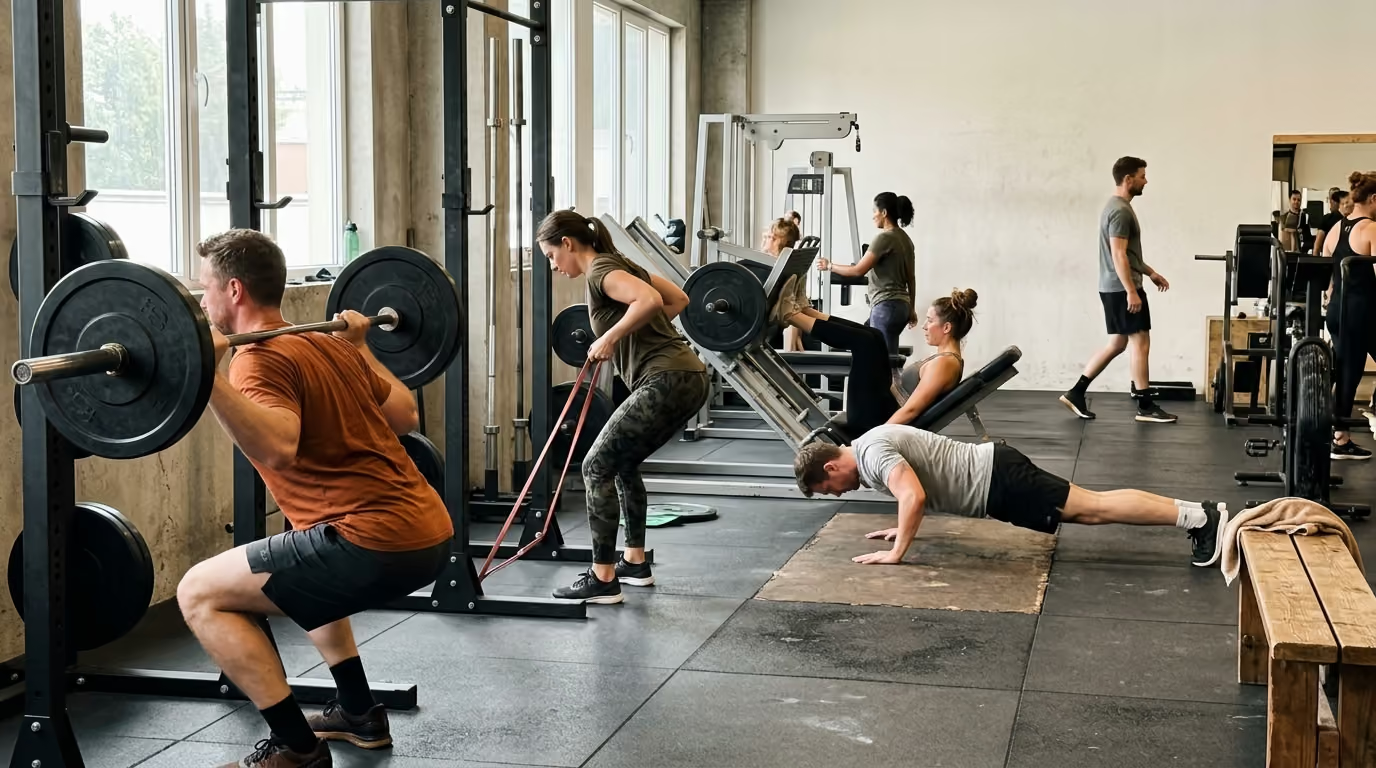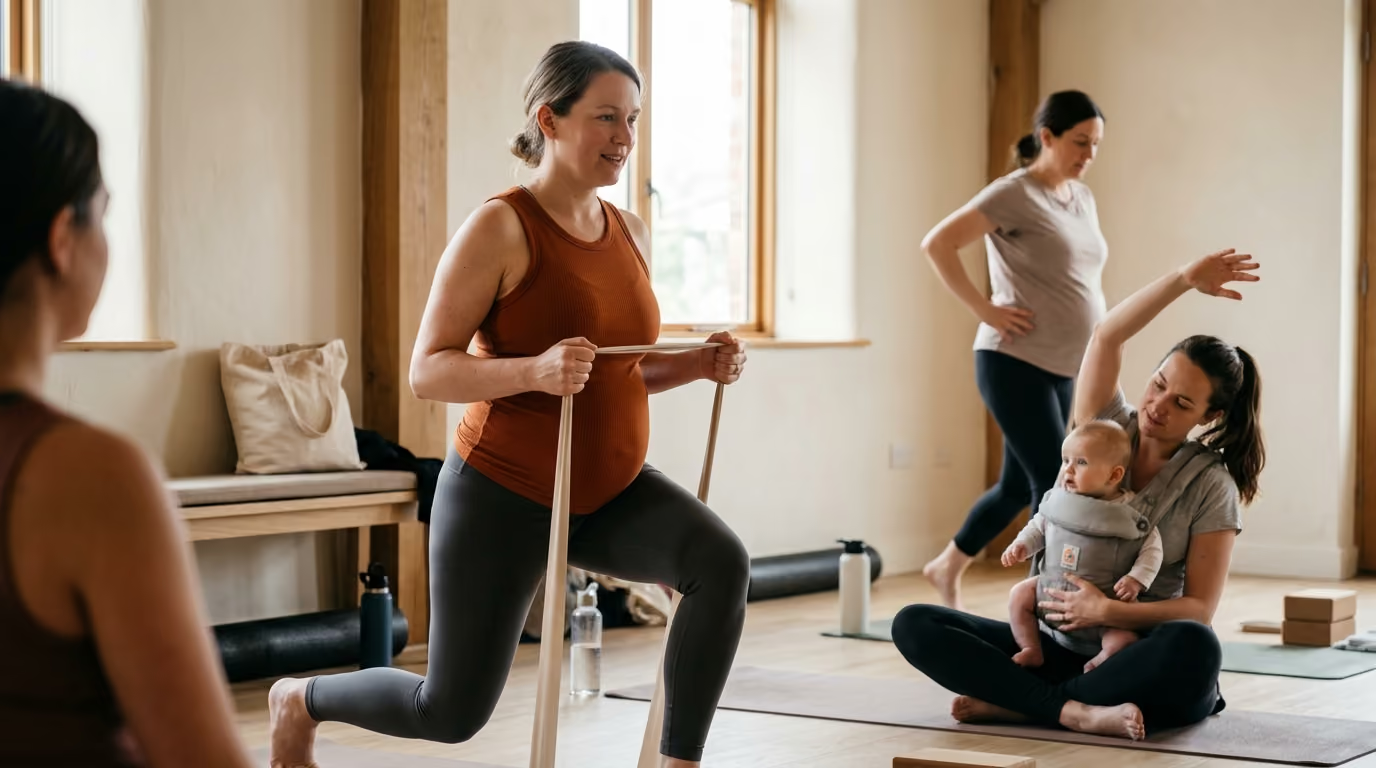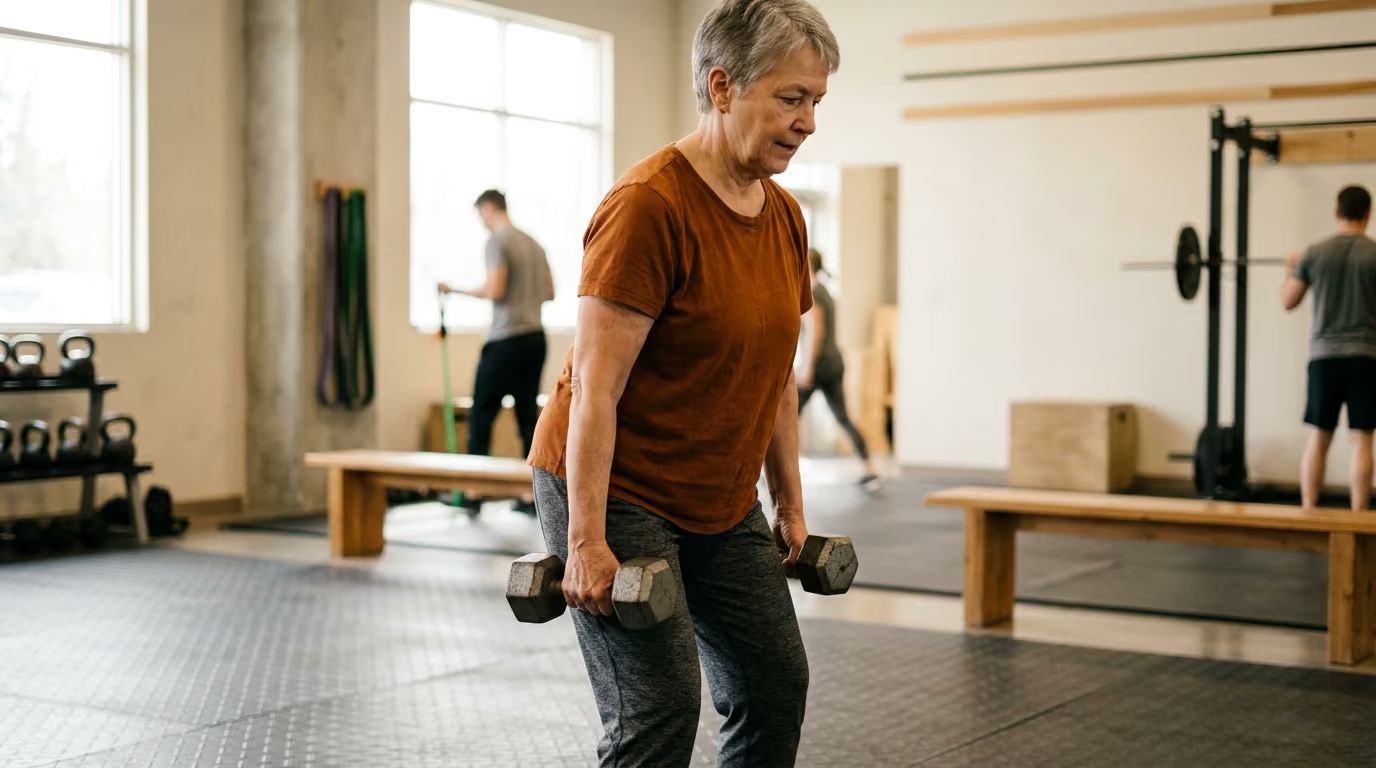

Progressive resistance training builds stronger bones and connective tissues to improve posture, protect against physical injury, and support long-term mobility.





You reach down to lift a heavy bag of garden soil, feeling an unexpected twinge in your lower back. Or perhaps you notice your shoulders rounding forward after hours at a desk, leaving your neck stiff by mid-afternoon. Many adults assume these physical changes are inevitable markers of getting older that must simply be accepted.
Resistance training offers a powerful, biologically grounded method for preserving your physical foundation. Progressive mechanical loading stimulates bone remodeling, increases tendon stiffness, reinforces spinal support musculature, and expands your daily movement reserve. When approached systematically, strength exercise protects structural tissues and builds everyday physical resilience across adulthood.
In our experience working with adults navigating midlife health, one of the most common mistakes is focusing solely on the scale. People would celebrate rapid weight loss, only to find their energy plummeted and their metabolism slowed. They were losing muscle and bone stimulus instead of just body fat. Shifting the conversation from generic weight loss to evidence-based strength and body composition has been one of the most impactful changes we have championed.
Bone is a dynamic, living tissue that responds continuously to physical forces. When you perform a resistance exercise, your muscles pull against your skeleton. This muscular contraction, combined with external resistance, causes microscopic deformation of the bone matrix.
Specialized sensory cells called osteocytes reside inside the bone structure. When mechanical deformation occurs, fluid moves through tiny channels surrounding these osteocytes. The cells detect this fluid motion through a process known as mechanotransduction. They then translate this physical signal into biochemical messages that direct local remodeling.
These biochemical signals coordinate two primary cell populations. Osteoblasts synthesize new bone matrix and assist in mineralization, increasing tissue density and strength. Osteoclasts break down older or damaged bone tissue through resorption. When progressive loading delivers an adequate stimulus, osteoblast activity outpaces resorption at the loaded sites.
Bone adaptation requires specific loading parameters to trigger an osteogenic response. The load must create sufficient strain magnitude, meaning the force must be heavy enough relative to your capacity. The rate of strain also matters, as faster force application often provides a stronger signal than slow movement. Finally, bone cells adapt rapidly to familiar patterns, making novel and multidirectional forces especially effective for bone remodeling.
Tendons, ligaments, and joint capsules adapt through related mechanical pathways. Tendons connect muscle to bone, acting as biological springs that transmit muscular force. When subjected to high mechanical strain, tendon cells synthesize collagen fibers and modify their internal matrix.
This process alters the material properties of the tendon, specifically increasing its modulus and structural stiffness. A stiffer tendon transmits force into bone more efficiently and tolerates higher external loads without injury. Unlike muscle, which receives a rich blood supply and adapts relatively quickly, connective tissue has lower metabolic activity. Tendons require consistent, progressive loading over many months to increase their load-bearing capacity.
Posture is frequently misunderstood as a static position that must be rigidly held throughout the day. In biological reality, posture is a dynamic behavior reflecting how your nervous system coordinates muscles against gravity. Healthy spinal function relies on the capacity to shift between different alignments comfortably while maintaining stability under external load.
The spinal column depends on a coordinated muscular network to manage compressive and shearing forces. Deep intrinsic muscles, such as the multifidus, provide segmental stability between individual vertebrae. Larger superficial muscles, including the erector spinae, generate extension torque to keep the torso upright. When these muscles lack endurance, the trunk naturally collapses into passive spinal ligaments, leading to muscular fatigue and stiffness.
Thoracic kyphosis refers to the forward rounding of the upper back. While structural bone shape influences spinal curves, muscular weakness in the thoracic extensors and scapular stabilizers often worsens this posture over time. Strengthening the mid-back and posterior shoulder girdle increases your capacity to actively extend the spine. This muscular support reduces excessive compressive loading on the anterior portion of the thoracic vertebrae.
Postural resilience also depends on the lower body and pelvis. The gluteus maximus, hamstring complex, and deep hip rotators anchor the pelvis in relation to the femur. Weak hip extensors force the lumbar spine to compensate during bending, lifting, and carrying tasks. A comprehensive program targeting the posterior kinetic chain establishes the strength necessary to maintain trunk control during real-world activities.
The scientific evidence supporting resistance training for musculoskeletal health is robust, though outcomes vary across different body tissues. Decades of clinical trials confirm that progressive resistance training reliably increases muscular strength and power across all adult age groups. Neural adaptations occur within the first several weeks, followed by gradual muscular hypertrophy when training volume and nutrition are adequate.
The evidence regarding bone mineral density is positive but reveals important biological nuances. Research demonstrates that progressive resistance exercise preserves or modestly increases bone mineral density in aging adults. A 2022 systematic review and meta-analysis published in Frontiers in Physiology showed that progressive resistance training significantly improved lower-limb strength and femoral neck bone density. However, changes at the lumbar spine were more variable across study cohorts.
Systematic reviews also indicate that bone responses to exercise are site-specific. The skeleton adapts primarily in the regions experiencing the direct mechanical strain of the exercise. For example, deadlifts and squats load the hip and lumbar spine, whereas upper-body presses load the wrists, arms, and shoulder girdle. Low-intensity weight-bearing activities, such as casual walking, provide general cardiovascular benefits but lack the strain magnitude required to stimulate meaningful bone adaptation.
Clinical evidence regarding fall prevention demonstrates that isolated strength training is only part of the solution. While stronger muscles provide the force needed to catch yourself during a stumble, balance and reactive control are equally vital. Multicomponent exercise programs that combine progressive resistance training with balance and gait challenges reduce fall rates by up to forty percent in older adults. Building true physical resilience requires training both raw muscular capacity and rapid neuromuscular coordination.
Building tissue capacity requires a systematic progression rather than random exercise selection. Moving through distinct stages allows your bones, tendons, and muscles to adapt safely over time.
The primary goal of the initial stage is building movement competency and joint tolerance. Beginners should focus on foundational movement patterns using manageable resistance and full, comfortable ranges of motion.
Key exercises in this initial phase include:
Train two days per week, performing one to two sets of eight to twelve repetitions per exercise. Keep several repetitions in reserve on every set, ensuring that movement quality remains pristine from the first repetition to the last.
Once movement patterns feel natural and joints tolerate loading without irritation, you can expand your structured strength and fitness routine. This stage introduces external resistance using free weights, cables, or dedicated resistance machines.
Effective movement selections for this stage include:
Perform two to three full-body sessions per week. Complete two to three sets of eight to ten repetitions per exercise, resting ninety seconds to two minutes between sets.
To stimulate deeper bone remodeling and maximize force production, you must periodically challenge your tissues with higher mechanical strain. This phase increases the relative load while keeping repetitions moderate.
Clinical osteoporosis guidelines recommend lifting loads between seventy and eighty-five percent of your single-repetition maximum for major compound lifts. Perform sets of six to eight repetitions with strict form, finishing each set with one to two repetitions left in reserve. Focus on compound movements like barbell deadlifts, leg presses, and weighted carries that transmit forces directly through the axial skeleton and hips.
Real-world physical resilience demands rapid force development to respond to sudden trips, slips, or balance disturbances. Power training teaches your nervous system to recruit motor units rapidly.
Integrate these power exercises into your weekly training:
Perform power movements at the beginning of your training session when your neuromuscular system is fresh. Complete three to five sets of three to five rapid repetitions, prioritizing speed and crisp execution over fatigue.
The final stage integrates your muscular strength, bone capacity, and joint stability into real-world functional tasks. This phase bridges the gap between traditional gym exercises and the varied physical demands of daily living.
Incorporate complex tasks such as asymmetrical carries, picking uneven objects off the floor, and stepping over obstacles. Practice controlled transitions down to the floor and back up to standing without using your hands whenever possible. These complex motor challenges train balance, spatial awareness, and connective-tissue tolerance across diverse angles.
Every individual begins resistance training with a unique history, structural baseline, and risk profile. The following real-world case patterns illustrate how progressive loading principles adapt across different adult populations.
A forty-two-year-old accountant spends nine hours daily seated at a desk. They experience recurring mid-back tightness, mild neck fatigue, and low lifting confidence, but have no diagnosed bone conditions.
Their initial programming priorities center on restoring spinal extension capacity and introducing basic axial loading. They perform a full-body routine three days per week focusing on goblet squats, dumbbell Romanian deadlifts, chest-supported rows, and farmer carries. Within twelve weeks, their back endurance improves significantly, and their daily desk posture becomes comfortable without conscious straining.
A fifty-eight-year-old teacher receives a dual-energy X-ray absorptiometry scan showing osteopenia at the femoral neck. Her physician clears her for exercise, and she has no prior fracture history.
Her training program focuses on progressive multi-joint resistance training combined with moderate ground-reaction forces. She performs leg presses, barbell Romanian deadlifts, dumbbell overhead presses, and standing lateral band walks twice weekly. She also adds brief, supervised bouts of brisk stair stepping to provide dynamic impact at the hip joint. After eighteen months of consistent training alongside adequate protein and vitamin D intake, follow-up testing shows stabilized bone density at the femoral neck and improved lower-limb power.
A seventy-one-year-old retiree notices difficulty rising from deep armchairs and reports feeling unsteady when walking on uneven outdoor terrain. They want to avoid falls and maintain independent mobility.
Their intervention emphasizes lower-limb strength, reactive balance, and rapid force production. The routine incorporates supported box squats, standing cable rows, single-leg balancing drills, and brisk sit-to-stand repetitions. After four months, their chair-rise speed improves by thirty-five percent, and their confidence navigating stairs and outdoor paths increases substantially.
A seventy-six-year-old individual has diagnosed osteoporosis and a healed, stable thoracic compression fracture from two years prior. They present with pronounced thoracic kyphosis and cautious movement patterns.
Their program requires careful clinical consideration, avoiding loaded spinal flexion and aggressive rotational torque. An exercise physiologist guides them through gentle, supported spinal extension movements, seated leg presses, cable chest presses, and supported calf raises. Low-impact walking serves as the primary weight-bearing stimulus, avoiding high-impact jumping or ballistic loading. This targeted approach strengthens the supporting trunk musculature safely while protecting vulnerable spinal structures.
A forty-eight-year-old recreational runner experiences persistent Achilles tendon discomfort after abruptly increasing their weekly running mileage. Their muscular strength is adequate, but their connective tissues were overwhelmed by the sudden spike in training volume.
Their rehab protocol temporarily reduces running volume while introducing heavy, slow resistance training. They perform seated and standing calf raises using a four-second lowering phase, loading the tendon with high local strain at slow speeds. Over twelve weeks, the Achilles tendon adapts by increasing its structural stiffness and load tolerance, allowing the runner to return to running safely. This experience highlights how tendon remodeling requires specific, progressive mechanical loading rather than complete rest.
Multiple persistent myths surround resistance exercise, bone remodeling, and structural posture. Addressing these misconceptions helps adults make informed, evidence-based training decisions.
Walking is an exceptional form of exercise for cardiovascular health, mental well-being, and daily energy expenditure. However, ordinary walking provides a repetitive, low-magnitude mechanical force that rarely exceeds the threshold needed to stimulate new bone formation in healthy adults.
Bone cells rapidly desensitize to familiar, low-intensity mechanical signals. To trigger osteogenic adaptation, the skeleton requires novel strain directions and higher peak forces than walking can provide. While you should certainly maintain a regular walking habit, you should pair it with progressive resistance training to ensure optimal skeletal loading across your hips, spine, and upper body.
A widespread belief suggests that you must lift near-maximal, bone-crushing loads to stimulate skeletal adaptation. Research published in scientific literature demonstrates that both moderate and heavy loads can stimulate bone remodeling when the exercises are performed with sufficient effort.
Lifting a moderate weight for ten repetitions near technical fatigue generates substantial muscular tension. This muscular pull transmits high mechanical strain into the attached bones. You do not need to perform dangerous single-repetition lifts to build bone health, making progressive resistance training accessible for older adults and beginners.
Resistance training is one of the most effective tools for building physical resilience, but it cannot make the human body invincible. Fracture risk depends on a wide array of biological and environmental factors, including bone geometry, medication side effects, vision, home trip hazards, and overall balance.
Strength training reduces fracture risk through multiple distinct pathways. It builds stronger bone tissue, improves muscular balance to prevent falls, and increases soft-tissue capacity to absorb impact forces if a fall does occur. Viewing strength exercise as a broad risk-reduction strategy rather than an absolute guarantee establishes healthy, realistic expectations.
Many people believe that proper posture requires pulling the shoulder blades together and holding the spine rigidly upright like a soldier. This rigid bracing creates unnecessary muscular tension, restricts natural breathing patterns, and accelerates physical fatigue.
Human spines are designed with natural lordotic and kyphotic curves that act like biological shock absorbers during movement. The goal of postural training is not rigid immobility, but rather developing the muscular capacity and endurance to support your torso comfortably through diverse, changing positions throughout the day.
When you start lifting weights, your nervous system quickly learns to recruit muscle fibers more efficiently. Muscle tissue also possesses a rich capillary blood supply, allowing it to repair, recover, and grow relatively fast.
Tendons and ligaments have far lower vascularity and cellular turnover rates than skeletal muscle. As a result, your muscular strength often increases faster than your connective tissues can adapt to the heavier loads. Ramping up training volume or weight too aggressively can irritate tendons, underscoring the vital need for gradual progression and adequate sleep and metabolic recovery.
While progressive resistance training offers universal benefits, understanding its limitations ensures safe and realistic application.
Bone remodeling is an inherently slow biological process. Measurable changes in bone mineral density typically require six to twenty-four months of consistent progressive resistance training.
Furthermore, standard dual-energy X-ray absorptiometry scans have inherent margins of measurement error. A follow-up scan that shows stable bone density after a year of training should be celebrated as a clinical success, because it indicates that age-related bone loss was halted. Improvements in muscle strength, walking speed, and functional capacity often occur long before significant changes register on a bone scan.
Individuals with diagnosed osteoporosis, severe osteopenia, or a history of low-trauma fragility fractures must approach exercise with tailored precautions. Certain movements, such as loaded forward spinal flexion with rotation, increase compressive forces on the anterior vertebral bodies and should generally be modified.
People with severe osteoporosis should consult a physical therapist or qualified exercise physiologist before starting high-impact jumping or heavy spinal-loading protocols. Progressive resistance training remains highly recommended for this population, but exercise selection, range of motion, and loading parameters must be matched to individual clinical health status.
Distinguishing between normal exercise sensations and symptoms that require medical attention is essential for long-term consistency. Mild muscular fatigue during a set and delayed-onset muscle soreness twenty-four to forty-eight hours afterward are normal, harmless training responses.
In contrast, you should never ignore sharp joint pain, radiating neurological sensations such as numbness or tingling, or sudden, severe back pain. These symptoms warrant immediate cessation of the exercise and professional clinical assessment. Building lasting physical capacity is a long-term process that prioritizes joint comfort and structural safety over rapid, unsustainable exertion.
The biological process through which cells convert mechanical stimuli, such as physical pressure, fluid shear stress, or muscular tension, into cellular biochemical signals that direct tissue adaptation.
Tendon stiffness represents the amount of force required to deform a tendon by a given length. Tendon modulus refers to the intrinsic material quality and density of the tendon tissue itself, independent of its overall thickness.
A measurement of how quickly your neuromuscular system can generate force from a resting state. It represents the explosive speed of force production, which is essential for catching your balance during a stumble or trip.
Building skeletal strength, dynamic posture, and everyday physical resilience is an ongoing investment in your health. Use these practical steps to structure your weekly routine:
Revisit this guide whenever you experience a major change in your physical health, such as receiving a new bone density scan, recovering from a joint issue, or entering a new decade of life. It serves as a reliable framework for adjusting your training volume, selecting appropriate exercises, and maintaining realistic expectations.
Strength training is far more than a tool for changing your physical appearance. By progressively loading your skeleton and muscular system, you build a durable physical reserve that protects your bones, supports your posture, and preserves your functional independence for decades to come.
WeightRestart shares research-led guidance on weight loss, metabolism, nutrition, strength, appetite, sleep and recovery. Our goal is to make complex health information clear, practical and useful for people building progress they can maintain.



Learn how to build a weight-management approach around better information, realistic expectations and habits you can keep using.
read the blog