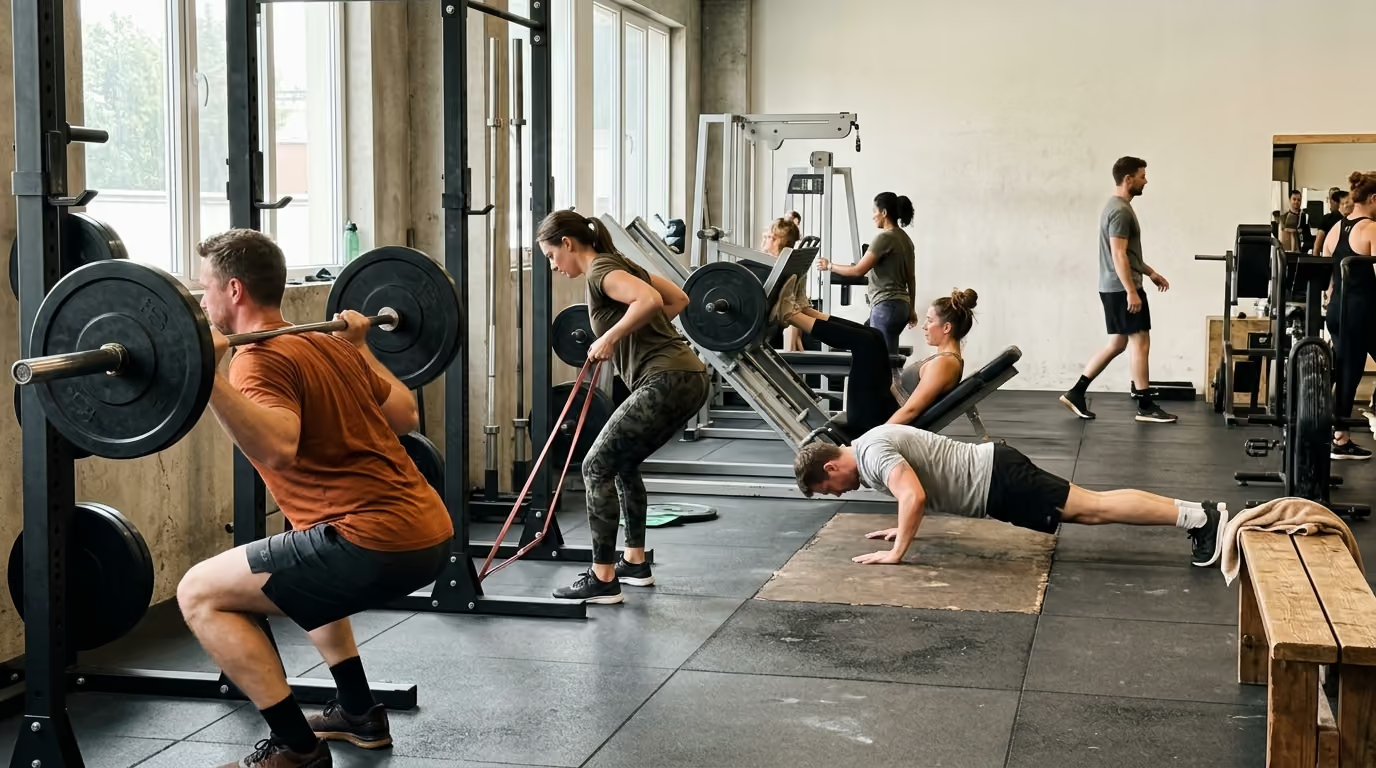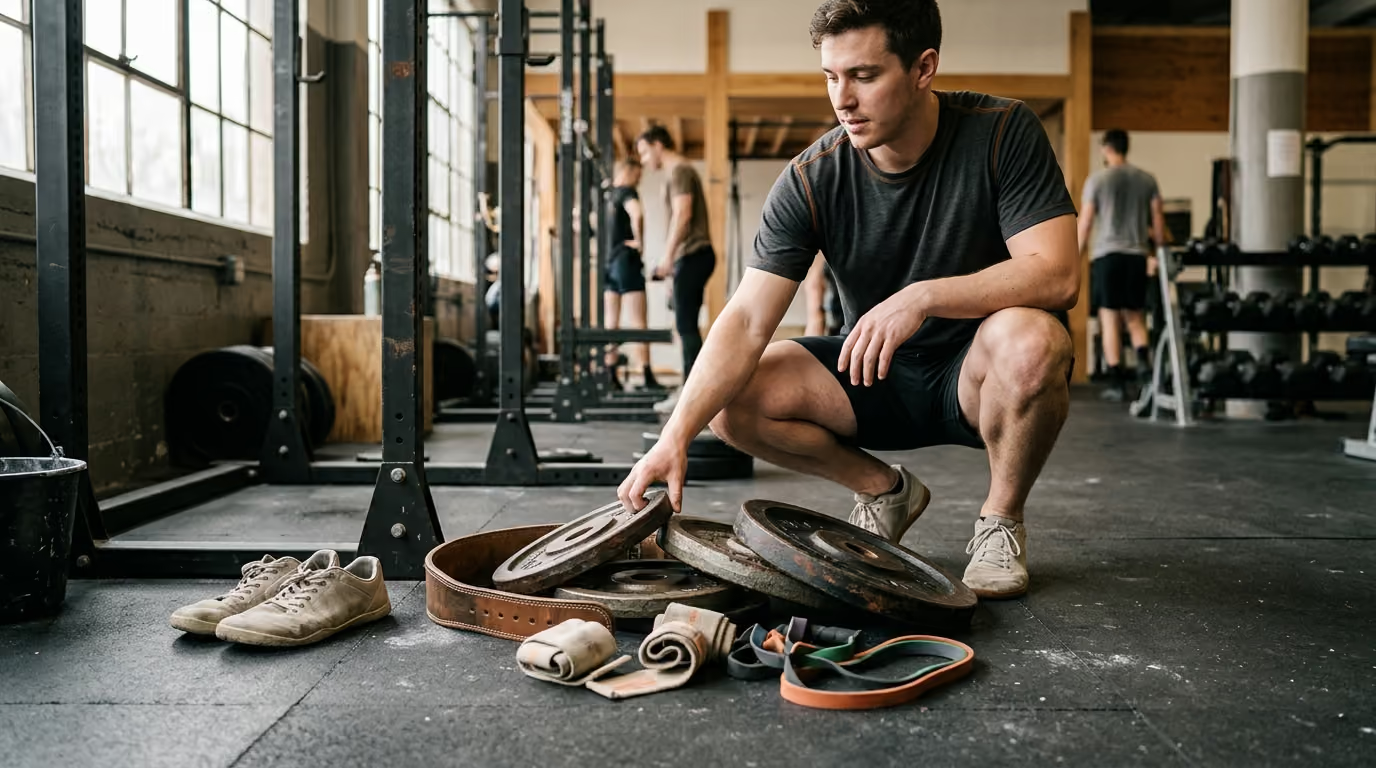

Strength training gear provides mechanical support for specific lifts so you can address physical limitations without buying unnecessary gym accessories.





If you have ever searched online for the best lifting shoes, belts, or knee sleeves, you have likely encountered conflicting advice and endless product recommendations. Fitness marketing often suggests that buying specialized accessories is necessary to lift safely, build muscle, or prevent injury. This guide provides a clear, evidence-based assessment of strength training equipment, explaining what each tool does to your mechanics, when it is truly useful, and when you can leave it out of your gym bag.
Strength training accessories should solve clear, identifiable physical constraints rather than compensate for rushed technique, inappropriate loads, or poor program design. Equipment alters the physical interface between your body and the load, changing friction, joint angles, trunk stiffness, or grip endurance. When used purposefully, specific gear can enhance movement consistency, improve training tolerance, and support your long-term strength and fitness goals without relying on unnecessary fitness trends.
Every piece of lifting equipment acts as a mechanical intervention. When you put on a pair of shoes, wrap a strap around a barbell, or fasten a belt around your waist, you change the physical constraints of the exercise. These tools alter ground reaction forces, adjust joint angles, shift muscle recruitment patterns, and modify your perception of stability. The critical question is never whether a product is popular, but whether the mechanical change it produces aligns with your specific training goal.
External support differs fundamentally from internal physiological adaptation. An accessory can assist a movement or stabilize a joint, but it does not automatically build internal capacity. For instance, lifting straps allow you to continue pulling when your hands tire, but they do not develop your natural grip strength. Similarly, a supportive lifting belt helps you generate higher abdominal pressure, but it cannot replace the baseline muscular control required to brace your torso without assistance.
Fitness marketing frequently blurs the boundaries between support, injury protection, and performance enhancement. Support refers to mechanical assistance, compression, or a firmer contact point. Injury protection involves reducing tissue strain below injury thresholds, which is a clinical claim that requires rigorous epidemiological proof. Performance enhancement means the equipment measurably increases load, repetitions, movement speed, or total volume. A piece of gear can provide support without providing measurable injury protection or increasing your maximum strength.
To decide whether an accessory is necessary, you should apply a limiting-factor framework to your training. Before purchasing any item, identify the exact constraint that is ending your set or limiting your progress:
A training tool is justifiable when it directly resolves an early limitation without compromising the primary purpose of the exercise. When you purchase gear without identifying this bottleneck, you often end up carrying unnecessary accessories that clutter your routine without improving your physical development.
Your shoes represent the single most important equipment choice in resistance training because they create the direct physical connection between your body and the floor. The footwear you select directly influences ground stability, ankle mobility requirements, torso angle, and the distribution of force across the hips and knees. A comprehensive scientific review on squat footwear confirmed that shoe selection significantly alters kinematics and kinetics across both novice and experienced lifters.
Flat, non-compressible shoes provide a stable base of support with minimal sole thickness. By keeping your foot close to the ground and parallel to the lifting platform, flat shoes minimize the distance a barbell must travel during pulling movements like the deadlift. This stable surface prevents the foot from rolling inward or outward under heavy loads, allowing efficient force transfer through the floor.
While many lifters prefer flat shoes or completely unshod lifting, research shows that barefoot lifting does not automatically produce superior strength. A comparative biomechanical study examining shod versus unshod deadlifts found that lifting barefoot did not increase maximal performance, although wearing shoes did slightly increase the mechanical work required due to the added height of the sole. For most trainees, a simple flat shoe with a firm rubber outsole provides an ideal balance of traction, lateral stability, and consistent foot positioning.
Weightlifting shoes feature an elevated, rigid heel, typically ranging from 0.5 to 0.75 inches in height. This elevation places the ankle in artificial plantarflexion, reducing the amount of dorsiflexion required to reach a deep squat. Research examining loaded high-bar squats demonstrated that elevating the heels alters spinal moments and kinematics, offering mechanical advantages for novice lifters who struggle to maintain an upright posture.
Biomechanical studies show that weightlifting shoes decrease forward trunk lean, increase knee flexion, and shift a greater portion of the mechanical moment to the knee extensors. This makes raised-heel footwear a practical tool for trainees with naturally limited ankle mobility or those performing front squats and Olympic weightlifting movements. However, this adjustment also increases the mechanical demand on the quadriceps and the patellofemoral joint, which may require careful management if you have existing anterior knee sensitivity.
Standard running shoes are engineered to absorb shock, cushion impacts, and encourage forward propulsion. These features are valuable for running, but they work against stability during heavy resistance training. The thick, compressible foam soles deform unevenly under significant external loads, creating an unstable foundation that forces the ankles and feet to make continuous micro-adjustments.
Standing on compressible foam during squats, lunges, or overhead presses reduces force transmission and can make balance unpredictable. While soft athletic shoes are acceptable for light machine work or general conditioning, structured barbell and dumbbell training benefits substantially from a firm, non-yielding sole.
To choose the right footwear for your routine, evaluate your shoe options against these practical criteria:
Selecting footwear is about establishing a secure, repeatable base for your exercises. For broader strategies on developing lower-body mechanics, review our guides on strength, movement, and body composition.
Lifting belts are among the most recognizable gym accessories, yet their physiological function is frequently misunderstood. A lifting belt is not a mechanical back brace that holds your spine rigidly in place. Instead, it provides an unyielding external wall against which your abdominal and trunk muscles can brace.
When you perform a heavy lift, you naturally take a deep breath and tighten your core musculature. This action increases intra-abdominal pressure, which helps stabilize the lumbar spine and stiffens the torso against bending forces. A lifting belt amplifies this mechanism.
In a landmark biomechanical study of deadlifts performed at 90 percent of one-repetition maximum, researchers found that wearing a belt caused intra-abdominal pressure to rise earlier in the repetition. The belt significantly increased peak pressure, average pressure, and the total pressure-time area during the lift. Complementary research demonstrated that abdominal belts increase the intramuscular pressure of the erector spinae muscles, stiffening the trunk without diminishing natural muscle engagement.
Lifting belts vary considerably in material, thickness, width, and closure mechanisms:
A belt should be fastened snugly enough to provide resistance when you expand your abdominal wall, but not so tight that it prevents a full diaphragmatic breath. If a belt restricts your normal setup or forces you to breathe shallowly into your chest, it is fastened too tight.
Positioning is highly individual. Some lifters wear the belt horizontally across the navel, while others tilt it slightly upward or downward to avoid painful contact with the lower ribs or pelvic bones. The optimal position is the one that provides the most secure bracing feedback without interfering with your joint angles during the deepest point of the exercise.
A lifting belt is appropriate when you are lifting heavy axial loads, such as squats, deadlifts, and overhead presses, where trunk stiffness limits performance. It is particularly valuable during sets near maximal effort, where external feedback helps maintain consistent abdominal bracing.
A belt is unnecessary for novice lifters who are still learning basic bracing mechanics, or for exercises with low spinal loading, such as leg presses, seated rows, and arm movements. Relying on a belt for every exercise can prevent you from developing an intuitive sense of how to brace your core independently.
Using a lifting belt alongside deep breath holding can cause acute spikes in blood pressure and intrathoracic pressure. Individuals with cardiovascular conditions, unmanaged hypertension, pelvic floor dysfunction, or those recovering from abdominal surgery should consult a qualified healthcare professional before using a rigid belt for heavy lifting.
Lifting straps are simple lengths of fabric or leather that wrap around your wrists and the barbell, dumbbell, or machine handle. Their primary purpose is to reinforce your grip, ensuring that hand fatigue does not prevent you from training the larger, stronger muscle groups of the back and lower body.
During heavy deadlifts, shrugs, and rows, your posterior chain muscles can frequently generate more force and sustain more volume than your finger flexors can support. When your hands begin to open, your nervous system often down-regulates force output to protect the joint, or you are forced to terminate the set early.
A controlled study examining deadlift performance demonstrated that using lifting straps significantly improved both mean and peak barbell velocity, reduced grip fatigue, and enhanced perceived power and grip security. Trainees also experienced lower overall perceived exertion and faster grip recovery in subsequent workouts. When combined with a lifting belt, straps have been shown to improve movement mechanics and shorten repetition completion times in recreational lifters.
A common misconception is that using lifting straps will automatically increase muscle activation in the back. A rigorous 2026 narrative review on lifting straps found that while straps consistently enhance maximal pulling load and improve perceived grip security, they do not produce consistent increases in back muscle recruitment. Straps do not force your latissimus dorsi or trapezius to work harder; they simply remove grip strength as the premature failure point of the set.
Using straps indiscriminately for all pulling movements can lead to lagging grip strength over time. To maintain balanced development, consider these practical programming recommendations:
Lifting straps are available in three primary designs:
Always wrap straps in the direction opposite to your fingers so that closing your hand naturally tightens the fabric around the bar. Practice with light loads first to master wrapping and unwrapping the implement smoothly.
Supportive equipment for the knees falls into two distinct categories: flexible compression sleeves and rigid elastic wraps. Trainees often confuse the two, yet they function differently and serve distinct training purposes.
Knee sleeves are pull-on tubular supports, typically manufactured from 5mm or 7mm neoprene. They provide circumferential compression, retain local tissue warmth, and enhance sensory feedback from the skin and underlying tissues around the patellofemoral joint.
Research indicates that neoprene knee sleeves can provide modest, acute benefits in maximal strength. A study measuring maximum squat capacity found that participants achieved slightly higher one-repetition maximum values when wearing neoprene sleeves compared to an unequipped control condition. However, broader systematic reviews suggest that knee sleeves do not reliably improve muscle activation, explosive power, or movement mechanics. Their primary documented value lies in improving subjective joint comfort, warmth, and perceived stability.
A knee sleeve should fit snugly around the joint without pinching the skin, rolling down during squats, or cutting off blood circulation. If your toes tingle, your skin turns pale, or you cannot reach full squat depth because the material bunches aggressively behind the knee, the sleeve is too small.
Sleeves are an optional comfort accessory. They are valuable for trainees who train in cooler environments, those who appreciate the feeling of joint warmth, or individuals who experience minor joint stiffness during deep knee flexion. They do not structurally stabilize damaged ligaments or replace appropriate warm-up protocols.
Knee wraps consist of long, heavy elastic bands that are wrapped tightly around the knee joint in a spiral or crisscross pattern before a heavy squat. Unlike neoprene sleeves, knee wraps store significant elastic energy as the knee bends, actively assisting the lifter out of the bottom position of the squat.
While knee wraps can increase the amount of weight lifted, they also alter squat mechanics and increase compressive forces between the patella and the femur. Knee wraps are specialized tools primarily intended for competitive powerlifting and are unnecessary for general health, body composition, or recreational fitness.
Smaller training accessories often generate strong opinions among gym-goers. Understanding the practical trade-offs of these items helps you decide which ones genuinely serve your routine.
Lifting chalk, composed of magnesium carbonate, absorbs moisture and sweat from your palms. By drying the skin, chalk significantly increases the coefficient of friction between your hand and the knurling of the barbell or dumbbell.
Chalk is one of the most cost-effective and practical tools in resistance training. It enhances grip security without altering hand mechanics or reducing sensory feedback. Trainees should use dry powder or liquid chalk according to their gym's policies, making sure to wipe down equipment after use.
Lifting gloves are designed to protect the palms from friction, prevent painful calluses, and provide minor padding against rough barbell knurling. For individuals with sensitive skin or those who prefer to minimize callus formation, gloves serve a legitimate comfort role.
However, gloves carry specific biomechanical drawbacks. The added thickness of the glove material effectively increases the diameter of the barbell or handle, which can make holding heavy loads more difficult. Furthermore, padded gloves reduce tactile feedback from the bar, which can make fine adjustments to your grip position less intuitive.
Barbell collars are mechanical clamps placed on the ends of a barbell sleeve to prevent weight plates from sliding during a set. Even small shifts in plate positioning can create an asymmetrical load that strains the shoulders, hips, or spine.
The American College of Sports Medicine highlights barbell collars as essential equipment for facility safety and injury prevention. Collars are inexpensive, durable, and critical for maintaining balance on all multi-joint barbell exercises.
Wrist wraps are thick elastic bands secured around the wrist joint with a thumb loop and hook-and-loop closure. They provide temporary structural stiffness to prevent excessive wrist extension during heavy pressing exercises, such as the bench press and overhead press.
Wrist wraps are helpful when handling loads near maximum capacity or when recovering from minor wrist sprains. However, they should not be used as a permanent substitute for developing proper wrist alignment, where the barbell rests directly over the radius and ulna rather than bending the hand backward.
Resistance bands are versatile tools for warm-ups, mobility drills, and accommodating resistance. However, because they are made of latex or layered rubber, they degrade over time through exposure to sunlight, friction, and stretching.
Facility safety guidelines from sports medicine organizations emphasize the importance of regular equipment maintenance. Inspect resistance bands weekly for micro-tears, edge fraying, or cracking, and discard damaged bands immediately to avoid sudden snapping. Inspect your lifting straps, belt stitching, and footwear soles regularly to ensure your gear remains secure.
Determining when and how to implement gear requires looking at individual lifter circumstances. The following real-world scenarios illustrate how to match equipment to specific limitations.
A lifter struggling with limited ankle dorsiflexion finds that their heels lift off the floor during squats, causing their torso to lean excessively forward. Introducing a shoe with a raised heel provides immediate mechanical support, helping them maintain a balanced foot position and a more upright torso while they practice the movement. Over time, the lifter continues performing mobility drills while using the shoes as a stable training aid.
A trainee performing high-volume deadlifts finds that their glutes and hamstrings have strength remaining, but their fingers begin uncurling on the fourth repetition of every set. Implementing lasso straps exclusively for the heaviest working sets eliminates the grip bottleneck, allowing the posterior chain to receive an optimal training stimulus. The trainee maintains unequipped grip strength by performing all warm-up sets without straps.
A lifter feels unstable and soft in the midsection during heavy squats, leading to inconsistent bar paths and shifting balance. The lifter introduces a firm four-inch leather belt, learning to draw a deep diaphragmatic breath and brace outward against the leather before descending. The belt provides immediate tactile feedback, increasing trunk rigidity and movement confidence under heavy loading.
A recreational trainee finds that rough barbell knurling causes painful palm pinching and skin tears, leading them to cut their workouts short. Testing chalk resolves minor sweat-related slippage, but sensitive skin still limits their pulling exercises. The trainee opts for thin, non-padded lifting gloves during accessory pulling exercises, allowing them to train comfortably without adding excessive bulk to the bar diameter.
A lifter looking to equip themselves for general resistance training does not need an elaborate collection of competitive accessories. A practical, high-value starter setup includes:
This concise setup addresses the most common mechanical limitations without adding unnecessary complexity or expense.
To determine whether a new piece of equipment is worth adding to your training routine, work through this step-by-step decision process:
The research base examining strength training equipment varies in depth and quality across different product categories. Understanding the strengths and limits of this evidence prevents common misconceptions from dictating your gear purchases.
The scientific evidence on strength training accessories can be categorized as follows:
Several persistent myths continue to circulate in gym culture regarding lifting accessories.
One common misconception is that wearing a lifting belt makes your core muscles weak over time. Electromyographic research demonstrates that abdominal and spinal erector muscles remain highly active when lifting with a belt. The belt acts as an external bracing surface rather than an immobilizing cast, meaning your core musculature continues to work vigorously against the load.
Another misconception is that weightlifting shoes will permanently fix poor mobility or protect your lower back from injury. A raised-heel shoe changes the geometry of the squat by reducing ankle mobility demands, but research confirms it does not automatically reduce joint loading or ensure spinal safety. Footwear is a movement-modification tool, not a medical corrective device.
Many lifters also believe that training completely barefoot is inherently superior for your body. While thin, flat soles are excellent for stability, scientific comparisons show that barefoot lifting does not yield superior force production or muscle activation compared to wearing stable, flat shoes.
Finally, trainees often assume that more supportive gear is always better. In reality, excessively rigid belts, ultra-tight sleeves, or thick wraps can restrict natural joint ranges of motion, create uncomfortable pressure points, and reduce your ability to adapt to varied movement patterns. Equipment should support your training, not dictate it. For deeper insights into managing your physical capacity and adapting your workload, read our guide on sleep, stress, and recovery.
Understanding standard biomechanical terminology helps you evaluate equipment claims with greater precision:
Use this practical checklist to audit your training gear and refine your approach over the coming week:
WeightRestart shares research-led guidance on weight loss, metabolism, nutrition, strength, appetite, sleep and recovery. Our goal is to make complex health information clear, practical and useful for people building progress they can maintain.



Learn how to build a weight-management approach around better information, realistic expectations and habits you can keep using.
read the blog