
We translate the reported 2026 ACSM resistance training update on bodyweight exercise. Learn how practical routines can build strength and preserve muscle mass.





On September 13, 2026, NaturalNews reported that the American College of Sports Medicine (ACSM) had updated its resistance training guidance for the first time in 17 years. This marks a significant milestone for public health messaging regarding physical activity. The reported update formally recognizes bodyweight exercise, resistance bands, and free weights as highly effective forms of training. According to the publication, healthy adults should train each major muscle group at least twice weekly.
The significance of a 17 year gap between guideline updates highlights how much exercise science has evolved recently. Many previous standards heavily favored rigid gym environments with complex equipment requirements. The new perspective validates the daily habits of people working out in their living rooms or local parks. This shift in authoritative messaging aligns perfectly with the reality of maintaining lifelong physical health.
This guidance intentionally shifts the focus away from complex fitness culture demands. The updated framework frames consistency and practicality as more important than pursuing a perfect exercise routine. Recognizing bodyweight movements as a legitimate path to physical capability helps remove common barriers to entry. The emphasis is on establishing sustainable habits rather than forcing adherence to rigid equipment requirements.
Muscles grow and gain strength when they adapt to increasing levels of physical tension. This biological process requires progressive overload to stimulate the muscle tissues effectively over time. NaturalNews notes that bodyweight training achieves progressive overload by gradually increasing repetitions or reducing rest periods between sets. Exercisers can also advance to more difficult movement variations as their physical strength improves.
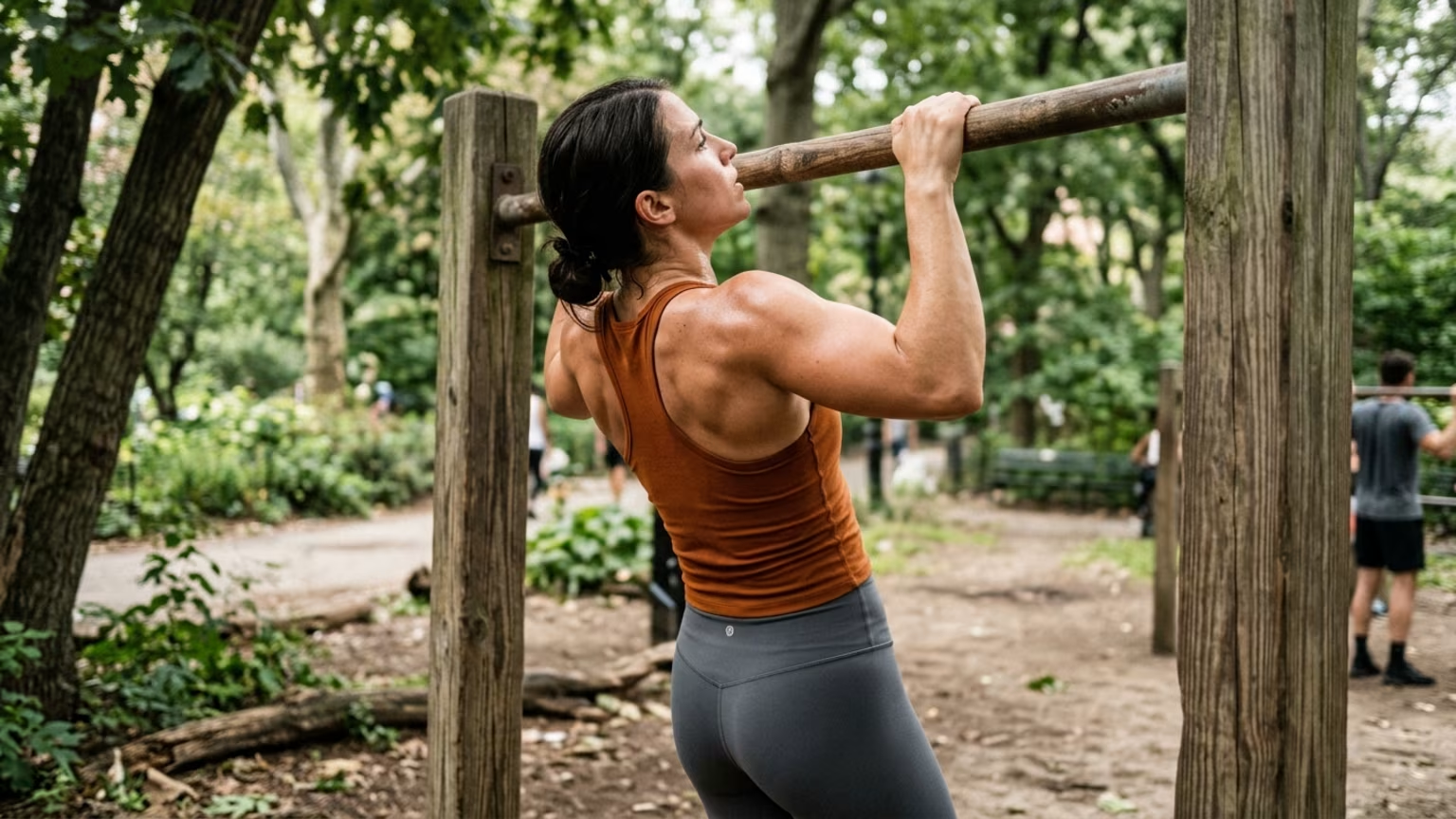
Progressive overload can take many creative forms when working without standard barbells or dumbbells. The NaturalNews article provides examples of intelligent progressions like elevated feet push-ups and slow negative pull-ups. Advanced variations like split squats, reverse lunges, and single leg glute bridges offer significant challenges for the lower body. These thoughtful modifications ensure the muscles continue receiving an adequate stimulus for growth.
The updated guidance highlights several fundamental movement patterns for building total body strength. The article lists push-ups and pull-ups as highly effective upper body options. It also recommends bodyweight squats, standard lunges, and basic glute bridges for lower body development. The traditional eight to 12 repetition range is widely considered useful for muscle growth, though higher repetitions may eventually become necessary.
A highly sustainable program must also include practical regressions for true beginners. The report explicitly describes regressions like incline push-ups, band-assisted pull-ups, and reduced range glute bridges. Finding a comfortable entry point allows individuals to prioritize controllable and pain free repetitions. Adults returning after prolonged inactivity should avoid treating exhaustion or severe soreness as proof of an effective workout.
One of the most common mistakes I see in adults over forty is focusing solely on the scale. People would celebrate rapid weight loss, only to find their energy plummeted and their metabolism slowed. They were losing muscle instead of just fat. Shifting the conversation from generic weight loss to body composition and strength training has been one of the most impactful changes we have championed.
Learning to scale movements appropriately is vital for long term progress and joint health. Adults who prioritize building an effective program anywhere often demonstrate better adherence than those relying entirely on commercial gyms. Utilizing regressions safely aligns closely with principles of inclusive strength training for larger bodies. Mastering basic movement mechanics prepares the body for more demanding physical tasks as we age.
Mainstream fitness coverage frequently exaggerates the isolated benefits of equipment free workouts. We must look at the specific claims carefully to separate proven facts from sensationalism. The NaturalNews article is secondary reporting rather than a direct clinical document. It claims the updated guidance relies on 137 systematic reviews and more than 30,000 participants.
However, those specific figures cannot be audited directly because the individual reviews and pooled results are not identified. The publication does not provide the formal ACSM document title, journal citation, or full bibliography. We should treat the participant numbers as reported claims rather than independently verified statistics. A cautious interpretation is necessary when applying these broad guidelines to specific personal goals.
Saying that bodyweight exercise improves strength does not mean every routine will produce identical results. Bodyweight resistance can be difficult to scale precisely for specific goals. This is particularly true for smaller muscle groups or for individuals requiring external resistance beyond what their body position provides. The available reporting simply validates bodyweight training as one acceptable option among many alternatives.
Furthermore, bodyweight exercise is not a guaranteed standalone weight loss method. These movements are powerful tools for preserving or developing lean muscle tissue. They do not automatically produce a specific amount of fat loss without appropriate nutritional habits and energy balance. The twice weekly recommendation refers entirely to training frequency rather than a complete comprehensive program.
The media reaction to updated fitness guidelines often polarizes the conversation unnecessarily. Reporters sometimes imply that lifting heavy weights is now obsolete, which misrepresents the clinical consensus entirely. Bodyweight routines and heavy barbell training simply offer different tools for varying life circumstances and goals. Recognizing one effective method does not invalidate the proven benefits of utilizing heavier external loads.
Additional systematic reviews provide important context regarding how general exercise impacts the aging body. A 2026 review analyzed 124 trials involving a total of 18,429 participants. This comprehensive review reported that exercise can help attenuate age related bone density decline in adults aged 40 and older. The data showed that combined aerobic and resistance exercise probably improves lumbar spine bone mineral density compared with control conditions.
It is crucial to understand the limitations of these specific bone health findings. The evidence concerns adults aged 40 and older across multiple varied exercise modalities. The findings strongly support the overall value of exercise in midlife. However, they do not prove that the specific bodyweight exercises listed by NaturalNews uniquely improve bone density on their own.
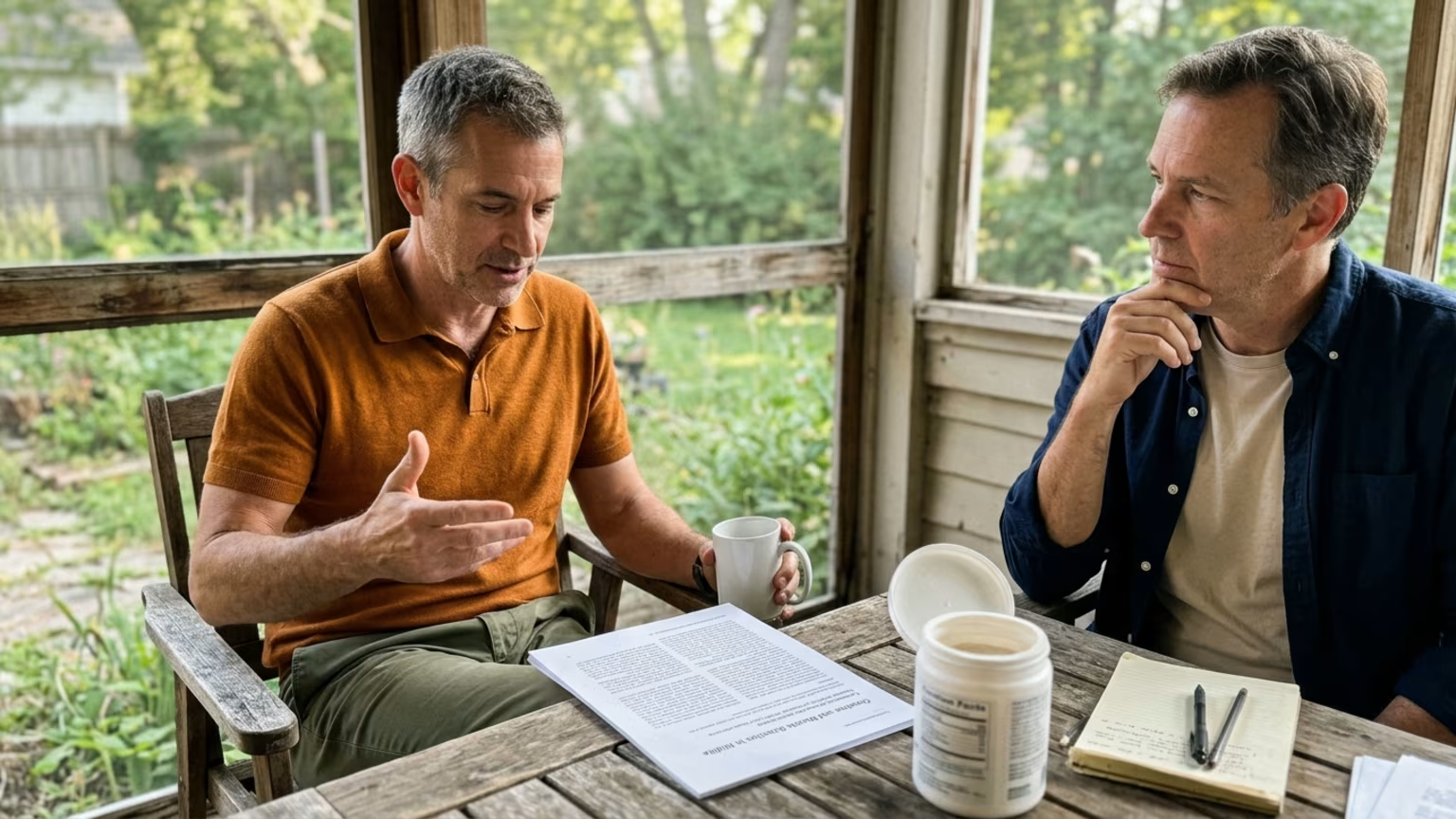
Nutritional supplementation is another area where clinical data offers helpful nuance. A separate 2026 PubMed indexed review looked at creatine use in generally healthy older adults. The review found that creatine may provide modest additional improvements in muscle strength when combined with resistance training. This data helps contextualize how dietary additions might support a new strength routine.
However, the same review noted that effects on overall muscle mass and physical function remained uncertain. Researchers cautioned against directly extrapolating these findings to frail, sarcopenic, or functionally limited older adults. Supplements are not strictly necessary to benefit from basic bodyweight exercise. The core focus should remain on consistent physical movement rather than complex nutritional additions.
Applying clinical data to daily life requires understanding the specific populations studied by researchers. The bone health review specifically analyzed older adults to track physical decline over time. This focus provides valuable reassurance for midlife individuals worried about losing their physical resilience. Sustainable habits formed now build a crucial foundation for independent living in later decades.
The scientific community still has significant work ahead to optimize bodyweight training protocols for aging populations. Future research is needed to directly compare precise bodyweight progressions against standard machine loading in older adults. Claims about developing muscle power require particular caution because targeting power without external loads remains vaguely defined. Finally, the field needs larger clinical trials specifically focused on older adults with functional limitations.
Exercise professionals must also develop clearer programming standards for cardiovascular integration. Adults seeking improved metabolic health may reasonably combine resistance training with walking, recognizing that routine aerobic activity benefits heavily from added muscle support. However, current sources do not establish a specific combined program guaranteed to optimize weight loss. Clearer clinical guidance on concurrent training will eventually help adults maximize their weekly exercise investments safely.
WeightRestart shares research-led guidance on weight loss, metabolism, nutrition, strength, appetite, sleep and recovery. Our goal is to make complex health information clear, practical and useful for people building progress they can maintain.


Learn how to build a weight-management approach around better information, realistic expectations and habits you can keep using.
read the blog