

Recent clinical commentary suggests extreme workouts without recovery may impact ageing. Learn how balancing aerobic activity and strength work supports health.





On October 2, 2026, the Indian Express published new practitioner commentary regarding how specific exercise habits might influence biological ageing. The article reported on comments from metabolic specialist Dr Sumit Sharma. Dr Sharma cautioned against daily high-intensity interval training, long-distance running on concrete and heavy lifting without recovery. The news piece presented these intense habits as factors that may wear people down or accelerate biological ageing.
This commentary arrives at a time when many adults feel pressured to maintain highly demanding workout schedules. At WeightRestart, we believe in providing clear and research-led guidance to help you make informed decisions. Dr Sharma brings 21 years of medical practice to this clinical observation. The publication also featured insights from Dr Aniket Mule, an internal medicine consultant at KIMS Hospitals in Thane.
Dr Mule provided essential context regarding how the body responds to physical stress over time. For adults aged 35 to 60, managing weight and health often feels like a confusing battle against conflicting advice. This recent clinical perspective emphasizes a more balanced approach to movement and physical longevity. It challenges the common belief that maximum exertion is always required for optimal health.
The focus shifts toward building resilience through a thoughtful combination of effort and rest. Understanding these clinical observations can help you step away from extreme diets or workout regimens. You do not need to punish your body to achieve meaningful improvements in your physical health. The evidence points toward building a sustainable routine that you can maintain for decades.
This shift in perspective is crucial for anyone feeling burned out by the fitness industry. Many people struggle with confusion over conflicting nutrition and diet research. By translating complex clinical research into simple steps, we can address the entire ecosystem of weight management.
To understand why these practitioners recommend specific routines, we must look at how the body functions on a cellular level. The Indian Express article attributes to Dr Mule the view that strength work can help maintain muscle mass and bone density. Preserving this physical structure becomes increasingly important as we progress through midlife. Muscle is not merely a tool for lifting heavy objects or moving through the world.
It is a highly active tissue that plays a vital role in your overall metabolic ecosystem. Dr Mule notes that retaining lean muscle supports glucose regulation and metabolic function. When you eat, your digestive system breaks down food into glucose to be used for energy. Healthy muscle tissue provides a massive storage site for this glucose, pulling it out of your bloodstream.
If you lose muscle mass over time, your body loses this essential metabolic buffer. Building a routine that prioritizes preserving muscle and supporting sustainable weight management is a foundational step for long-term well-being. Maintaining bone density is another significant benefit of consistent resistance training. The physical stress of lifting weights signals your bones to remain dense and strong.
This is a critical factor for maintaining independence and mobility in later years. The goal of exercise should be to remain functional, strong and resilient over time. It is not simply about burning calories or achieving a specific aesthetic standard. This biological reality highlights why relying solely on severe caloric restriction can be counterproductive.
When you focus entirely on shrinking your body, you risk losing this highly valuable muscle tissue. A more effective approach focuses on nourishing your body and providing the physical stimulus it needs to stay strong. Building and preserving muscle fundamentally changes how your body manages energy every single day. Weight change is never simply a matter of willpower; it is heavily influenced by habits, movement and your environment.
The mainstream media frequently frames fitness news in a way that generates anxiety and confusion. The Indian Express headline suggests that certain exercise habits may accelerate ageing. This is a very strong claim that can easily frighten people away from vigorous physical activity. However, it is essential to look at what the reported evidence actually establishes.
The warning about accelerated ageing is a practitioner's claim as reported by the newspaper. The article does not cite an independent study demonstrating that daily intense exercise directly accelerates biological ageing. Dr Mule offers a highly qualified perspective that helps strip away this sensationalism. He explicitly states that these intense activities are not inherently harmful to the body.
Instead, he points out that poor technique or rapid progression can increase the risk of injury. Pushing your limits without prioritizing recovery is what truly compromises your physical health. You must ensure your body has adequate time to repair itself after a demanding training session. This distinction is vital for adults who want to exercise safely without relying on extreme approaches.
You do not need to categorically avoid vigorous activity to protect your joints or your health. The true danger lies in ignoring your body's signals and skipping necessary rest periods. Adopting a shame-free approach to fitness means recognizing when to push and when to recover. Focusing on developing a realistic metabolic health routine involves listening to your body rather than following rigid rules.
At WeightRestart, we promise clear guidance that makes uncertainty visible and removes the hype. The data does not suggest that running or heavy lifting will ruin your health. It simply reminds us that appropriate conditioning and recovery are non-negotiable components of any fitness plan. Choosing exercise that fits a person's individual needs is far more effective than forcing a mismatched routine.
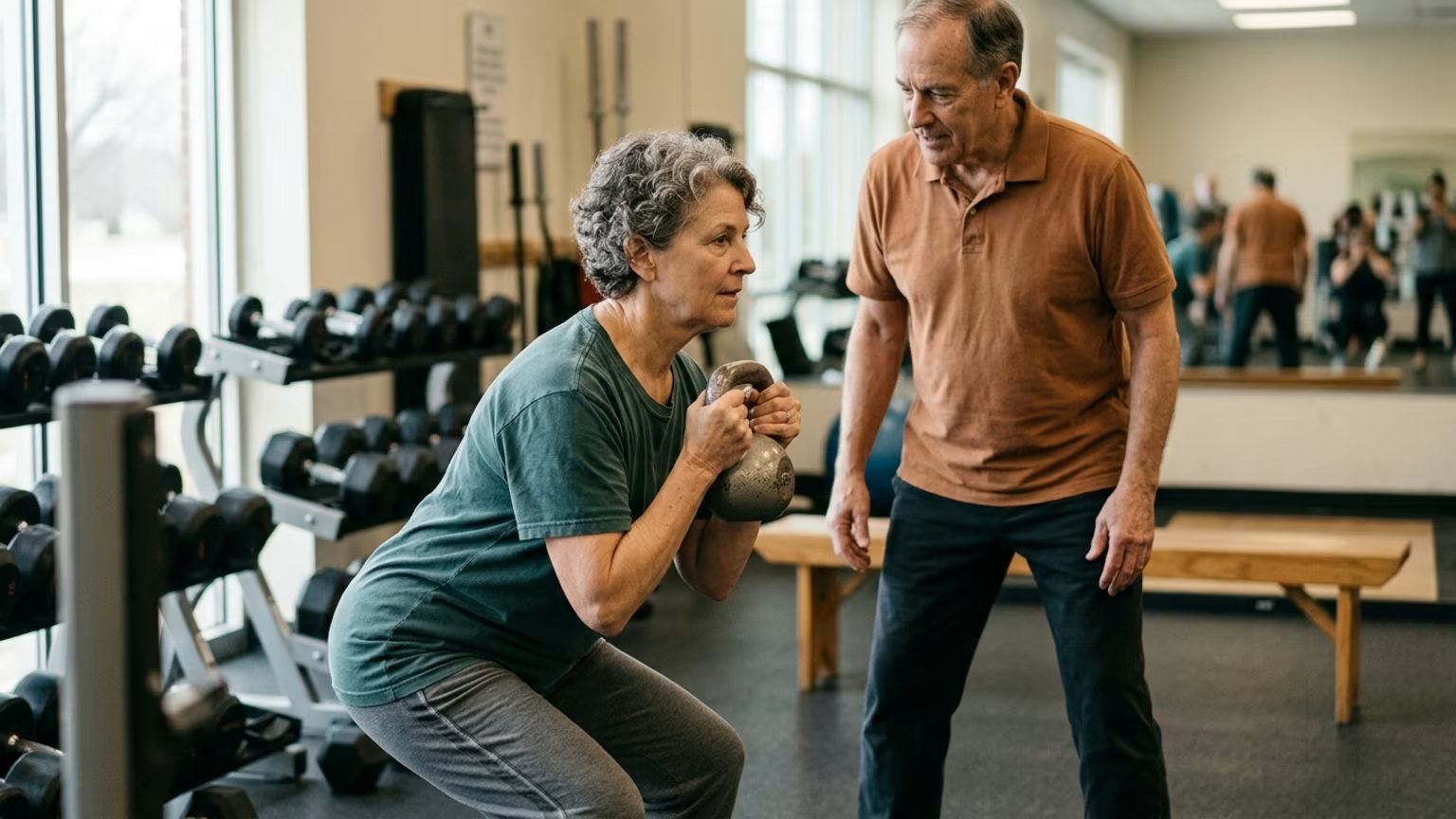
The news article proposes a specific weekly schedule based on the practitioners' clinical observations. The suggested routine includes Zone 2 cardio for 45 to 60 minutes, three to four times weekly. It also advises incorporating strength training two to three times a week. The practitioners list foundational movement patterns like the squat, hinge, push and pull.
They even recommend weighted walking with 10 to 20 kilograms as part of this routine. While these suggestions outline a solid fitness program, they are not universal clinical mandates. The precise dose of Zone 2 cardio or weighted walking represents the article's recommendations rather than validated proof of an anti-ageing protocol. The article itself wisely advises readers to consult a health practitioner before starting a new routine.
Your physical background, current health status and daily schedule must dictate your approach to movement. We translate complex clinical research into simple steps for everyday life so you can avoid burnout. For a broader and more established perspective, we can look at global public health guidelines. A recent European Journal of Preventive Cardiology article reports the current World Health Organization guidance for physical activity.
The WHO recommends 150 to 300 minutes of moderate-intensity physical activity weekly. Alternatively, adults can aim for 75 to 150 minutes of vigorous-intensity activity, or an equivalent combination. This official guidance sets overall aerobic and strengthening targets rather than endorsing one precise daily schedule. The same journal article states that WHO guidance also includes muscle-strengthening activity for optimal health.
Furthermore, it highlights a crucial recommendation to reduce and regularly interrupt sedentary time. Managing the hours you spend sitting is just as important as the minutes you spend exercising. The most defensible takeaway is that combining aerobic activity with muscle strengthening provides the best foundation for health. We help adults integrate these concepts into practical habits without extreme pressure, and you can visit WeightRestart to learn more.
What to watch next is how global health organizations might update their guidelines to include specific recovery metrics alongside training volume. Future research is needed to determine exactly how high-intensity training influences metabolic markers when adequate rest is ignored. Until large systematic reviews can quantify the precise recovery thresholds for older adults, the clinical focus remains on balancing varied movement with sufficient rest. Medical professionals and sports scientists will likely continue studying these biological mechanisms to develop highly personalized exercise prescriptions for midlife health.
WeightRestart shares research-led guidance on weight loss, metabolism, nutrition, strength, appetite, sleep and recovery. Our goal is to make complex health information clear, practical and useful for people building progress they can maintain.





Learn how to build a weight-management approach around better information, realistic expectations and habits you can keep using.
read the blog