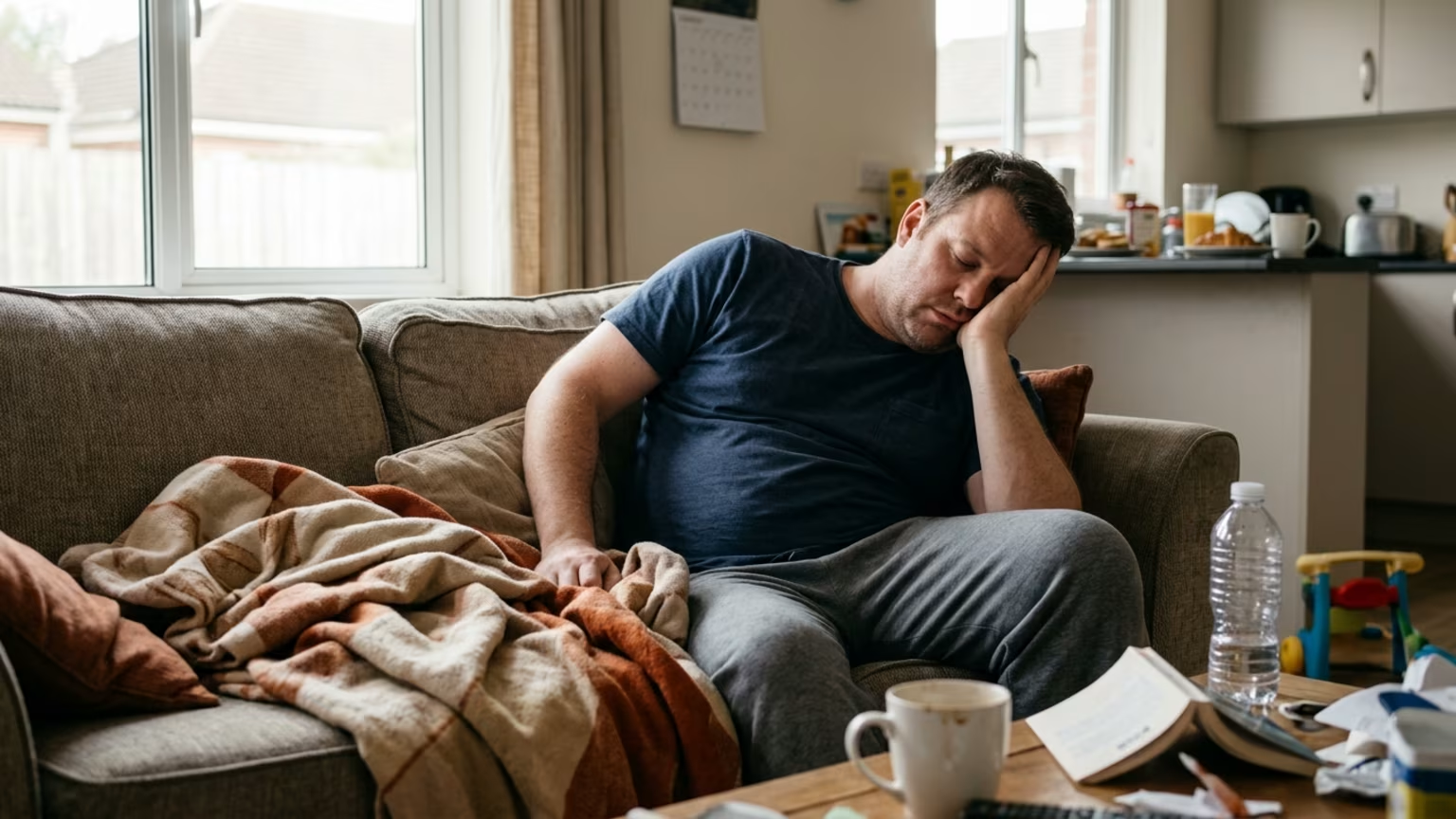

Learn how sleep impacts appetite and weight. Clinical evidence shows sleep deprivation increases calorie intake and alters hormonal metabolic signals.





Willpower is not the reason you eat more after a restless night. We have spent decades treating weight management as a simple math equation that ignores our biological needs. In reality, adequate rest is what makes healthy habits possible.
Myth: Weight gain is a simple failure of dietary discipline. Reality: Your brain and hormones actively drive you to consume more energy when you are sleep-deprived. Blaming a lack of motivation completely misses the biological reality of how appetite functions. Your nutritional choices are heavily influenced by the quality of your recovery.
Many people assume that managing nutrition requires constant mental vigilance. They believe that if they just follow the rules strictly enough, their body will eventually comply. This mindset completely ignores the reality of human physiology. When you restrict sleep, your body interprets this as a stressor and alters your metabolic function accordingly.
When we view sleep as an optional luxury, we set ourselves up for failure. We push through exhaustion with caffeine and sheer determination. This approach forces the body to fight against its own survival instincts. True metabolic health requires us to respect our need for consistent rest.
It is easy to see why this misunderstanding became so popular. For years, experts told us that changing our bodies was strictly about eating less and moving more. This narrow focus made sense when the fitness industry only valued short-term aesthetic results. It ignored the reality that human biology requires adequate recovery to function well.
For decades, popular media pushed the narrative that anyone could achieve their ideal body with enough determination. Magazine covers promised rapid transformations through extreme dietary restriction and exhaustive daily workouts. Sleep was often framed as an obstacle to productivity rather than a fundamental biological need. We were told that sleeping less meant we were working harder toward our goals.
Diet culture taught us to view our bodies as machines that could be easily programmed. We assumed that a strict meal plan could override any amount of physical fatigue. If someone gained weight, society assumed they were simply not following the rules. This created a culture of shame around natural biological responses.
One of the most common mistakes I see in adults over forty is focusing solely on the scale. People would celebrate rapid weight loss, only to find their energy plummeted and their metabolism slowed. They were losing muscle instead of just fat. Shifting the conversation from generic weight loss to body composition and strength training has been one of the most impactful changes we have championed.
We now know that exhaustion drastically changes your habits and daily movement. When people feel completely drained, they naturally seek out highly rewarding foods. It is a biological survival mechanism rather than a character flaw. This is why finding the right training dose is critical for sustainable results.
The University of Colorado Anschutz Medical Campus published an explainer on September 3, 2026. The article examined whether inadequate sleep may be contributing to the country's weight-related health problems. They noted that nearly three-quarters of U.S. adults meet criteria for overweight. Furthermore, more than 40% meet criteria for obesity, and approximately 30% of adults do not obtain their recommended amount of sleep.
According to the article, repeated adult sleep-restriction experiments have found participants consuming approximately 200 to 300 additional calories after shortened sleep. A separate meta-analysis reported an average increase of 385 calories under partial sleep deprivation. These extra calories are largely driven by stronger hunger cues and reduced satisfaction after eating.
These changes in appetite are not just about eating larger meals during the day. Sleep deprivation specifically increases the appeal of highly palatable foods that are rich in sugar and fat. When your brain is exhausted, it aggressively seeks out the fastest available sources of energy. This makes the office snack jar incredibly difficult to resist when you are running on empty.
Sleep loss also affects physical activity and metabolic function throughout the day. The CU article describes a six-week sleep-restriction study involving New York City residents. These participants became more sedentary and sat more during the day. This happened even after researchers adjusted for the amount of time they were awake.
Hormones and insulin are heavily impacted by your daily sleep schedule. A randomized-trial meta-analysis reported that sleep restriction, circadian misalignment, and suppression of slow-wave sleep were associated with adverse insulin-sensitivity effects. In adolescents, short sleep and later sleep timing were associated with poorer insulin sensitivity. Over time, this could raise the risk of obesity and type 2 diabetes.
WeightRestart believes that understanding these mechanisms is the first step toward better health. When you know that poor rest alters your hormones, you can stop blaming your lack of discipline. You can focus on creating a sustainable routine instead. This is why managing sleep debt is so important for your overall progress.
While the clinical data is compelling, the relationship between rest and metabolism remains complex. Another review reported that three of five sleep-restriction studies showed reduced insulin sensitivity or impaired glucose regulation. However, two of those studies found no significant effect. This shows that individual responses to sleep deprivation can vary significantly across different populations.
We must also acknowledge that weight management involves a vast ecosystem of different factors. Higher body weight can coexist with sleep issues, chronic stress, medication use, and demanding work schedules. Treating sleep as a single isolated variable ignores the reality of how these factors interact. We need a comprehensive approach that respects the complexity of human health.
Extending your time in bed can provide measurable benefits for many adults. In one intervention, participants reached roughly 7.5 hours per night after two weeks of effort. They reduced their food intake by approximately 270 calories per day without being assigned a specific diet. Adults who routinely sleep around six hours could experiment with adding 30 to 60 minutes of sleep opportunity.
However, it is important to remember that sleep supports diet and physical activity rather than replacing them. Sleep alone will not completely fix a highly processed diet or a totally sedentary lifestyle. It acts as a foundation that makes other healthy behaviors much easier to maintain. You still have to engage in supportive nutrition and move your body.
Developing strategies for appetite control often starts with getting enough rest. A regular wake time can make bedtime more predictable and reduce large schedule shifts. Creating a calm environment before bed can help transition your brain into recovery mode. These small habits slowly build a more resilient metabolic system over time.
You can finally stop feeling guilty about your cravings after a terrible night of sleep. The scientific consensus is clear that sleep loss directly alters your appetite and reduces your daily movement. By prioritizing regular rest, you build a supportive environment that makes healthy choices feel completely natural. Better sleep quietly shifts the biological odds back in your favor.
WeightRestart shares research-led guidance on weight loss, metabolism, nutrition, strength, appetite, sleep and recovery. Our goal is to make complex health information clear, practical and useful for people building progress they can maintain.



Learn how to build a weight-management approach around better information, realistic expectations and habits you can keep using.
read the blog


