
Updated 2026 clinical guidance treats physical activity as a metabolic therapy for obesity care, prioritizing muscle preservation and fitness over the scale.





In September 2026, Healio published an article summarizing updated clinical perspectives on physical activity in obesity care. The piece is titled "Physical activity across the lifespan in patients with obesity: Moving beyond the scale." This publication summarizes a 2025 consensus statement from the American Association of Clinical Endocrinology. The guidance formally positions physical activity as a therapeutic tool during active weight loss and long-term maintenance. The fundamental message is that exercise success should not be judged primarily by changes on the scale.
When adults increase their daily movement, the body undergoes significant physiological changes that protect long-term health. Healio identifies improvements in cardiorespiratory fitness, visceral adiposity, insulin sensitivity, and blood pressure. These vital metabolic benefits often occur even when body weight changes very little. Understanding these biological adaptations helps us reframe exercise as a tool for internal health rather than external appearance. Regular activity during active weight loss helps preserve lean mass and sustains the resting metabolic rate.
Sarcopenic obesity is a major clinical concern for older adults navigating weight management. This condition involves excess adiposity combined with a gradual loss of lean muscle mass. Experts support multicomponent programs incorporating aerobic, resistance, and balance training to counter this decline. For children and adolescents with obesity, guidance recommends 60 minutes of moderate-to-vigorous physical activity daily. However, Healio emphasizes that smaller amounts of activity serve as a meaningful starting point for previously sedentary youth.
During pregnancy and postpartum care, the American College of Obstetricians and Gynecologists recommends at least 150 minutes per week of moderate-intensity aerobic activity. For menopause and postmenopause, the article recommends regular aerobic activity alongside muscle-strengthening exercise at least twice weekly. This routine helps address abdominal fat accumulation, reduced resting metabolic rate, and increased cardiovascular risk. The consistent theme across all ages is that movement regulates bodily functions and preserves physical strength.
Another critical factor is how these physiological changes support long-term weight maintenance. The American College of Sports Medicine notes that light-intensity activity can be highly useful. This is especially true when enough total energy expenditure is achieved over the course of the week. Short movement breaks throughout the day can accumulate into a meaningful total weekly volume.
Mainstream fitness media often frames intense exercise as a guaranteed and rapid weight-loss solution. The clinical data presents a much more measured reality about physical activity and the bathroom scale. Healio reports that exercise training produces approximately 2 to 3 kg of additional weight loss on average. The article explicitly cautions that exercise alone generally does not produce major weight loss.
For years, our team at WeightRestart watched smart, capable people blame themselves when standard diet advice failed them. They would cut calories drastically, run themselves into the ground, and inevitably regain the weight. I realized we were treating a complex biological and psychological system like a simple math problem. This realization shifted our approach to movement, proving that tracking physical strength is far more valuable than simply weighing yourself. A stable scale does not mean exercise has failed if fitness, strength, and sleep are improving.
The American College of Sports Medicine supports a multimodal approach for long-term weight regulation. The ACSM consensus statement reports that high-intensity interval training is not superior to moderate-to-vigorous continuous exercise. This challenges the popular idea that extreme training is necessary for health or body composition improvements. No single exercise modality is clearly superior overall for weight regulation.
The broader research context supports resistance training as a primary strategy for preserving fat-free mass. The precise proportion of weight loss that comes from lean tissue varies significantly between individuals. It depends on the specific medication, nutrition plan, baseline body composition, and study design. This nuance is completely lost in fitness marketing that promotes uniform, guaranteed outcomes for everyone.
Specific clinical trials provide valuable insights into how different training methods affect the body. A 2026 study in older adults with obesity who were dieting examined various exercise protocols. That study reported visceral-fat reductions of 36% with combined exercise, 19% with aerobic exercise, and 21% with resistance exercise. The same study reported greater improvement in insulin sensitivity with combined exercise. Combined training resulted in an 86% improvement, compared with 50% for aerobic exercise and 39% for resistance exercise.
It is important to remember these specific percentages come from a single study population. They should not be generalized as universal outcomes for every adult with obesity. An ACSM position statement notes that resistance training may not increase total weight loss. However, it can increase fat-free mass, increase fat-mass loss, and significantly reduce health risks. These observations reinforce the importance of measuring waist circumference and strength alongside basic body weight.
Another critical clinical observation involves body composition changes during medication-assisted weight management. A 2026 systematic review and meta-analysis of randomized trials examined GLP-1 receptor agonist treatments. The review reported that treatment at obesity-management doses was associated with a 1.74 kg reduction in absolute lean mass. The phrase "40% of weight loss can come from lean mass" was also reported in the Healio article. This data explains why preserving muscle is vital when utilizing multi target obesity drugs.
Healio recommends that clinicians prescribe activity using the FITTE framework. This clinical tool stands for frequency, intensity, time, type, and enjoyment. The inclusion of enjoyment is clinically relevant because patients are more likely to continue activities they actually like. The clinical message summarized by Healio is to "begin low and go slow" for long-term adherence. This is particularly important for people managing pain, fatigue, deconditioning, or stigma-related concerns.
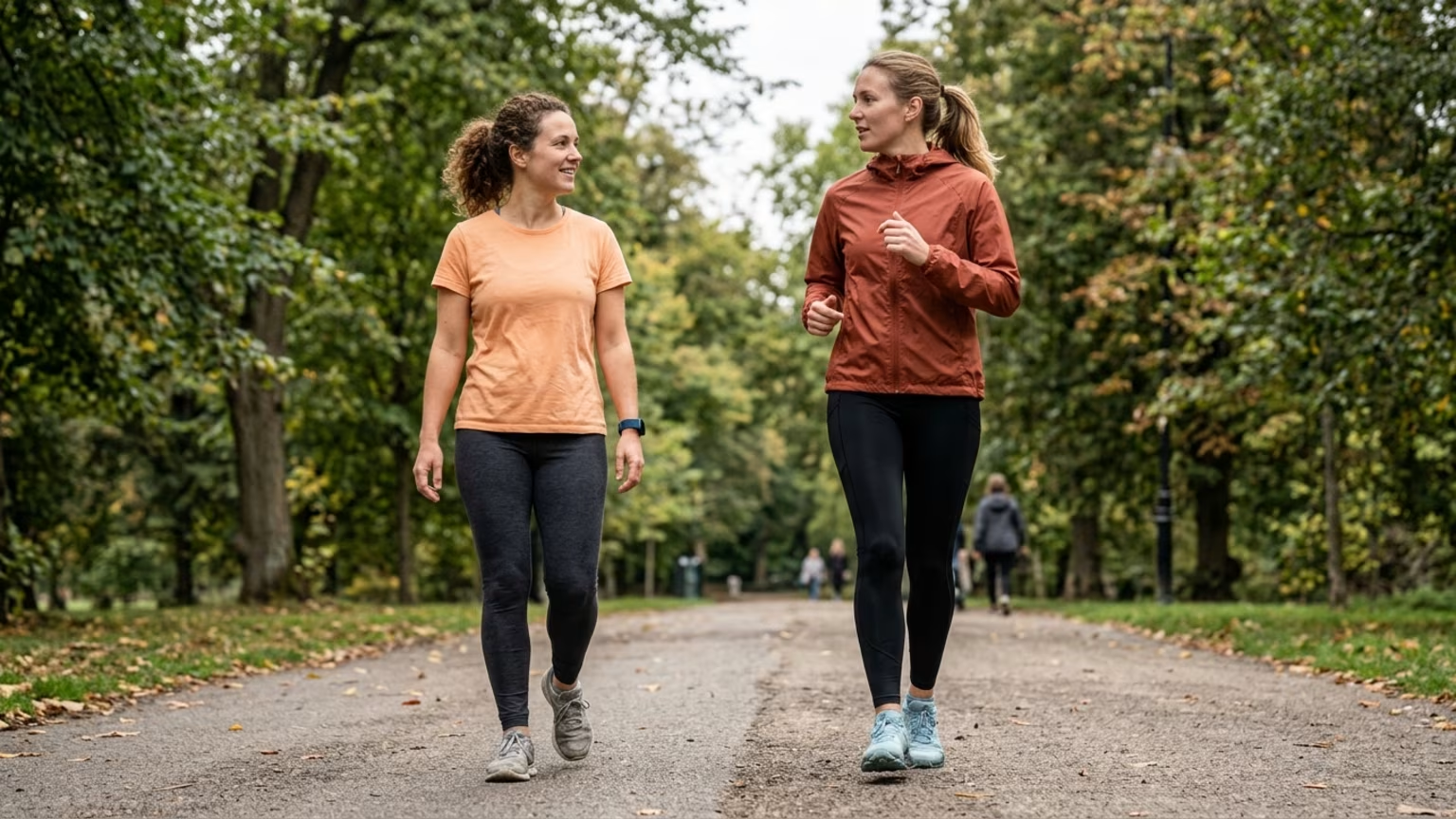
For adults in the maintenance phase, the article identifies 150 to 300 minutes per week of moderate-intensity aerobic activity as the target. ACSM similarly reports that benefits become especially evident at approximately 150 minutes per week of moderate-intensity activity. They note that 150 to 250 minutes per week can help prevent weight gain and produce modest weight loss. More than 250 minutes per week is associated with clinically significant weight loss and improved maintenance. Finding enjoyable moderate aerobic activity makes reaching these targets much more realistic.
For older adults with obesity, Healio describes progressive resistance training at 50 to 80% of one-repetition maximum. This should be completed two to three times weekly, alongside aerobic and balance training. A 2026 expert consensus on older adults recommends adding approximately 5 to 10 minutes every one to two weeks during the first four to six weeks. This slow progression builds competence while minimizing the risk of injury or excessive fatigue. Appropriate progressive resistance training supports daily function without demanding extreme physical exertion.
If pain or mobility becomes a significant barrier, abandoning activity altogether is not the only option. Healio advises clinicians to recommend chair-based, water-based, or non-weight-bearing options for adults with mobility limits. Healthcare providers can recommend aquatic exercise or physical therapy for personalized guidance. The ultimate goal is to find activities that reduce friction and increase personal adherence.
Pain, fatigue, musculoskeletal limitations, and sleep apnea are structural barriers rather than evidence of poor willpower. The article recommends the 5As framework—ask, assess, advise, agree, and assist—for physical activity counseling. Clinicians should use person-first language and avoid assuming that a patient is ready for a formal exercise prescription. Weight-centric communication may be harmful, and weight stigma can negatively affect treatment engagement.
As the medical community continues to refine obesity care guidelines, the emphasis is clearly shifting toward comprehensive metabolic health. More clinical research is needed to establish personalized safety-screening protocols for previously sedentary adults before initiating vigorous programs. Future studies must evaluate how varied physical activity counseling integrates with emerging weight-loss medications in standard medical practice. Until these integrated therapy protocols fully mature, the immediate priority remains helping adults build sustainable, shame-free, and enjoyable movement habits.
WeightRestart shares research-led guidance on weight loss, metabolism, nutrition, strength, appetite, sleep and recovery. Our goal is to make complex health information clear, practical and useful for people building progress they can maintain.



Learn how to build a weight-management approach around better information, realistic expectations and habits you can keep using.
read the blog